
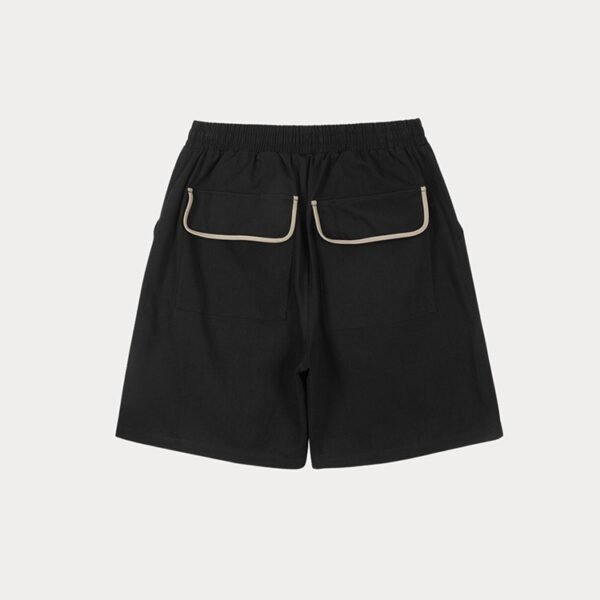
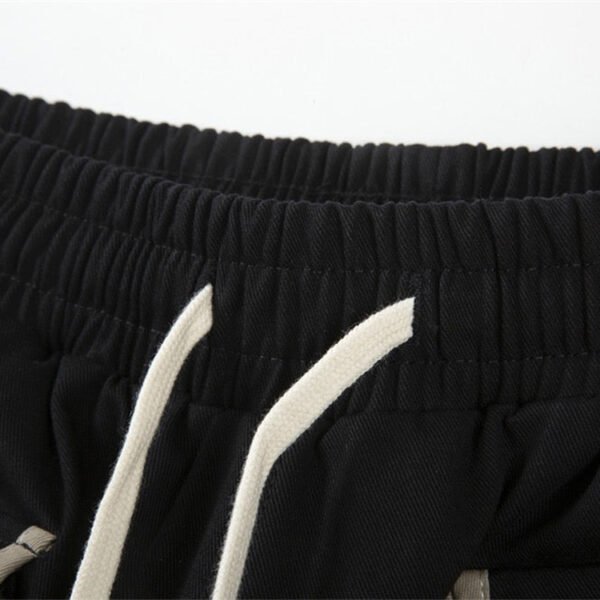

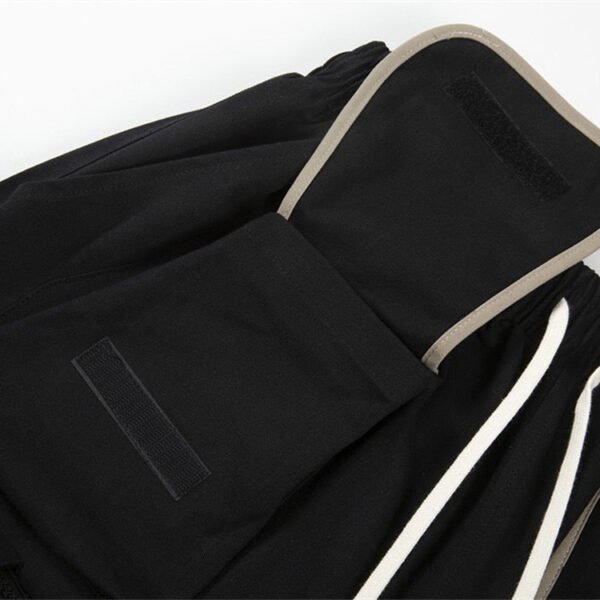

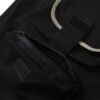
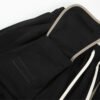
This custom black utility short is developed around color standard under consistent lighting. The dark shell and pale pocket edging create a useful approval test: small shade shifts can change perceived contrast, surface depth, and the garment's finished commercial appearance.
Why Black Needs a Defined Viewing Condition
Black is visually sensitive because lighting changes how much blue, brown, gray, or surface sheen the eye perceives. For this short, a fixed viewing condition creates a common reference for reviewing shell depth, seam balance, and contrast edging.
The supplied image presents the garment against a neutral, evenly lit background, making the black body easy to isolate. That evidence supports a controlled review method, while exact color coordinates, tolerance limits, and approved light source remain To Confirm.
The Contrast Pocket Detail Raises the Stakes
The rear pocket openings are outlined by visibly lighter edging, so any change in black depth can alter the perceived relationship between body and trim. A color decision must therefore consider both components together, not the shell alone.
This construction gives the short a clear utility signature without relying on printed graphics. The trade-off is tighter coordination: shell dye, binding or piping shade, thread appearance, and pressing conditions should be assessed as one visual system.
Surface Appearance and Shade Evaluation
The image shows a smooth, matte-looking shell rather than a highly reflective fabric. That surface helps reduce glare during inspection, yet weave direction, finishing, and fold pressure can still make panels appear different under changing angles or illumination.
VeeWen should translate this visual reference into a fabric and finishing checkpoint during development. Buyers should compare flat fabric, sewn components, and the completed short, because a shade that passes in yardage may read differently after construction.
Turning the Axis into VeeWen Workflow
At VeeWen, this argument belongs in the product-development sequence after the visual direction is fixed and before bulk approval. The team can record the selected lighting condition, identify the black shell reference, and attach contrast-trim swatches to the development file.
The next checkpoint is a coordinated sample review: fabric, pocket edging, waistband elastic, thread, and finished garment are inspected under the same condition. Any requested adjustment should be documented against that reference, keeping later approvals tied to the original intent.
Trade-Offs Buyers Should Resolve Early
A near-black standard may conceal minor surface variation in one environment but reveal it in another. Conversely, a very uniform black can increase rejection risk when different lots, trims, or finishing treatments are introduced, especially across repeat production.
The practical decision is to define what matters most: body depth, low sheen, pocket contrast, or lot-to-lot continuity. Buyers should establish acceptable visual tolerance before confirming the production package, because color expectations affect both appearance and approval efficiency.
Approval Checkpoint for the Production Package
Before releasing this style, request a documented black reference, the intended viewing condition, and a complete sample showing the rear pocket edging. Review the garment from front and back, including waistband, hems, pocket panels, and any visible seam shading.
Approval should be recorded only when the shell and contrast details create the intended hierarchy under the agreed light. Composition, color coordinates, wash behavior, and testing requirements remain separate confirmation items for the final technical package.
Buyer Questions
What is the key development risk for this short?
The key risk is inconsistent perception of black across lighting environments, particularly where lighter rear-pocket edging makes small shell shade differences more noticeable.
Can the contrast edging be changed during development?
Yes, edging color and width can be reviewed during sampling, but changes should be judged beside the black shell under the agreed lighting condition.
Is the fabric waterproof?
Waterproof performance is not verified by the supplied image or wording available here. Any coating, membrane, rating, or test requirement must be confirmed separately.
What is the minimum order quantity?
The commercial minimum for this product-development record is MOQ: 100 pieces per style, with final specifications confirmed through the approved production package.
Approve the Black Standard Before Bulk Development
Send the target shade, preferred lighting reference, and trim direction for this short. VeeWen can align the development review around one visual standard before finalizing the production package.



Reviews
There are no reviews yet.