
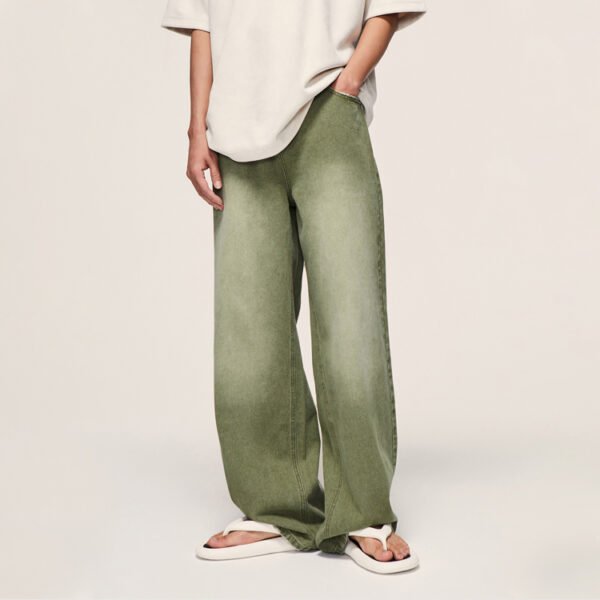
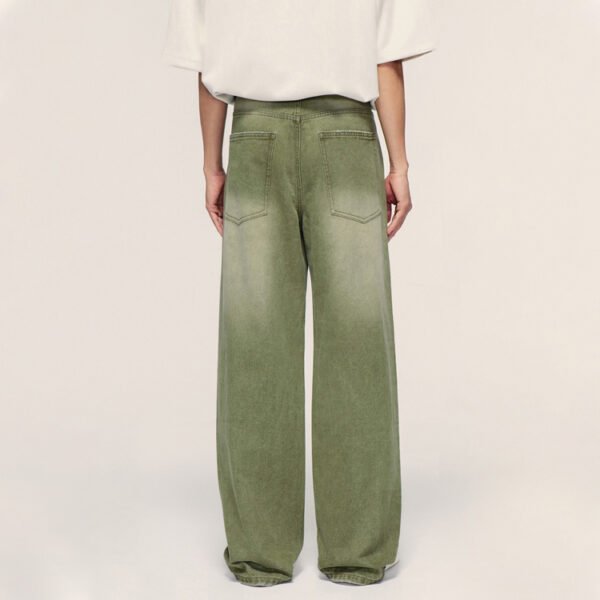
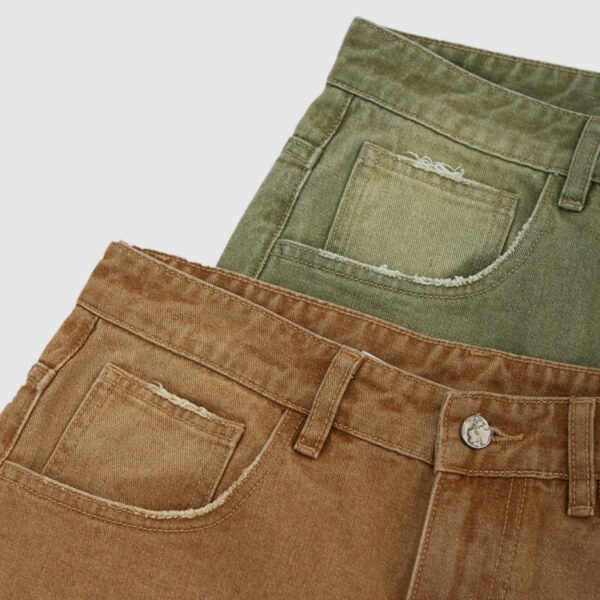
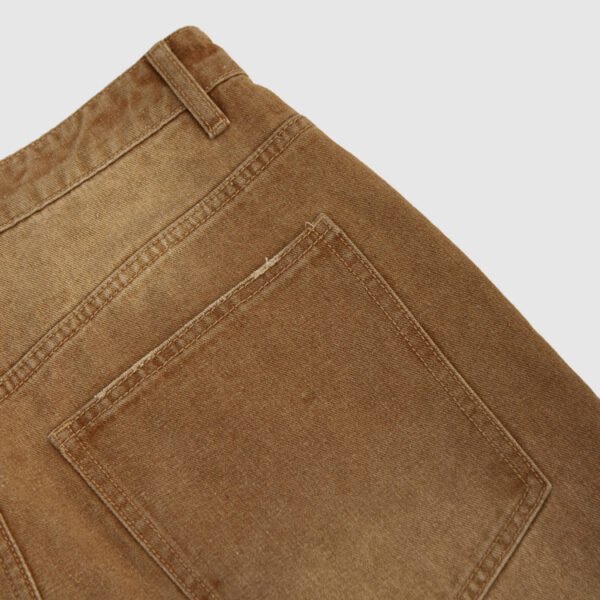
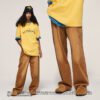
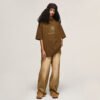
This custom washed olive denim jean is developed around a simple production question: how much fabric weight can support a baggy leg while retaining an easy, mobile fall. The supplied image shows broad proportions, tonal fading, and a softly pooling hem, making drape approval central to the garment decision.
Fabric Weight Controls the Intended Drape
A baggy jean does not automatically create an easy silhouette. Excessive weight can force the wide leg to stand away from the body, while insufficient structure can make the seat and knee collapse. The correct range should let the leg fall continuously from hip through hem.
The supplied image provides a useful visual target: the lower legs remain broad but soften toward the sandals, with visible vertical movement rather than pronounced stiffness. VeeWen development should therefore compare fabric options by hanging behavior, bend response, and full-length balance before finalizing the material.
Wash Changes How Weight Is Perceived
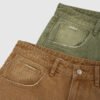
The muted olive wash appears softly faded across the thighs and lower legs, reducing the visual heaviness commonly associated with dense denim. Wash chemistry, abrasion, and rinsing can also alter hand feel, surface friction, and apparent body, so the approved shade cannot be separated from fabric-weight evaluation.
A heavier base may support the silhouette but require a wash route that opens the surface without flattening its shape. A lighter base may achieve softness more readily but need review for pocket stability, seam torque, and the way fading emphasizes folds during wear and movement.
Pattern Volume Must Follow Fabric Behavior
The image shows generous width through the thigh and calf, with the side seams reading almost vertically as the wearer stands. That proportion creates a specific pattern requirement: ease must be distributed deliberately, rather than added only at the hem, or the garment may appear tented.
During development, VeeWen can assess the relationship between rise, seat, thigh, knee, and hem while observing the selected cloth on a moving fit model. The approval target is a relaxed profile that remains intentional from front and side views, without excessive twisting or pooling.
Pocket and Hem Details Affect Balance
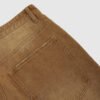
The source wording identifies pockets, while the supplied image shows a clean front with hands entering at the upper hip. Pocket opening angle, bag depth, and placement will influence how the front panel hangs, especially when the fabric is softened by washing and the leg carries significant.
The hem gathers over the footwear in the image, suggesting that length and opening need coordinated approval. Buyers should review hem width, inseam, bartacks, hardware, and stitch density together, because small construction changes can make a lightweight drape look unfinished or a heavy drape look restrictive.
VeeWen Workflow for Drape Approval
VeeWen should begin by translating the image into measurable fit checkpoints: leg width, rise balance, hem relationship, wash softness, and front-pocket position. Fabric candidates can then be reviewed against the same pattern, keeping the silhouette constant while isolating the effect of weight and finishing.
The development gate is a complete garment review after washing, not a fabric swatch approval alone. Confirm the chosen base, wash sequence, shrinkage allowance, seam appearance, and size grading together, because the final drape is produced by their interaction rather than by GSM in isolation.
Buyer Approval Checkpoint
Approve the garment only when the wide leg falls with the same relaxed continuity shown in the supplied image after the intended wash process. Check standing and walking views, seated recovery, pocket access, hem stacking, and the visual transition from thigh to ankle.
The buyer should record an acceptable fabric-weight window instead of approving a vague hand feel. Final sign-off should cover base cloth, washed color, distress map, measurements, construction details, and MOQ: 100 pieces per style, with unresolved performance points marked To Confirm.
Buyer Questions
What fabric weight should buyers choose for this baggy jean?
Choose the lightest weight that keeps the leg open and stable, then verify drape after washing because finishing can materially change hand feel and recovery.
Is the olive color production-ready?
No. The image establishes a muted olive direction only; approve lab dips, wash panels, cast, fading contrast, and acceptable shade variation before bulk production.
Will the loose shape fit all sizes consistently?
It can be graded from an approved base size, but rise, thigh, knee, hem, and stacking need separate review to preserve the intended proportion across sizes.
What is the minimum order?
The commercial minimum is MOQ: 100 pieces per style. Buyers should confirm size ratios, wash allocation, grading, and final construction before placing the production order.
Approve the Drape Direction
Send your target measurements, wash references, and preferred hand feel to VeeWen. We can align fabric trials and fit checkpoints around the wide-leg silhouette before MOQ: 100 pieces per style.

Reviews
There are no reviews yet.