


This custom acid-wash pullover hoodie is developed around marker direction and material consumption, because irregular surface variation, separate front and back graphics, and multiple directional panels make cutting efficiency inseparable from visual consistency.
Acid-Wash Variation Makes Orientation Visible
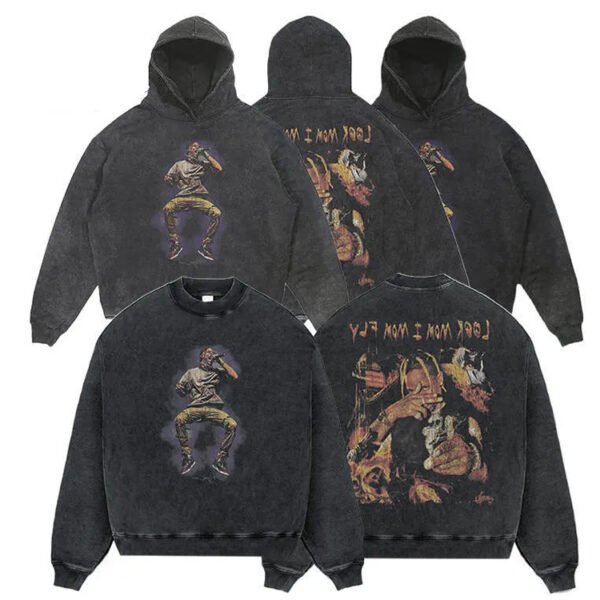
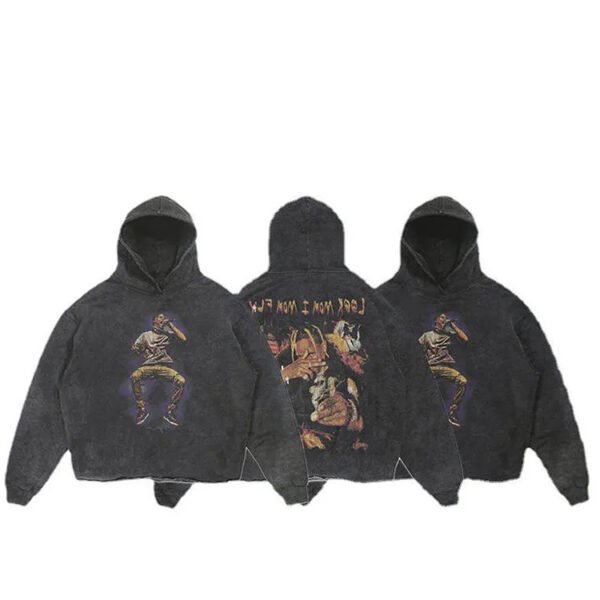
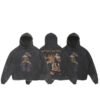
The supplied image shows a charcoal-black hoodie surface with irregular faded areas across multiple garments. Because that variation is part of the appearance, rotating or rearranging panels during cutting may produce noticeably different tonal movement between sleeves, body sections, hood, and pockets.
VeeWen's development workflow should map the intended grain or marker direction before cutting the first approval sample. The buyer should decide how closely adjacent panels must visually relate, since stricter matching may reduce usable yield and increase material consumption.
Front and Back Graphics Need Panel Awareness
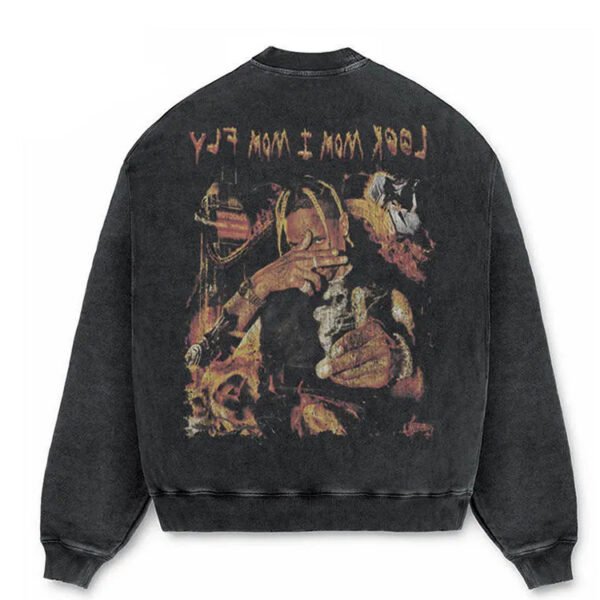
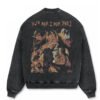
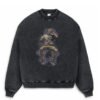
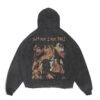
The visual evidence presents distinct front and back artwork arrangements, including a centered performer-style image on the front and larger illustrated compositions on rear panels. Their scale and color density make placement dependent on stable panel dimensions and controlled wash behavior.
During development, VeeWen should place artwork references directly onto the pattern layout and review them after the proposed wash route. The buyer's checkpoint is whether graphic position remains intentional when body panels experience uneven fading or dimensional change.
Marker Planning Balances Yield and Appearance
A hoodie contains large body pieces, sleeves, hood sections, cuffs, and hem components that do not all share the same visual direction. Maximizing marker efficiency may conflict with keeping acid-wash movement aligned across neighboring pieces or preserving artwork orientation.
VeeWen can develop an initial marker plan alongside a visual-priority plan, then identify where yield and appearance diverge. The buyer should approve which panels receive strict directional control and which areas may accept natural wash variation.
Raw Edges Change the Risk Profile
The source wording references cut-edge or raw styling, while the image shows a casual washed presentation with visibly relaxed garment character. Raw edges can reinforce that direction, but they also require decisions about fraying tolerance, edge stability, and repeatability.
The development workflow should isolate raw-edge samples at hood, hem, or selected openings before bulk construction. VeeWen can then record the acceptable edge behavior, while the buyer decides whether natural irregularity is desirable or excessive for the range.
Material Consumption Should Be Reviewed by Size
Marker efficiency cannot be judged from one sample size because hoodie grading changes the relationship between body panels, sleeve length, hood dimensions, and artwork placement. Larger sizes may require different nesting decisions or create more unavoidable waste around directional pieces.
VeeWen's workflow should compare graded marker layouts before final quotation or cutting authorization. The buyer should review the trade-off between consistent artwork positioning, directional wash matching, and material consumption across the intended size range.
Bulk Release Depends on a Directional Record
This hoodie should not move into bulk cutting from a product image alone. The approval record needs to connect wash appearance, panel direction, graphic placement, raw-edge tolerance, graded measurements, and material yield assumptions in one controlled reference.
VeeWen's final development checkpoint is a signed marker and appearance approval covering front, back, sleeves, hood, cuffs, and hem. That decision confirms whether the buyer accepts the planned balance between repeatability, natural wash variation, and consumption.
Buyer Questions
Is the hoodie composition verified as 100% cotton?
No. Cotton appears in the source wording, but the supplied evidence does not verify the final percentage, weight, or finished fabric specification.
Why does marker direction matter for acid-wash hoodies?
Panel orientation can influence tonal continuity, artwork direction, and perceived balance after washing, while stricter matching may reduce cutting efficiency.
Can the front and back artwork vary by panel?
Yes, but each artwork should be positioned against the graded pattern and reviewed after washing to confirm scale, registration, and visual balance.
What is the minimum commercial quantity?
The commercial minimum is MOQ: 100 pieces per style, subject to finalized materials, artwork, marker approval, and production specifications.
Approve the Marker and Wash Direction
Share the artwork files, size range, wash preference, and raw-edge tolerance so VeeWen can align marker planning, material consumption, and visual approvals at MOQ: 100 pieces per style.


Reviews
There are no reviews yet.