
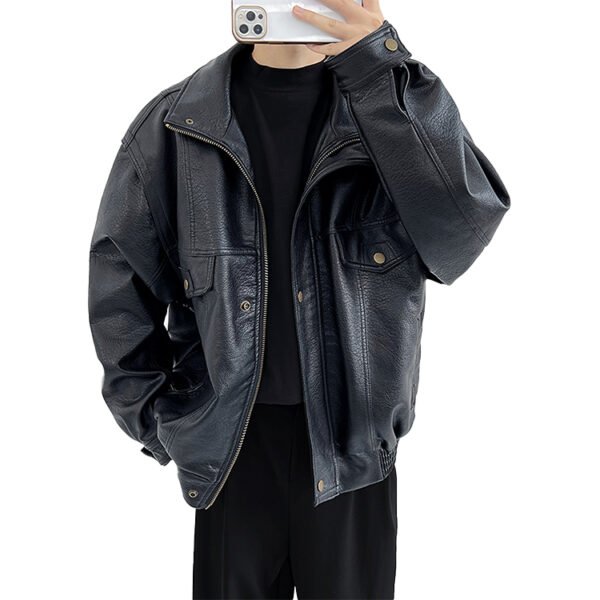
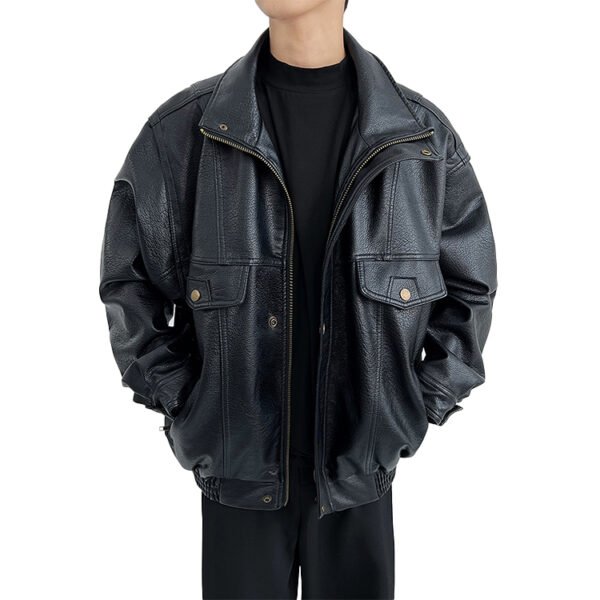
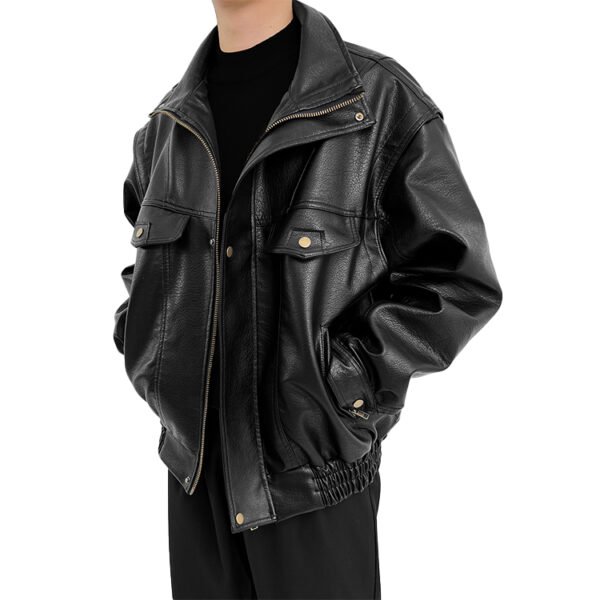
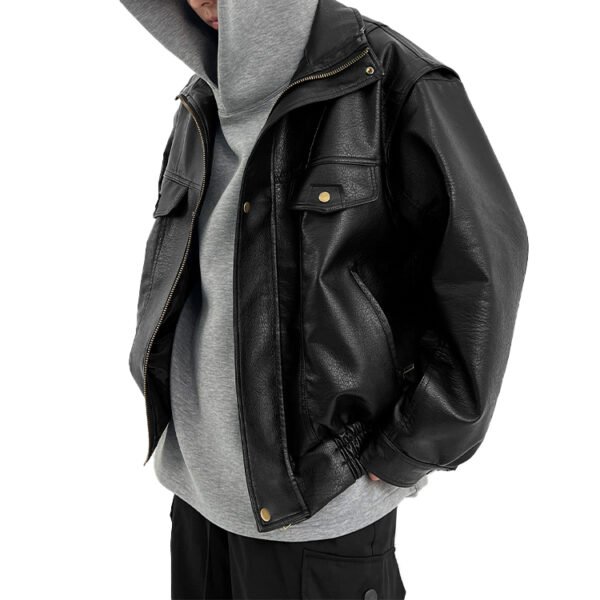
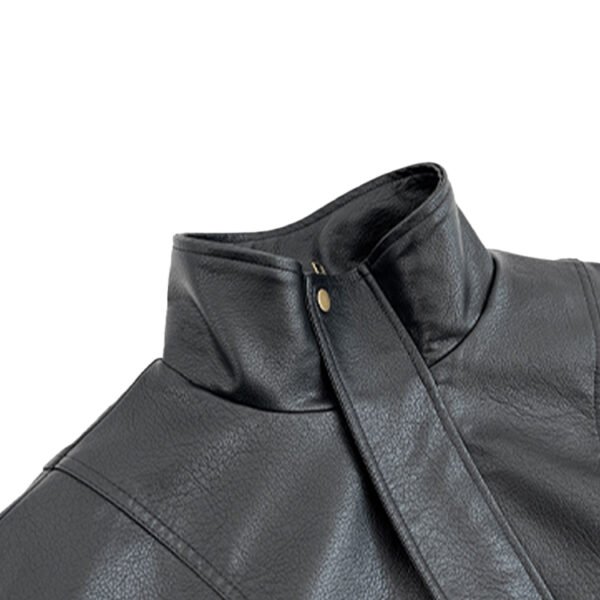

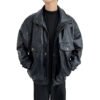
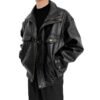
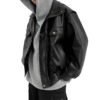
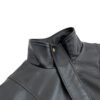
This custom short leather bomber jacket is developed around the collar-to-zipper intersection visible in the reference. The upper front combines a snap-tab collar, overlapping edges, zipper tape, and structured pocket geometry, making closure sequencing essential to comfort, alignment, and the compact bomber silhouette.
Why the Upper Front Controls the Jacket
The reference concentrates several components at the neckline: a snap-tab collar, overlapping front edges, zipper tape, facing layers, and visible hardware. Because these parts meet within a short vertical distance, small pattern or sewing errors can make the collar lift, zipper wave, or neckline feel crowded.
A controlled transition distributes thickness across the upper front instead of forcing every layer to terminate at one point. The result should preserve the jacket's assertive structure while keeping the zipper path straight and the collar flexible enough for ordinary movement.
Reading the Supplied Garment
The supplied image shows a black short jacket with broad sleeves, a central zipper, a tabbed collar, and multiple flap-style pockets. The upper collar edges visibly overlap near the zipper start, creating the exact junction that deserves priority during pattern engineering and sample assessment.
Dark shell surfaces make the contrasting metal details easy to see, including the zipper teeth and snap hardware. This contrast means misalignment would be visually prominent, so the development review should combine tactile closure checks with a front-on inspection of symmetry and hardware spacing.
Collar and Zipper Sequencing
The pattern team should establish a fixed assembly order for collar stand, collar tab, front facing, zipper tape, and shell edge. Each component needs a defined stopping point so seams do not accumulate unpredictably around the zipper head and upper closure.
The zipper should be tested through fully open, partially closed, and fully closed positions while the collar is snapped and unsnapped. This sequence reveals whether the tab obstructs the slider, whether the collar rolls consistently, and whether the front edge remains balanced.
Hardware, Facings, and Wear
Hardware selection changes the intersection's behavior. A heavier zipper or snap can support the jacket's utility character, yet it can also pull the upper front downward or increase pressure where the collar folds. Hardware dimensions therefore belong in the sample specification, not only the trim sheet.
Facings and reinforcement should stabilize the closure without creating a hard ridge against the neck. The appropriate balance depends on the confirmed shell thickness, backing, and finish, so the sample must be reviewed as a worn garment rather than as a flat component.
VeeWen Workflow Checkpoint
VeeWen can build the development review around this specific junction by confirming the shell and trim behavior, marking the collar-to-zipper stack, and producing a first sample with the intended hardware geometry. The fitting session should photograph the upper front open, half closed, and fully closed.
Buyers should approve the collar shape, zipper travel, snap alignment, front symmetry, and neck comfort before grading. After approval, the documented construction sequence can move toward production planning at MOQ: 100 pieces per style, with final specifications tied to the accepted sample.
Trade-Offs and Approval Logic
A firmer collar and reinforced facing can sharpen the bomber silhouette, but too much support may restrict the neck or prevent the tab from folding naturally. A softer transition improves comfort, although it may reduce the visual definition seen in the reference.
Approve the construction when the upper front closes without rippling, the collar sits evenly, and hardware remains proportionate to the compact body. Buyers should also confirm whether the final shell is genuine leather or another material, because thickness and maintenance requirements will change.
Buyer Questions
Is the jacket confirmed to be genuine leather?
No. The source wording references leather, while the supplied image verifies appearance only. Buyers should confirm shell composition, backing, thickness, handfeel, care requirements, and finish before approval.
What should the first sample prove?
The first sample should prove smooth zipper travel, stable collar closure, balanced front edges, comfortable neck contact, and controlled thickness where the snap tab meets the zipper.
Can the pocket layout and hardware be customized?
Yes, pocket dimensions, flap proportions, zipper type, snap finish, labels, and lining can be developed to the buyer's specification after the construction direction is approved.
What is the commercial minimum for this bomber jacket?
The commercial minimum is MOQ: 100 pieces per style. Final colorways, size ratios, packaging, and production details should follow the approved technical specification.
Approve the Collar-to-Zipper Checkpoint
Share your shell material, hardware direction, size range, and pocket requirements with VeeWen. The next approval should confirm zipper travel, collar comfort, upper-front symmetry, and MOQ: 100 pieces per style.


Reviews
There are no reviews yet.