

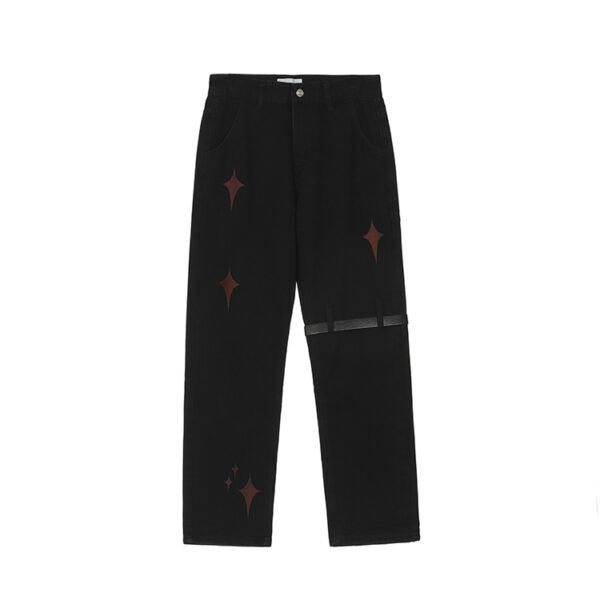
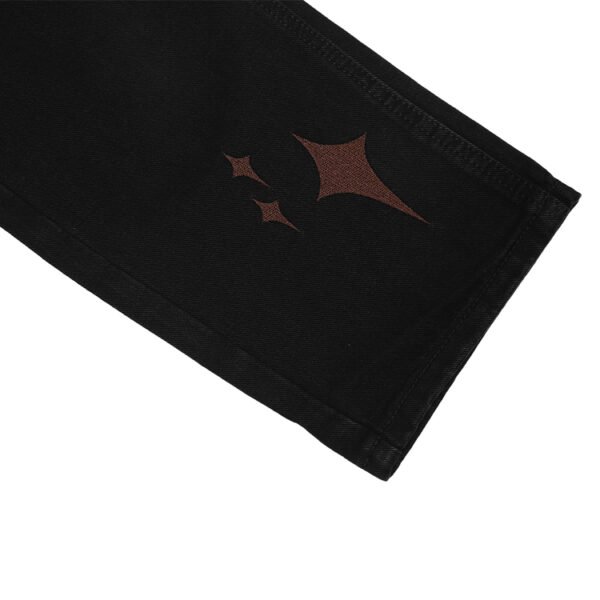

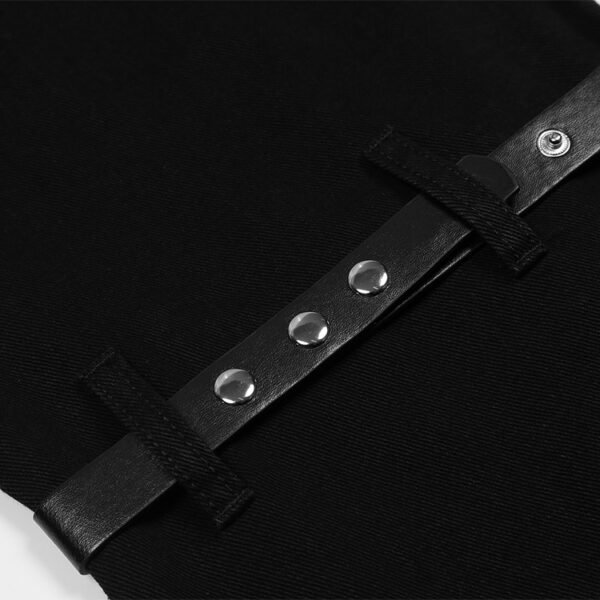


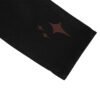

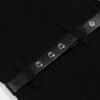

These loose denim jeans are built around reorder control rather than decoration alone. The supplied image shows repeated star motifs, a strapped lace-up leg detail, back pockets, and a deep brown surface, creating a physical approval brief that can anchor future production decisions.
Why the Sealed Sample Matters for Decorated Denim
Decorated jeans contain several variables that can drift independently: embroidery scale, motif position, strap height, hardware spacing, and surface color. A sealed sample gives production one physical arrangement to reference, making the approved relationship more useful than a broad verbal description.
The supplied image shows stars positioned on both a back pocket and lower leg, while the strapped detail crosses one upper leg. That distributed placement should be recorded precisely because small shifts can change balance, leg emphasis, and perceived proportion.
Map Placement Before Confirming Reorders
The back-pocket motif and lower-leg motif should be measured from stable landmarks, including pocket edges, side seams, inseam, and hem. The lace-up element should be mapped from waistband and side-seam references, with hardware positions recorded individually for repeat inspection.
This mapping converts visual evidence into production instructions without pretending that the image supplies exact dimensions. Buyers should approve the measurement sheet beside the physical sample, then retain both as the reorder reference for future colorways or repeat quantities.
Control the Denim Surface Separately
The image shows a deep brown denim appearance, but it does not verify fiber composition, GSM, stretch, or a defined wash recipe. Those unknowns can alter embroidery registration, strap behavior, seam appearance, and the contrast between decoration and ground fabric.
For reorder control, the buyer should approve the surface reference independently from the trims. Record the accepted color appearance and handfeel once material development is complete, because changing the denim base can invalidate otherwise accurate placement and tolerance decisions.
VeeWen Workflow for Reorder Protection
VeeWen can structure development around a sealed sample packet containing the approved jeans, measurement chart, embroidery artwork, placement map, hardware description, and exception notes. This workflow directly addresses repeatability by connecting physical evidence with the technical file used for production.
Before bulk confirmation, the buyer reviews the complete packet and identifies which details are fixed and which may vary within tolerance. The sealed sample then becomes the decision checkpoint for reorders, helping separate authorized updates from unintended production drift.
Trade-Offs in Hardware and Embroidery
More visible hardware can strengthen the lace-up statement, but it may add weight, catching points, or laundering considerations. Larger embroidery improves recognition from distance, while excessive scale can compete with the pocket shape and make the loose leg appear visually narrower.
These trade-offs should be settled through wear and handling review, not inferred from the image. Confirm attachment, spacing, comfort, and decoration scale against the intended customer use before sealing the reference sample for repeat production.
The Final Reorder Approval Gate
The buyer should inspect the sealed sample front and back, then compare every decorative landmark against the approved map. Confirm the brown surface direction, pocket construction, motif registration, strap alignment, hardware security, and core garment measurements before release.
Approval means accepting a controlled reference, not merely liking the design. Once the sample and tolerances are signed off, retain them with the order record and apply MOQ: 100 pieces per style to the production decision.
Buyer Questions
What should be included with the sealed approval sample?
Include the physical jeans, measurement chart, embroidery artwork, placement map, hardware description, approved surface reference, and written tolerance notes for future production.
Can the decoration be changed for a reorder?
Yes, but any motif, placement, hardware, or color change should create a revised approval record. The original sealed sample should remain identified as the previous reference.
Are the denim fiber percentages confirmed?
No. The supplied evidence verifies only the visible denim appearance and design details. Fiber content, weight, stretch, and finishing specifications require separate material confirmation.
What is the commercial minimum for this style?
The commercial minimum is MOQ: 100 pieces per style. Size ratios, decoration quantities, packaging, and any approved reorder modifications belong in the final order file.
Seal the Reorder Reference
Share your artwork, measurement landmarks, hardware direction, and target surface appearance with VeeWen. We can organize the approval packet before bulk production at MOQ: 100 pieces per style.


Reviews
There are no reviews yet.