
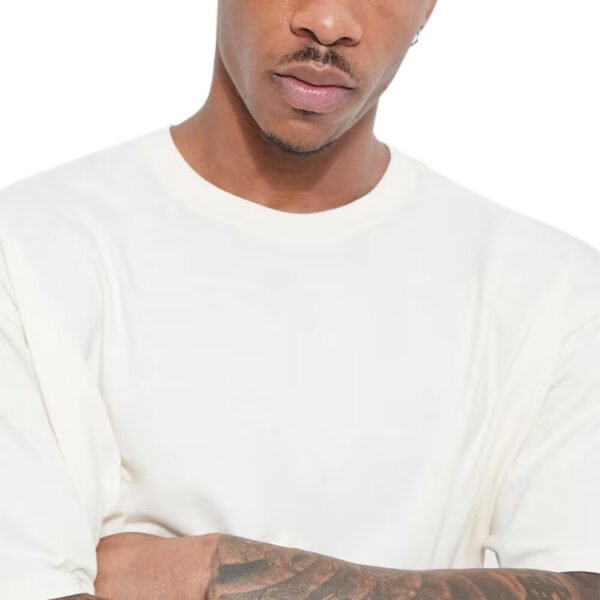
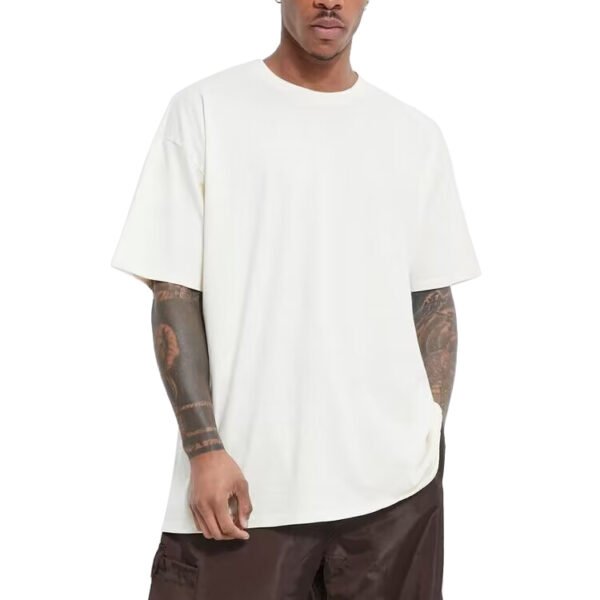



This custom men's oversize crew-neck T-shirt is developed around edge stability: the neckline must remain visually even while the relaxed body preserves an easy streetwear proportion. The white reference image emphasizes a clean collar and uninterrupted surface, making support selection a visible product-development decision.
Why Edge Stability Matters Here
An oversize T-shirt creates more visual space around the neckline, so a slight ripple or widening becomes easier to notice. The supplied white image shows a simple circular collar against a plain surface, giving buyers a clear benchmark for symmetry and controlled recovery.
Interlining should therefore be treated as a localized engineering choice rather than a blanket stiffening layer. Support may be evaluated at the neck seam, shoulder transition, or selected hems, while the body remains flexible enough to preserve the relaxed silhouette.
Reading the Supplied Visual Reference
The main image presents a close crop of a white crew-neck tee on a male model, with the collar sitting evenly around the base of the neck. The short sleeves and broad torso suggest that edge control must coexist with generous wearing ease.
Because the visible chest is unprinted in this reference, the surface offers a useful baseline for later artwork placement. Buyers can inspect whether collar support creates unwanted ridges, shadowing, or distortion once the intended graphic is introduced.
Support Mapping and Trade-Offs
A narrow, appropriately soft interlining can help prevent neckline collapse during handling, dressing, and repeated laundering, but excessive stiffness can create a raised collar or uncomfortable contact. The correct balance depends on fabric weight, seam allowance, stitch density, and the desired drape.
For this product, development should compare unsupported, partially supported, and fully supported edge options using identical measurements. The decision should record neckline opening, seam bulk, recovery after stretching, and the visual relationship between collar firmness and body volume.
Graphic Placement Implications
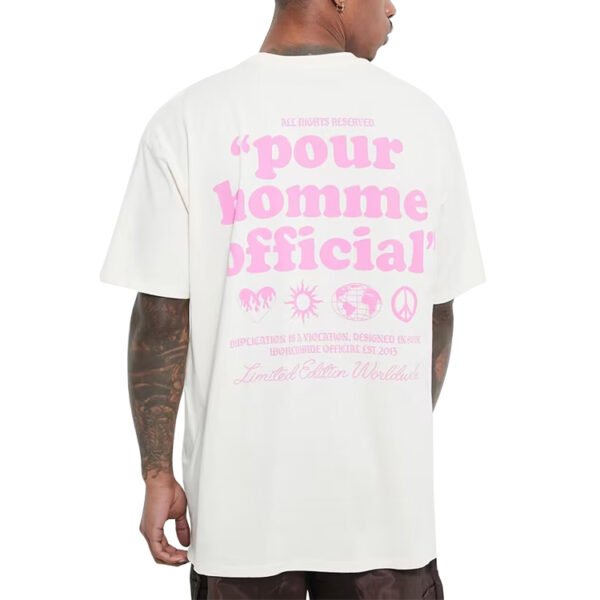
The source describes a custom-print graphic T-shirt, while the supplied main image shows a largely blank white front. That combination makes registration and clear space important: a stable neckline helps establish a repeatable reference point for artwork placement across production pieces.
Graphic scale should be checked against the oversize front panel rather than judged on a standard-fit block. Buyers should review collar-to-print distance, chest balance, and any interaction between print hand feel and nearby seam or interlining bulk.
VeeWen Development Workflow
VeeWen can convert this axis into a focused development checkpoint by locking the neckline pattern, seam construction, and support map before grading the oversize block. The first sample should isolate edge behavior, allowing corrections without confusing fit changes with material or artwork changes.
After the neckline is approved, the same measurement set can guide graphic placement, color confirmation, and production specifications. The commercial checkpoint is MOQ: 100 pieces per style, with final composition, trims, artwork, and tolerances documented before bulk approval.
Approval Checkpoint for Buyers
The buyer should approve the collar only when it appears circular from front and side views, recovers after gentle stretch, and does not overpower the relaxed body. Hand feel must remain appropriate for the intended streetwear positioning and expected wearing conditions.
A useful approval record should include the chosen support level, neckline measurements, seam allowance, stitch details, artwork position, and wash or care assumptions. If any point remains uncertain, mark it To Confirm instead of treating the visual sample as a verified performance result.
Buyer Questions
Is the cotton composition verified for this T-shirt?
The source wording states cotton, but no verified percentage or construction specification is supplied. VeeWen should confirm fiber content, fabric weight, and interlining compatibility during development.
Which edge should receive interlining first?
The neckline is the priority because it is clearly visible in the image. Shoulder transitions and hems can be reviewed afterward if sampling shows additional stabilization is necessary.
Will interlining make the oversize fit rigid?
It can if applied too broadly or selected too heavily. Localized support, comparative samples, and hand-feel review help preserve body drape while improving neckline control.
What is the minimum commercial quantity?
The commercial minimum is MOQ: 100 pieces per style. Final artwork, measurements, material references, trims, and approved construction details should be recorded before production planning.
Approve the Edge-Stability Sample
Send the intended artwork, size range, color direction, and neckline preference to begin a focused sample review. VeeWen will align the support map with the approved oversize block and MOQ: 100 pieces per style.


Reviews
There are no reviews yet.