
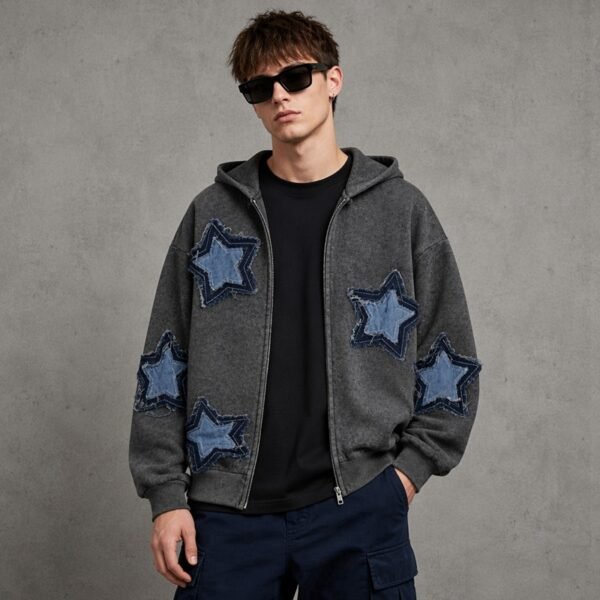


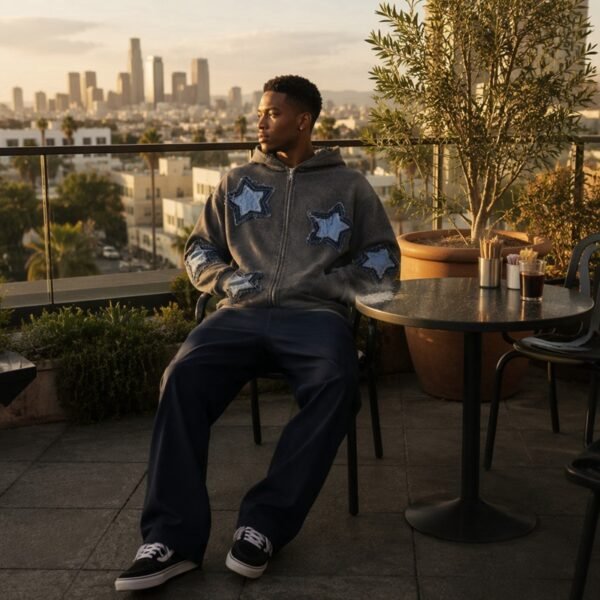

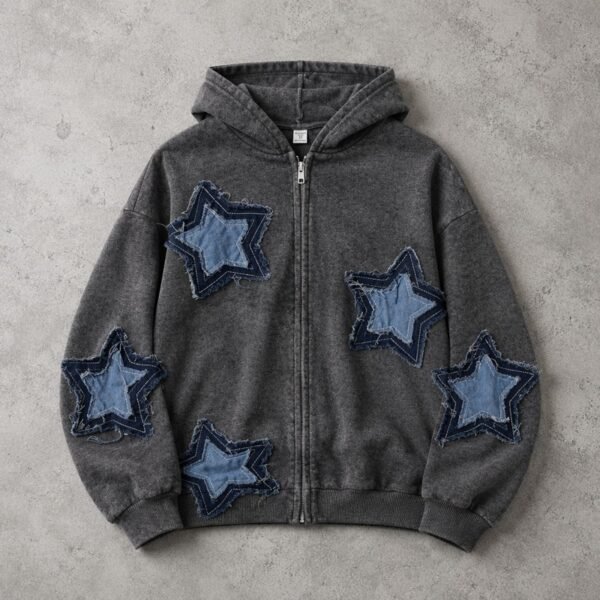
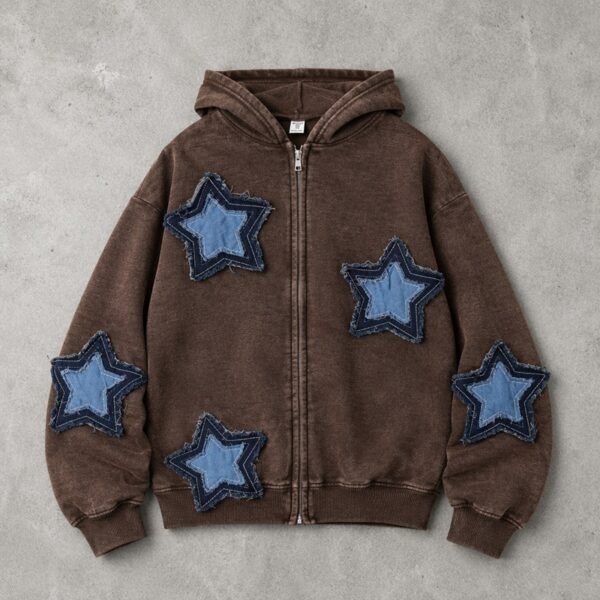







This zip hoodie is developed around a front-body balance problem: the zipper must open comfortably without splitting the visual field created by oversized star appliques. The supplied image supports a charcoal washed base, relaxed sleeve volume, and blue contrast motifs across the torso and arms.
Front Opening as a Graphic Boundary
The zipper is not only a closure; it becomes the central boundary between two applique fields. In the image, stars sit close to both sides of the opening, so excessive tape width or a low endpoint could crowd the graphics and weaken the intended front-body rhythm.
A controlled zipper length leaves enough uninterrupted fabric beneath the final tooth while retaining a clean path through the hood opening. VeeWen's development checkpoint should map the zipper line, hem rib, pocket area, and applique exclusion zones on one graded front pattern.
Applique Placement and Load Distribution
The image shows star motifs distributed across the left chest, right chest, and sleeves rather than concentrated in one panel. That distribution creates balance, but each applique also introduces local weight, stiffness, and stitch stress near shoulder, side, and sleeve seams.
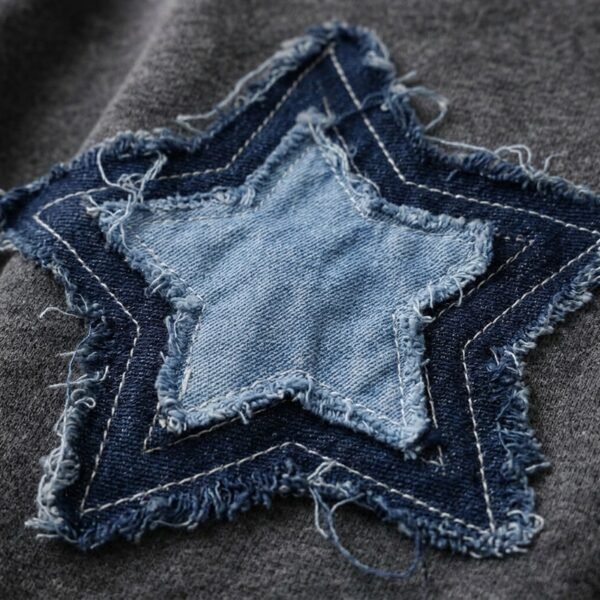
Pattern review should therefore separate decorative placement from seam engineering. Buyers should confirm whether the stars use a stable backing and whether frayed edges remain intentionally irregular after washing, especially where sleeve flexing repeatedly loads the applique perimeter.
Washed Ground, Controlled Contrast
The charcoal body appears intentionally weathered, while the blue stars remain legible through layered tonal contrast. This relationship depends on wash intensity, applique color, edge treatment, and thread visibility working together instead of being approved as isolated color swatches.
During VeeWen sampling, the wash recipe and graphic package should be reviewed on the same garment. A darker body can improve motif contrast but may reduce the vintage effect, while a stronger wash can soften seams, rib definition, and raw applique edges.
Relaxed Volume and Opening Function
Dropped shoulders, broad sleeves, and ribbed cuffs give the hoodie a relaxed silhouette visible in the supplied image. Those proportions increase the importance of zipper stability because a loose front can ripple or torque when the garment is worn open.
The fit checkpoint should test zipped and open states across the intended size range. Buyers should inspect hem alignment, hood lay, tape waviness, and pocket access, then decide whether the opening should remain fully functional or primarily frame the graphic front.
VeeWen Development Checkpoint
For this style, VeeWen's workflow should begin with a front technical map that locks zipper length, tape position, hem relationship, and star clearances before decorative sampling. That sequence directly addresses the assigned manufacturing axis instead of treating graphics as a late embellishment.
The approval sample should show the complete wash, zipper, rib, applique, and fray interaction on one garment. Buyers should mark the zipper endpoint and nearest motif edges explicitly, because those two measurements determine whether the finished front feels open, crowded, or deliberately framed.
Buyer Approval Criteria
The central decision is proportion: a longer opening improves ventilation and access, but it divides more of the graphic composition; a shorter opening protects the star field, but reduces opening range and may feel less versatile.
Approve the style only after reviewing the garment closed, partially open, and fully open. Confirm zipper length, applique scale, fray behavior, wash contrast, and size grading together, then release the specification with MOQ: 100 pieces per style.
Buyer Questions
Can the zipper length be adjusted during development?
Yes, zipper length can be developed with the front pattern, but the buyer must recheck applique clearances, pocket access, hem balance, and opening function before approval.
Are the star edges intended to remain frayed?
The image shows raw-looking frayed edges, but the final effect depends on applique construction and washing. Confirm the acceptable irregularity range through a signed approval sample.
What material information is currently verified?
The supplied evidence supports a washed sweatshirt-style body and denim-look appliques. Exact fiber composition, weight, stretch, backing, and care requirements remain To Confirm.
What is the commercial minimum for this style?
The commercial minimum is MOQ: 100 pieces per style. Final size ratios, color quantities, packaging, labeling, and production specifications should be confirmed before order placement.
Approve the Front-Balance Sample
Send the preferred zipper endpoint, applique artwork, wash reference, size range, and target color direction. VeeWen can then prepare a focused development review for MOQ: 100 pieces per style.


Reviews
There are no reviews yet.