


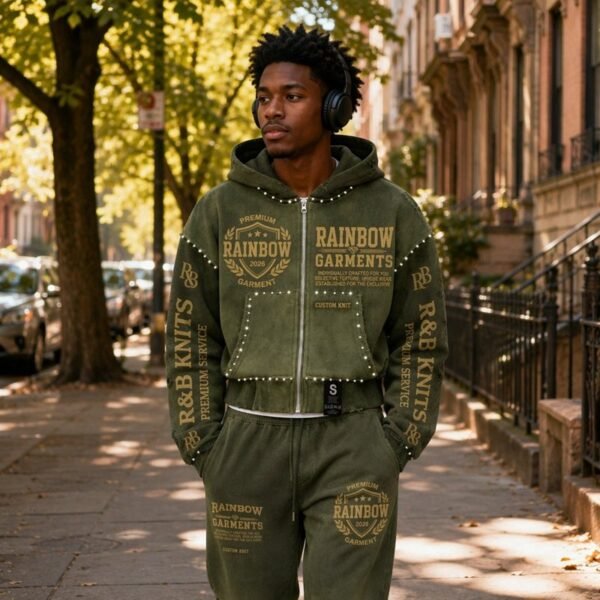

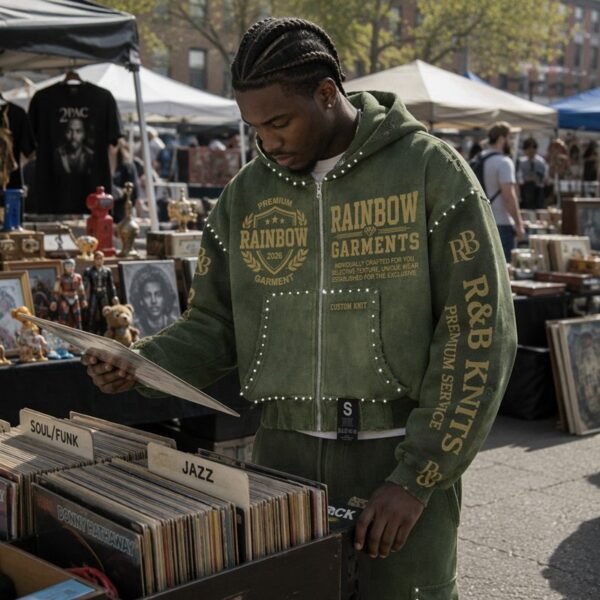



Develop this olive washed hoodie around panel alignment, because the supplied image combines a centered zipper, large graphics, and rhinestone lines that trace multiple seams. The approval target is coordinated placement after washing, ensuring decoration reinforces the garment architecture instead of exposing panel movement.
Why Panel Alignment Controls the Product
Panel alignment determines whether the zipper, graphics, pockets, and rhinestone paths read as one designed system. In the supplied image, the center front divides the artwork while decorative lines follow construction boundaries, so even modest sewing displacement can create visible imbalance.
A hoodie with fewer surface treatments might tolerate small shifts, but this direction concentrates attention at every junction. The cropped body, sleeve graphics, hood decoration, and hem accents make alignment a structural design requirement rather than a final embellishment check.
Evidence from the Supplied Main Image
The image shows an olive zip-front hoodie with a centered metal zipper, tan graphic artwork, and bright rhinestone rows along hood, sleeve, pocket, and hem areas. These observations support a coordinated placement brief, while exact print methods and material specifications remain To Confirm.
The visible garment also includes distressed-looking edges and a washed surface, which can alter perceived placement through shrinkage or tonal variation. Development should distinguish actual panel movement from visual wash character before changing the pattern or decoration artwork.
Build a Seam-Based Decoration Map
Map every graphic and rhinestone path from pattern pieces rather than positioning artwork on a flat body rectangle. The zipper center, shoulder seam, sleeve seam, pocket opening, hood edge, cuff, and hem should each receive measurable registration points before sampling begins.
This approach allows the technical team to identify whether a mismatch originates in cutting, sewing, zipper insertion, printing, or embellishment application. It also gives the buyer a clear approval language, replacing subjective impressions with visible landmarks across the complete garment.
Wash Movement and Decoration Risk
Washing can change panel dimensions unevenly, especially where seam density, zipper weight, pocket layers, and decoration create different restraint. The resulting shifts may move artwork away from the centerline or interrupt rhinestone continuity, even when each operation appears accurate before finishing.
The development sample should therefore be inspected after the intended wash route, not only on a freshly assembled shell. Check zipper straightness, graphic spacing, rhinestone gaps, sleeve balance, and hem relationship from both front-facing and angled views.
How VeeWen Can Develop This Direction
VeeWen's product-development workflow should sequence panel engineering before decoration approval: confirm the graded pattern, stabilize the zipper center, then place graphics and rhinestones from seam-referenced artwork. This product benefits from that order because decoration cannot compensate for a drifting construction foundation.
For buyer review, VeeWen can organize one visual board showing the pre-wash sample, washed sample, placement map, and correction notes. The approval should cover panel balance and decoration continuity together, keeping the final decision tied to the garment's actual architecture.
Commercial Checkpoint for Production Release
Production release should require agreement on the washed color appearance, zipper centerline, print boundaries, rhinestone spacing, and acceptable seam-to-artwork tolerance. Confirming these points protects the design intent without claiming unverified durability, composition, or performance characteristics.
For this product, the commercial minimum is MOQ: 100 pieces per style. Before that commitment, approve the final sample after washing and decoration, then retain the approved placement map as the inspection reference for bulk production.
Buyer Questions
Is this confirmed as a pullover hoodie?
The source category identifies a hoodie, while the supplied image visibly shows a centered front zipper. Confirm the final closure direction before locking the assigned product-type specification.
Why must graphics follow the pattern pieces?
Pattern-referenced placement accounts for zipper, sleeve, hood, pocket, cuff, and hem boundaries. Flat-body positioning can drift when panels are sewn, washed, or decorated separately.
What should the washed sample demonstrate?
It should demonstrate a centered zipper, balanced panels, continuous rhinestone paths, stable graphic registration, and acceptable olive wash appearance from multiple viewing angles.
What is VeeWen's minimum order?
The commercial minimum is MOQ: 100 pieces per style. Production should proceed only after approving the washed decorated sample and its seam-based placement reference.
Approve the Alignment Map
Share your artwork, measurement chart, wash direction, and embellishment intent with VeeWen. Approve the washed placement sample before releasing MOQ: 100 pieces per style for production.


Reviews
There are no reviews yet.