
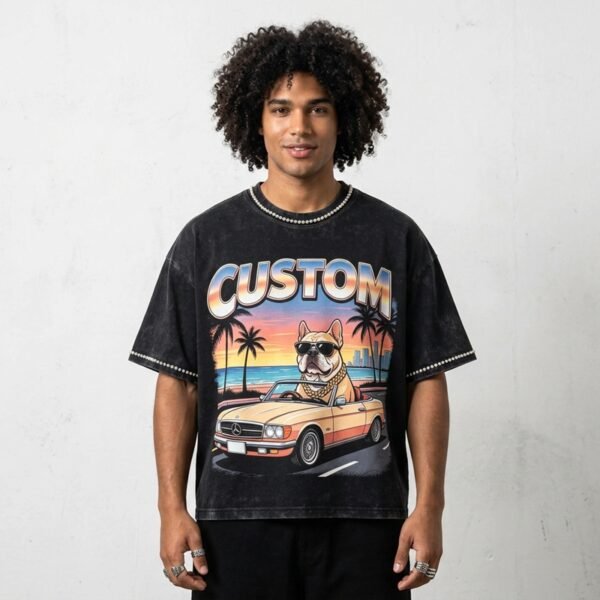


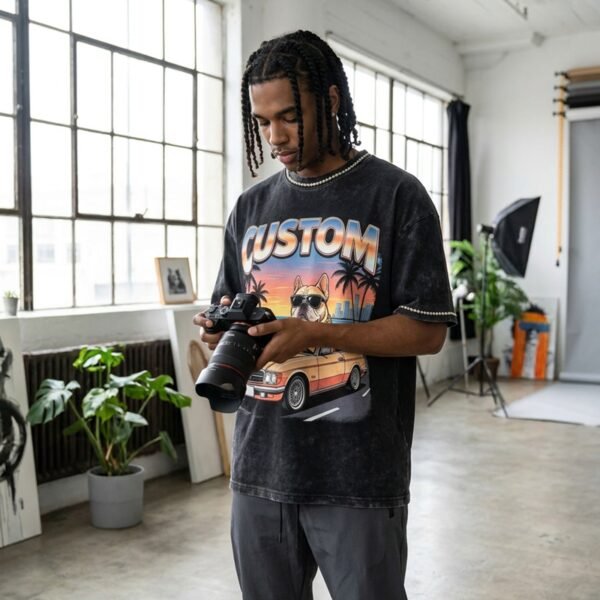

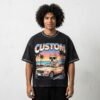





This oversized acid-washed T-shirt is developed around the wearer's experience at the neckline. The supplied image shows a broad crew collar, relaxed boxy proportions, and a prominent embellished graphic, so label position must stay comfortable, discreet, and stable as the washed surface changes through handling.
Why Label Placement Changes Comfort
A neck label sits where the collar already creates pressure and friction, so position and attachment directly affect comfort. The image shows a broad crew neckline, making even a small shift noticeable against the wearer's upper back and neck.
An oversized fit does not eliminate label problems because loose garments still move across the shoulders. A label that twists, lifts, or develops bulky edges can interrupt the relaxed experience and undermine the intentionally casual appearance of the garment.
Reading the Supplied T-Shirt Evidence
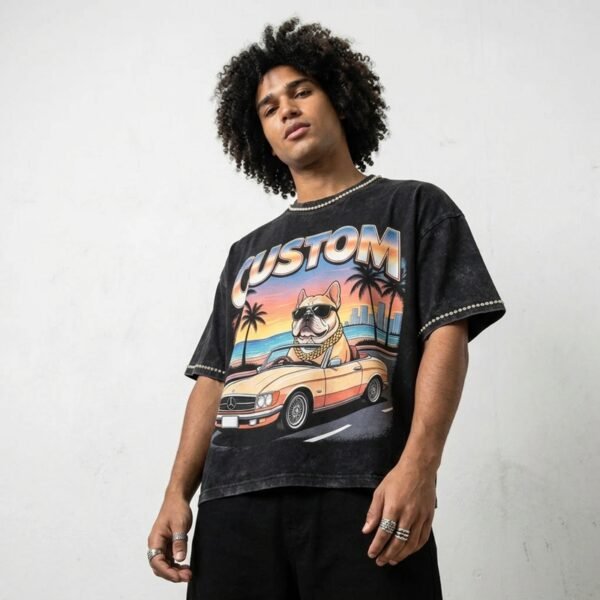
The main image shows a charcoal acid-washed surface, broad collar, relaxed sleeves, and a roomy boxy body. It also shows a large front graphic with bright dimensional accents, confirming a design where surface treatment and comfort must be developed together.
The visible image does not reveal the inside neck construction, label type, seam allowance, or wash recipe. Those unknowns should remain open technical fields until VeeWen reviews the fabric, collar rib, label artwork, and intended finishing method.
Choosing a Comfortable Label System
A printed neck mark can reduce bulk, while a sewn label may provide stronger branding presence but introduce edge friction. A woven label, transfer, or separate neck patch should be selected according to hand feel, durability expectations, and the buyer's visual priority.
Placement should be measured from the collar seam and centered consistently across sizes. The development sample should check whether the label remains flat during wear, avoids the collar's highest-pressure area, and stays visually discreet against the washed interior.
Wash and Surface-Treatment Trade-Offs
Acid washing can create tonal variation and soften the overall visual language, but it may also affect label contrast, seam appearance, and attachment stability. The label solution should therefore be reviewed after the intended wash or a representative development treatment.
A softer collar may improve comfort while becoming more vulnerable to stretching or rolling. A firmer collar can stabilize the neckline but feel less relaxed. The correct balance depends on the approved hand feel, collar dimensions, and the buyer's tolerance for post-wash change.
VeeWen Development Checkpoint
VeeWen's product-development workflow can isolate the neck label as a measured construction decision rather than an afterthought. The sample file should identify collar dimensions, label format, attachment position, stitch or print method, and the surface treatment used for evaluation.
During review, the buyer should wear or handle the sample through ordinary movement and inspect the inside neck directly. Confirm comfort, flatness, label visibility, collar recovery, and artwork balance before locking the technical package for production.
Bulk Approval and Wearer Feedback
Before bulk approval, compare label placement across the full size range because neckline proportions and shoulder width can change the perceived position. Confirm that the attachment remains centered, comfortable, and free from sharp or bulky edges in every approved size.
The final decision should also review graphic scale, embellishment security, acid-wash consistency, collar appearance, and care communication. MOQ: 100 pieces per style applies, while composition, GSM, performance, and exact wash results require confirmation.
Buyer Questions
Does the image show the label construction?
No. The supplied image shows the exterior neckline only. Confirm label format, attachment method, placement, and inside-neck comfort during sample development.
Why does an oversized T-shirt still need label testing?
Loose proportions do not prevent collar movement or friction. A poorly placed label can twist, rub, or add bulk as the garment shifts during wear.
Can the neck label be printed instead of sewn?
Potentially, depending on the approved fabric, wash treatment, durability expectation, and branding requirement. Compare printed and sewn options on representative development samples.
What is the minimum order quantity?
The commercial minimum is MOQ: 100 pieces per style. Ordering remains subject to approved fabric, wash, artwork, label, measurements, and construction specifications.
Approve the Comfort-Focused Neck Sample
Share the label artwork, collar measurements, and wash direction with VeeWen for development review. Approve the inside-neck comfort and post-treatment appearance before releasing the style for bulk production.


Reviews
There are no reviews yet.