










This long-sleeve plaid shirt is developed around a practical weight-control question: does the finished garment still feel balanced after the cracked chest print is cured, handled, and prepared for delivery? VeeWen can translate that approval into a repeatable development checkpoint.
Why Finished Weight Controls the Wear Experience
The plaid ground appears visually dense, but pre-process fabric weight alone cannot predict the delivered hand. Printing, curing, pressing, washing, and seam handling may change flexibility, surface compactness, and the way the shirt hangs on the body.
For this style, the buyer should judge weight while wearing the completed sample, not only by weighing greige or untreated cloth. The cracked graphic occupies a broad chest area, so excessive film build or heat exposure could make the front feel stiffer than the sleeves.
Reading the Plaid Construction
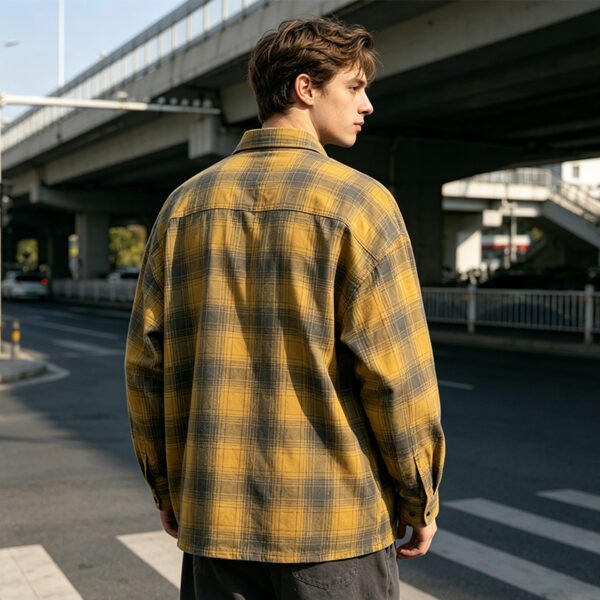
The image presents a yellow and grey plaid with intersecting lines that remain visible across the front, sleeves, and collar area. That continuity makes fabric alignment and cutting discipline important, because distorted checks can make the garment look uneven even when measurements are correct.
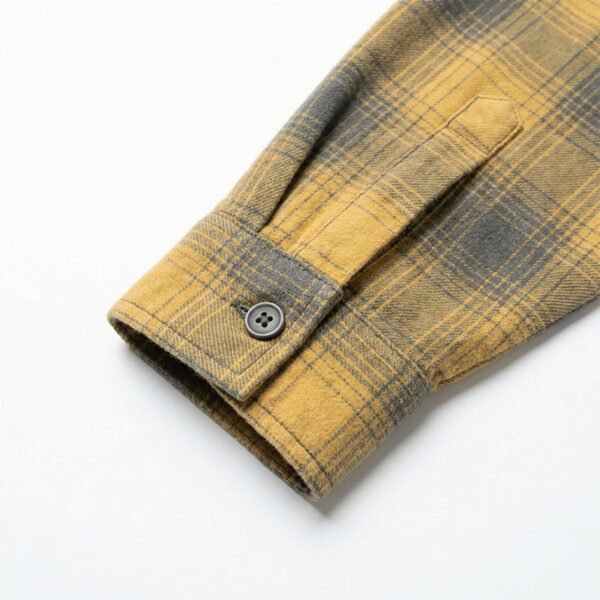
A button-front shirt also exposes the relationship between plaid scale and panel placement. During development, VeeWen should confirm whether the chosen fabric weight allows clean matching at the placket, shoulder, cuff, and pocket positions if pockets are added later.
Managing the Cracked Screen Print
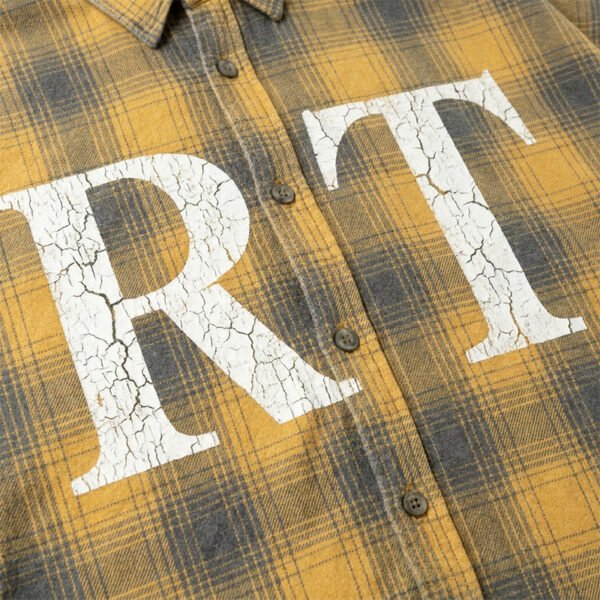
The chest artwork is light against the plaid and contains irregular fractured lines that communicate intentional age. The effect depends on controlled ink coverage and a believable crack pattern; too much opacity can flatten the plaid, while insufficient coverage can weaken legibility.
The graphic should therefore be evaluated for edge definition, registration, and hand feel after curing. A cracked appearance is not automatically a soft appearance, and a buyer should decide whether controlled texture or maximum flexibility is more important for the intended retail positioning.
Trade-Offs in Weight Selection
A heavier finished shirt can improve structure and make the plaid read more premium, but it may reduce ease through the arms and increase the visual authority of the printed chest. A lighter option can improve movement, yet may make the front print feel disproportionately dominant.
The correct decision depends on the balance between shirt-like stability and long-sleeve comfort. VeeWen should present the selected weight alongside the print sample, because the same fabric can feel materially different once artwork, curing, pressing, and any requested wash process are included.
VeeWen Development Checkpoint
VeeWen's workflow should record fabric weight at three moments: before cutting, after the garment is assembled, and after the approved print and finishing sequence. This creates a product-specific evidence trail for separating cloth selection issues from process-driven changes.
The approval sample should be reviewed flat and on-body, with attention to front drape, sleeve movement, button alignment, and print flexibility. Once the buyer signs the finished-GSM target and artwork hand feel, those criteria can guide the size set and production specification.
Approval Before Production Planning
The buyer's checkpoint is a combined fabric-and-graphic approval rather than a fabric approval in isolation. Confirm the finished weight, plaid appearance, chest-print coverage, crack scale, and sleeve comfort on the same completed sample before releasing grading or bulk planning.
If the sample feels too rigid, the remedy may involve fabric weight, ink deposit, curing conditions, or finishing sequence rather than one isolated change. VeeWen should document the selected route so later adjustments preserve the approved visual character and commercial intent.
Buyer Questions
Is the fabric composition confirmed?
No. The supplied evidence shows appearance and construction only; fiber composition, fabric specification, and finished GSM require buyer confirmation during development.
Why approve finished GSM instead of fabric GSM alone?
Printing and finishing can change hand, drape, and density. Finished-GSM approval evaluates the delivered garment after the exact production sequence.
Can the cracked artwork be adjusted?
Yes, artwork scale, fracture density, placement, and ink appearance can be reviewed during sampling, subject to the selected decoration process.
What is the commercial minimum?
The exact commercial minimum for this VeeWen style is MOQ: 100 pieces per style, with final specifications confirmed before production planning.
Approve the Finished-Weight Direction
Send the intended fabric reference, artwork file, target hand feel, and size range to VeeWen for a sample review centered on finished GSM, plaid balance, and print flexibility.


Reviews
There are no reviews yet.