


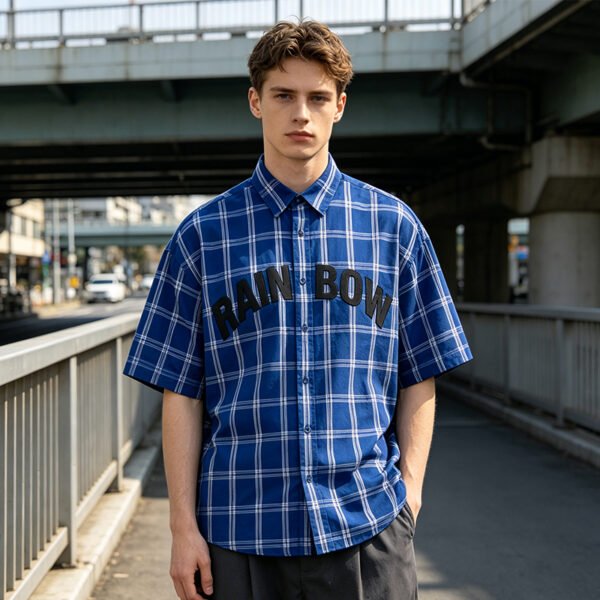


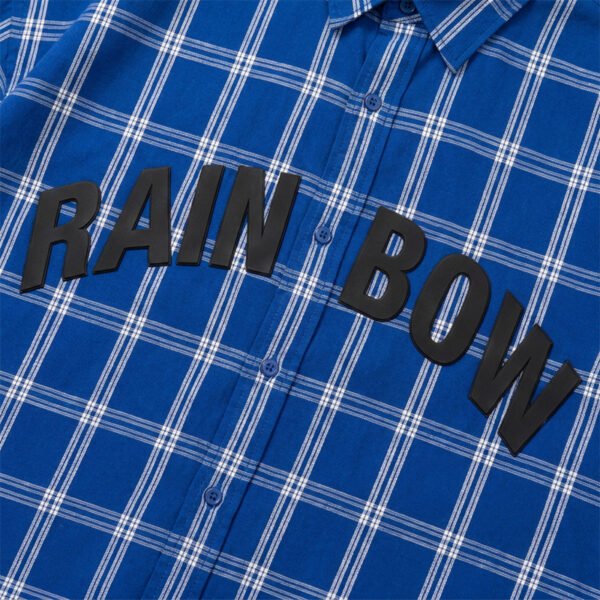






Develop this custom plaid shirt around a controlled volume decision: keep the woven body flat, or introduce mapped light fill for structured streetwear shape. The supplied image establishes loose boxy proportions, blue grid alignment, short sleeves, a button front, curved hem, and raised chest graphic placement.
Volume Mapping Across a Plaid Body
The image reads as a relaxed shirt because the body extends visibly away from the torso, while the straight side fall and curved hem keep that volume wearable. If fill is introduced, distribution should support the silhouette rather than create isolated bulges.
A development pattern can divide front, back, sleeve, and yoke zones, then assign fill levels by panel. The plaid supplies practical alignment references, so uneven loft, shifting seam allowance, or interrupted checks should be easy to identify during sample review.
Plaid Alignment Becomes the Control Grid
The blue base carries repeated white horizontal and vertical lines, making grain, panel matching, and placket centering visually consequential. Any quilt or fill treatment must respect those lines because distortion can make the shirt appear twisted even when measurements remain correct.
For the first sample, VeeWen's team can mark matching points at the collar, placket, side seams, sleeve joins, and hem. Those points create a shared approval language for checking whether internal volume changes alter the intended plaid rhythm across connected panels.
Graphic Placement and Surface Balance
The supplied image shows a dark raised chest graphic crossing the plaid near the upper front, creating a concentrated visual weight. A filled area behind that placement may change handfeel, print relief, edge definition, or the graphic's apparent scale.
The buyer should therefore approve graphic placement after the chosen fill map is physically sampled. Testing the artwork on the actual panel arrangement will reveal whether the chest treatment remains legible, centered, and proportionate against the enlarged boxy front.
Sleeve and Armhole Distribution
Short sleeves give this style a clear streetwear profile, but they also limit tolerance for excess internal material around the armhole. Overfilled sleeve caps can restrict movement, while underfilled shoulders may make the body look heavier than the upper frame.
A practical sample review should compare sleeve opening, armhole mobility, shoulder balance, and side profile together. The requested fit can remain loose without treating every panel identically, because selective distribution is the mechanism that protects comfort and silhouette.
Workflow Checkpoint for VeeWen Development
VeeWen can translate the supplied visual into a development brief that separates confirmed features from decisions still open: woven cotton reference, plaid direction, raised chest graphic, boxy fit, and whether any fill is actually required.
The next checkpoint is a construction sample with a documented panel map, not a generic approval garment. The buyer should review loft consistency, check matching, graphic behavior, sleeve mobility, and hem fall before authorizing the final specification package.
Trade-Offs Before Production Approval
A flat woven construction preserves breathability, simpler handling, and the clean drape visible in the image. Light fill could add body and seasonal presence, but it may increase thickness, affect pressing, complicate plaid matching, and change the shirt's movement.
Approve the fill route only if the added structure supports the commercial styling brief. Otherwise, retain the flat body and use pattern balance, fabric selection, and graphic placement to achieve presence without introducing unnecessary internal distribution risk.
Buyer Questions
Is this shirt confirmed to contain quilted or filled panels?
No. The supplied image presents a flat-looking woven shirt; quilting or fill remains a development option requiring explicit buyer approval and sample verification.
What material information is currently verified?
The source wording references woven cotton fabric, but no composition percentage, fabric weight, finish specification, or performance claim is verified from the supplied evidence.
How should plaid matching be approved?
Review collar, placket, side seam, sleeve join, and hem alignment on the actual sample before approving the fill map or final production specification.
What is the minimum commercial quantity?
MOQ: 100 pieces per style. Final material, artwork, construction, and packaging requirements should be confirmed before commercial order acceptance.
Approve the Volume Direction
Send the target season, preferred flat or filled construction, artwork file, size range, and plaid reference so VeeWen can prepare a focused sample brief.


Reviews
There are no reviews yet.