
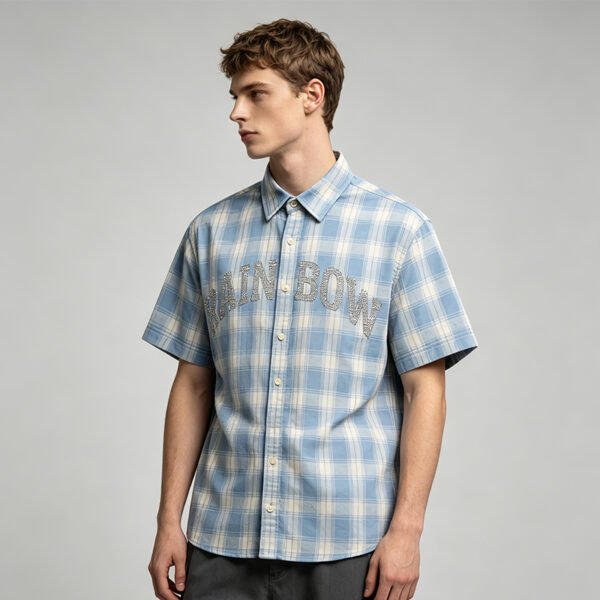
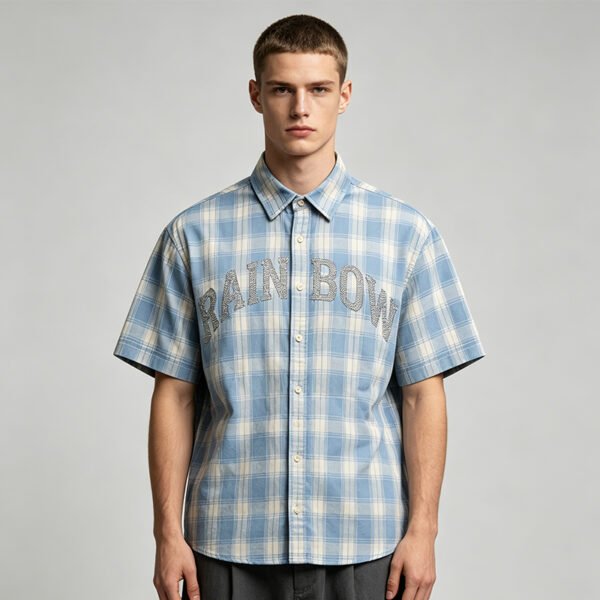
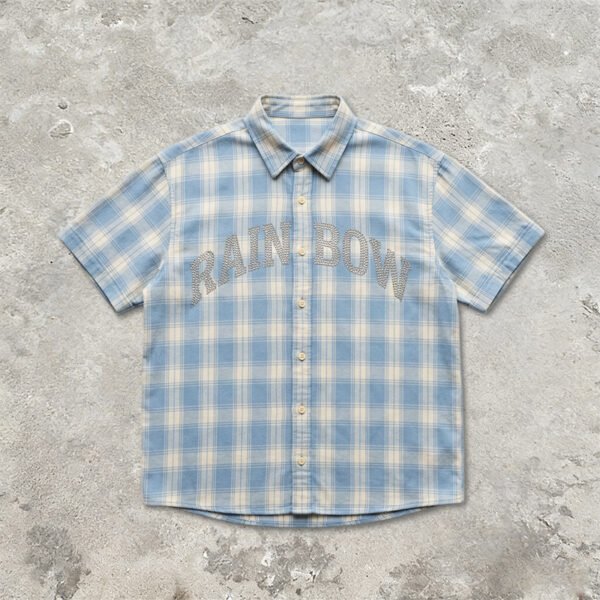





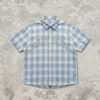
This custom short-sleeve shirt combines a relaxed boxy proportion with a highly visible rhinestone graphic over light plaid shirting. Its development challenge is structural coordination: channels, eyelets, and reinforcement must carry attachment stress without interrupting button spacing, plaid alignment, or front-panel drape.
Plaid Alignment Establishes the Control Grid
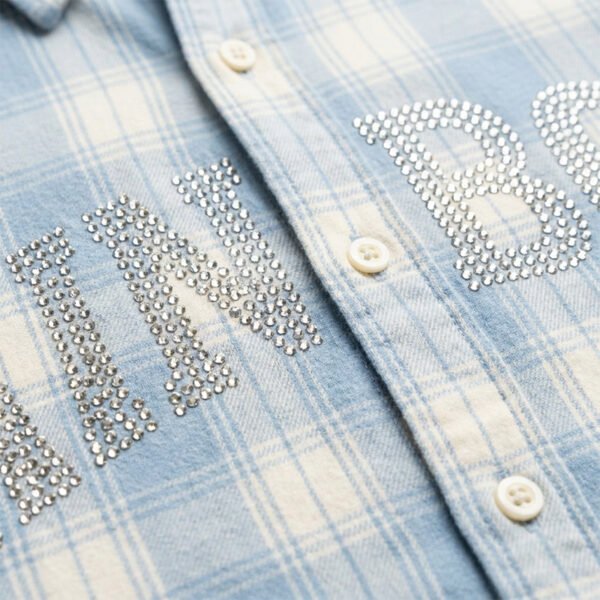
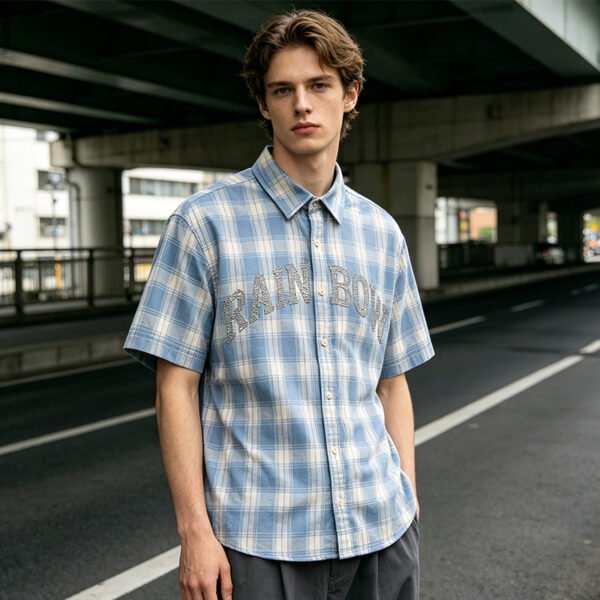
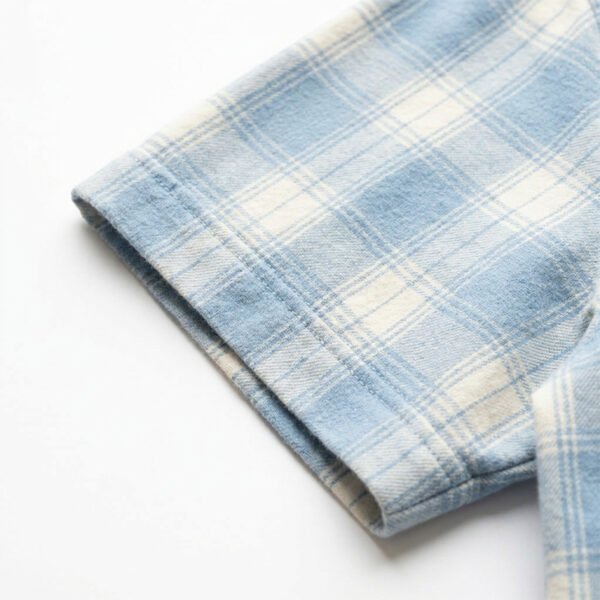
The supplied close-up shows blue and cream plaid lines continuing across the shirt front, while the placket creates a strong vertical interruption. This grid gives production a measurable reference for artwork placement, button spacing, and channel routing before embellishment begins.
A development sample should document the plaid relationship at the center front, pocket or panel boundaries, sleeve joins, and side seams. VeeWen's workflow can use those checkpoints to distinguish intentional graphic overlap from accidental pattern drift during cutting and assembly.
Rhinestone Weight Creates Localized Stress
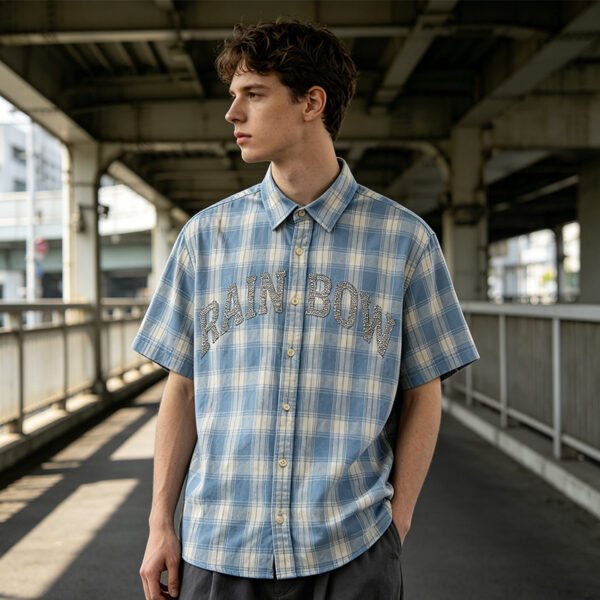
The image shows dense silver rhinestones forming broad, irregular lettering rather than a small isolated motif. Concentrated attachment weight can pull the shirting, especially where artwork approaches a placket, channel, eyelet, or other interrupted construction zone.
The buyer should identify the graphic's highest-density areas and define acceptable drape after application. VeeWen can test placement on the intended panel, then review distortion under buttoning and normal handling before approving the artwork as a production-ready component.
Channels Need a Reinforcement Map
The assigned construction axis centers on drawcords, eyelets, and channels, although the supplied close-up does not visibly show those features. They should therefore be treated as development variables requiring confirmation, not assumed details copied from the source title.
If channels or eyelets are added to the custom version, their paths should be mapped against rhinestone fields and plaid intersections. VeeWen can establish reinforcement patches, stitch boundaries, and clearance zones so functional details do not buckle the embellished front.
Eyelets Must Respect the Embellished Surface
Eyelets concentrate force around small openings, while rhinestones add rigidity and weight nearby. Placing both too closely can create puckering, cracked attachment areas, or a visibly uneven surface when the wearer moves or opens the shirt.
Approve an eyelet clearance rule during sampling, using the actual embellishment size and attachment method. VeeWen's review should inspect front appearance, reverse reinforcement, channel entry, and button operation together, because each condition affects the others.
Boxy Fit Changes Stress Distribution
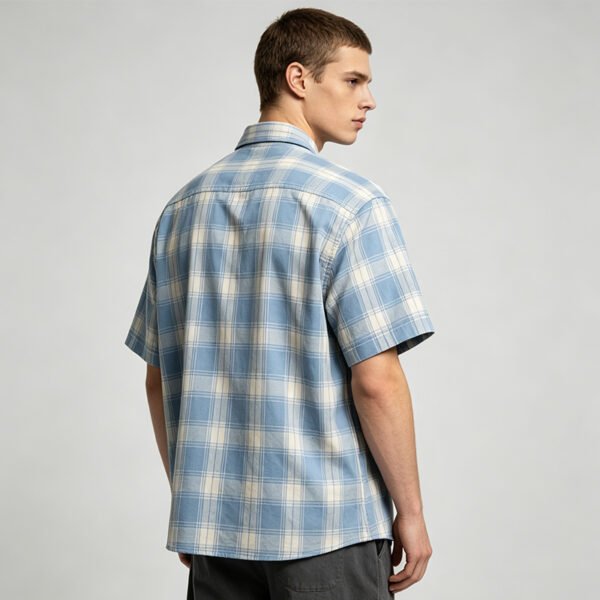
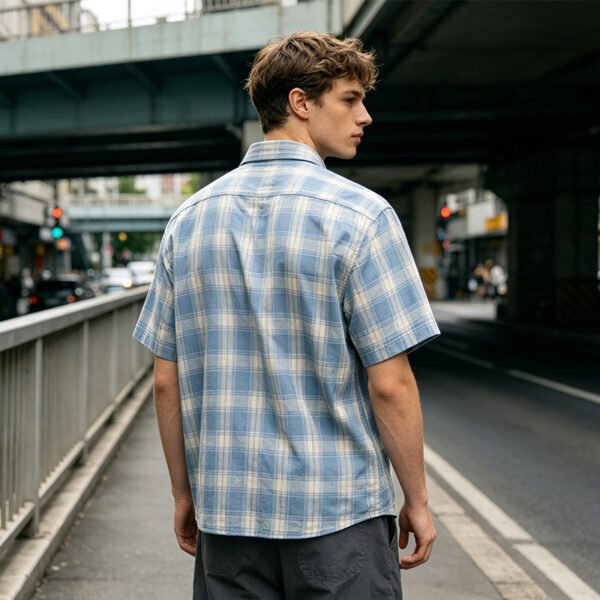
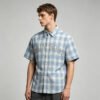
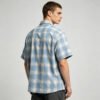
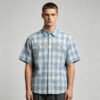
A loose boxy shirt distributes volume across a broader front and back than a fitted style, but its relaxed drape makes surface distortion more noticeable. Heavy lettering can cause the front panel to hang differently from the sleeves or unembellished back.
The buyer should assess the shirt on a form and laid flat, comparing side seams, hem balance, sleeve opening, and center front. VeeWen can preserve the intended boxy proportion by grading after the construction and embellishment decisions are jointly approved.
Release Artwork With Construction Approval
The final checkpoint is a combined review of appearance and mechanics, not a graphic-only signoff. Confirm rhinestone coverage, plaid alignment, button spacing, channel routing, eyelet reinforcement, and front-panel recovery on the same approved sample.
VeeWen's product-development workflow should record the artwork file, placement measurements, reinforcement map, and visual tolerances before production release. The style can then proceed at MOQ: 100 pieces per style once the buyer accepts the complete construction package.
Buyer Questions
Are drawcords and eyelets already confirmed on this shirt?
No. The supplied image shows plaid, rhinestones, and buttons, while drawcord, eyelet, and channel details remain technical development variables requiring buyer confirmation.
How should rhinestone placement be approved?
Approve artwork density, clearance from placket and channels, surface drape, reverse reinforcement, and button operation using one fully constructed embellished sample.
Can the boxy fit be graded after embellishment?
Yes, but grading should follow construction and artwork approval so added weight, panel distortion, and channel placement are reflected in final proportions.
What is the minimum order quantity?
The commercial minimum is MOQ: 100 pieces per style. Artwork, reinforcement, grading, and embellishment tolerances must be approved before production release.
Approve the Embellishment and Reinforcement Map
Share your plaid reference, rhinestone artwork, channel concept, eyelet positions, size range, and drape expectations. VeeWen can coordinate the construction sample and embellished approval around one technical review.


Reviews
There are no reviews yet.