
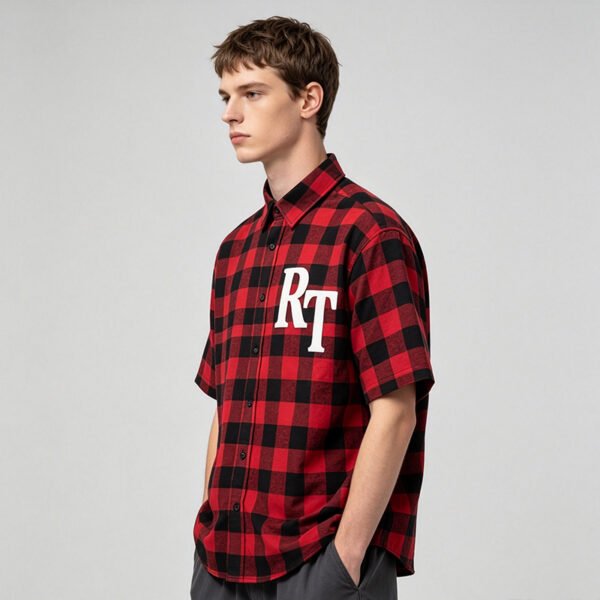
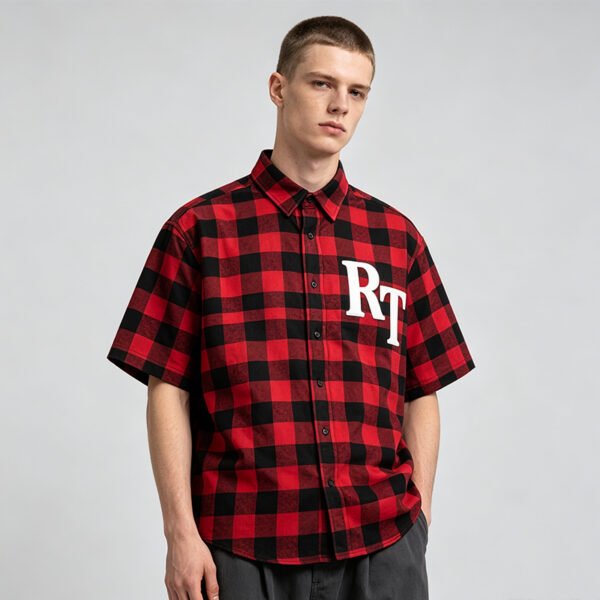

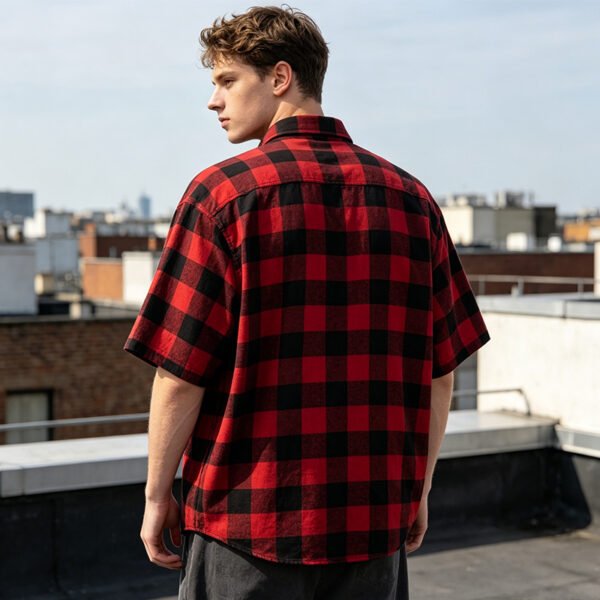
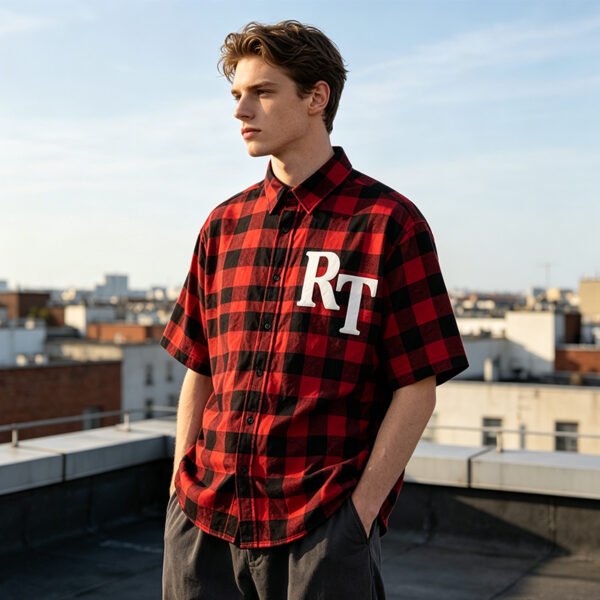
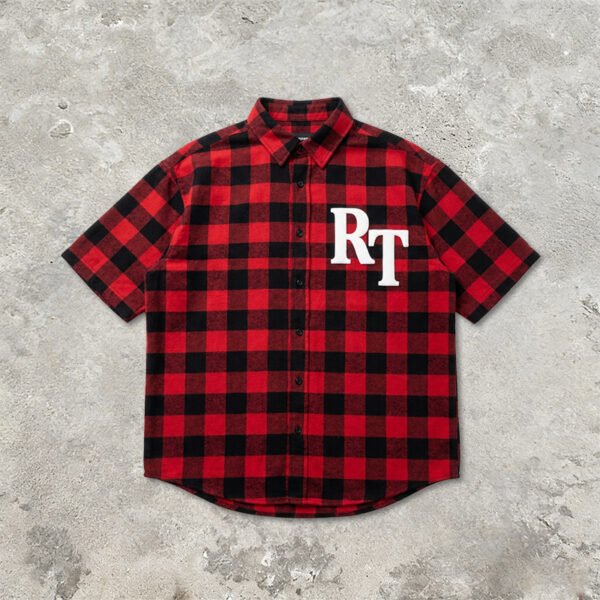
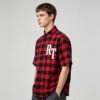
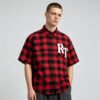




This shirt is defined by disciplined plaid registration rather than decoration alone. Red and black blocks create repeated visual checkpoints across the collar, placket, and body, while the raised print adds another dimensional layer. VeeWen development should therefore prioritize seam accuracy before approving artwork scale or bulk production.
Why Plaid Registration Controls Perceived Value
High-contrast plaid exposes every interruption in the pattern. When collar points, front placket edges, and shoulder joins meet accurately, the shirt reads intentional and structured; when blocks drift, the same boldness can look improvised. Registration is therefore a primary value signal for buyers.
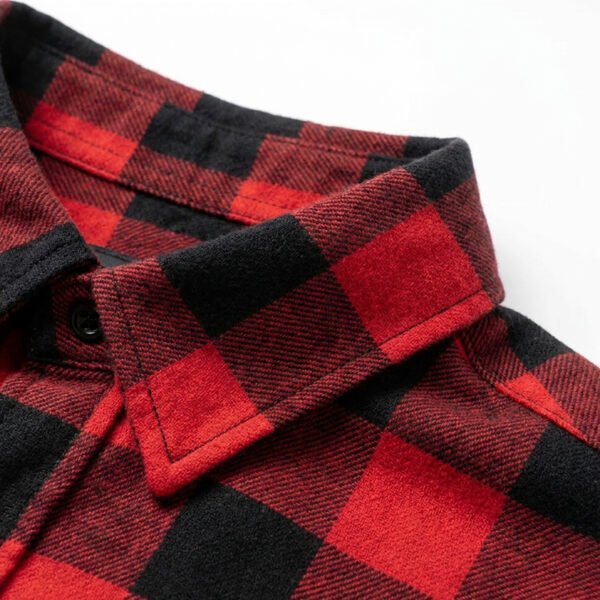
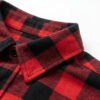
The supplied close-up shows multiple red and black blocks converging around the folded collar and button area. Those intersections create practical inspection points for development, allowing the buyer to judge whether pattern placement survives layering, pressing, and the final sewing sequence.
Collar and Placket Alignment
The collar is not a simple flat edge because its upper and lower layers overlap the plaid field. The development sample should verify matching at the collar stand, collar point, front edge, and button line, with seam allowance managed so visible blocks remain balanced.
A dark button appears beside layered red and black fabric in the supplied image, making the placket a particularly visible checkpoint. VeeWen should document the intended center line and reference block before cutting, then inspect both sides for mirrored visual weight.
Cutting Logic for Repeated Blocks
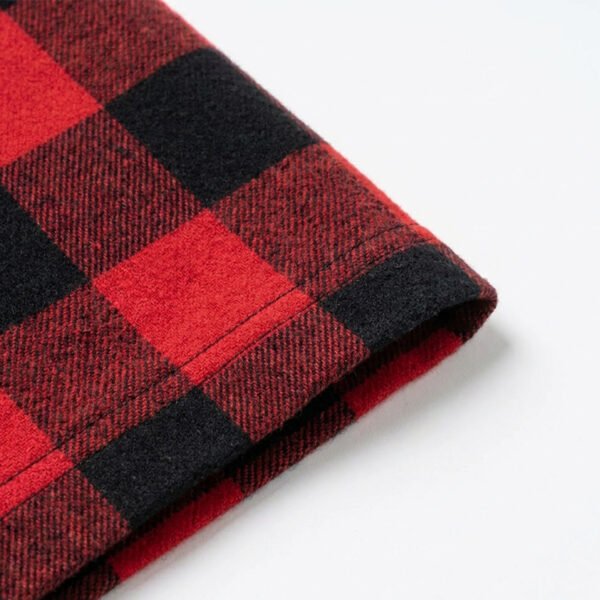
Plaid cutting requires a defined repeat, grain direction, and matching rule before panels reach the sewing line. The buyer should approve whether the design prioritizes horizontal continuity, vertical continuity, or balanced block placement where those goals cannot coexist at every seam.
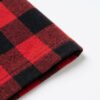
Because the image presents a dense repeating pattern, a cutting marker should identify prominent red squares and black intersections rather than treating the fabric as anonymous yardage. That decision helps protect visual consistency across front panels, sleeves, collar components, and any pocket additions.
Puff Print as a Secondary Alignment Test
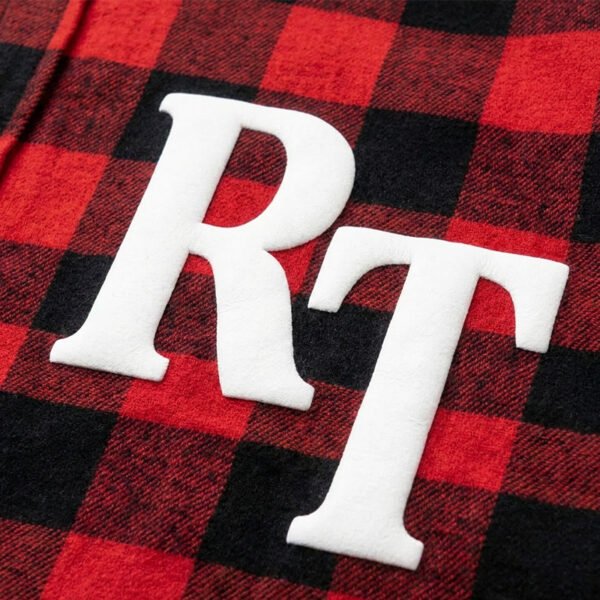
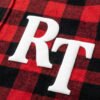
Raised puff print changes the surface profile and can compete visually with plaid intersections. Artwork should be positioned after the seam map is fixed, ensuring the print does not obscure a critical registration point or amplify an unavoidable mismatch near the front body.
The source wording identifies puff print, while the supplied image visibly confirms a dimensional plaid surface and structured collar. Print height, footprint, curing behavior, and placement remain development items, because each can influence how cleanly the finished shirt presents.
VeeWen Development Workflow Checkpoint
VeeWen should begin with a measured plaid repeat map, panel matching notes, and a collar-to-placket alignment diagram. The first sample then needs a front-facing review under consistent lighting, followed by corrections to marker placement, seam allowances, or assembly order.
For approval, the buyer should inspect the sample on a flat table and on a body form. Confirm the collar points, button line, shoulder joins, and side seams before releasing the style, then separately approve puff-print artwork and production tolerances.
Trade-Offs Before Bulk Approval
Strict pattern matching can increase fabric consumption because panels may require repositioning within the repeat. That trade-off should be evaluated against the commercial importance of uninterrupted visual lines, especially when the garment uses a relaxed silhouette with broad front surfaces.
Overly rigid matching can also limit placement flexibility for size grading or alternate colorways. Buyers should define which seams are mandatory matches and which may use a controlled offset, preserving manufacturing practicality without weakening the shirt's central visual argument.
Buyer Questions
What should be checked first on the development sample?
Check collar points, front placket, shoulder joins, and side seams first, because those high-contrast intersections reveal registration errors most quickly.
Is the cotton composition verified?
No. The supplied title references a cotton blend, but exact fiber percentages, fabric weight, and finished handfeel remain To Confirm during development.
Can the plaid be developed in another colorway?
Yes, subject to repeat mapping and approval. Any alternate colorway should preserve clearly defined registration priorities before artwork and grading are finalized.
What is the minimum commercial quantity?
The commercial minimum is MOQ: 100 pieces per style. Final approval should cover colorway, measurements, artwork, and documented seam-matching requirements.
Approve the Plaid Alignment Brief
Send the preferred plaid repeat, collar measurements, artwork file, and target size range. VeeWen can then prepare a development checkpoint centered on registration before commercial sampling proceeds.


Reviews
There are no reviews yet.