
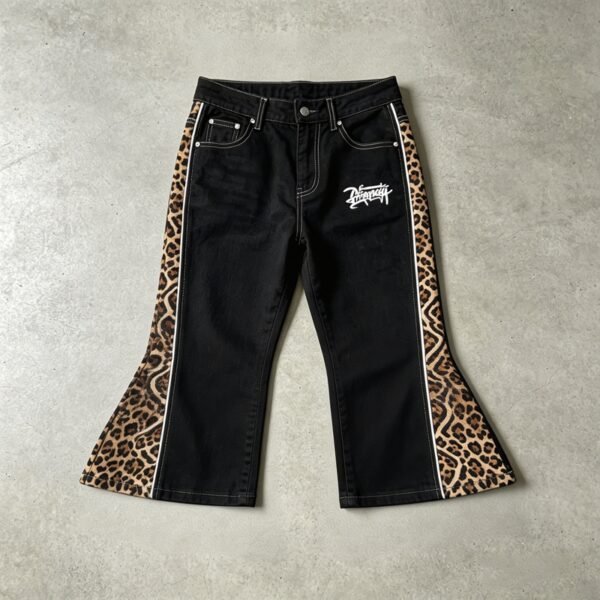

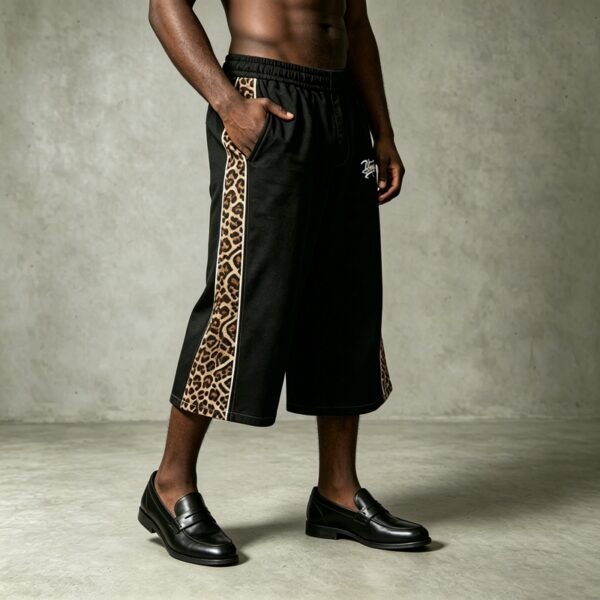
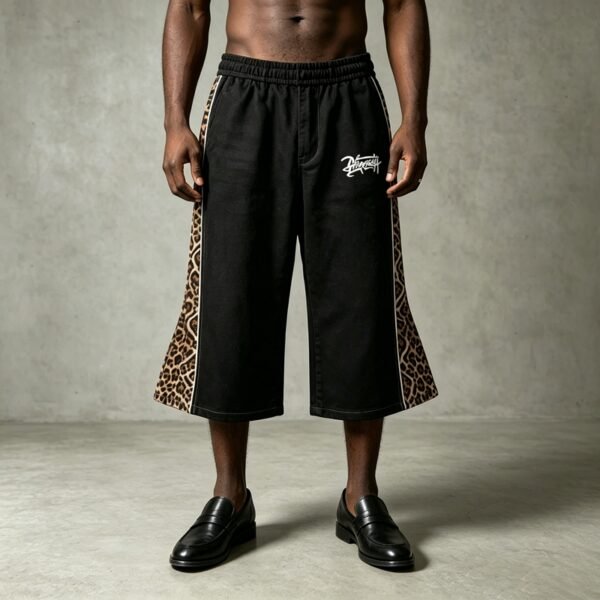
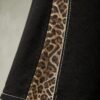

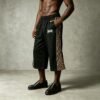
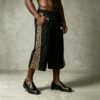
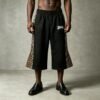
These black denim capri jeans use leopard side panels to create a flare that expands from a clean, high-waisted foundation. The key development issue is seam rotation after laundering: if the inserts twist inward, the garment loses both balance and its intended directional contrast.
Spirality Can Turn the Flare Inward
The leopard panels are designed to face outward as they widen toward the hem. Laundering can release uneven tensions in denim, however, causing side seams to rotate and pulling the inserts toward the front or back of each leg.
That rotation would change the apparent flare width even when the pattern measurements remain correct. Development should compare left and right seam angles before and after laundering, with the panel's outer edge used as the primary visual checkpoint.
Grain Alignment Supports Panel Balance
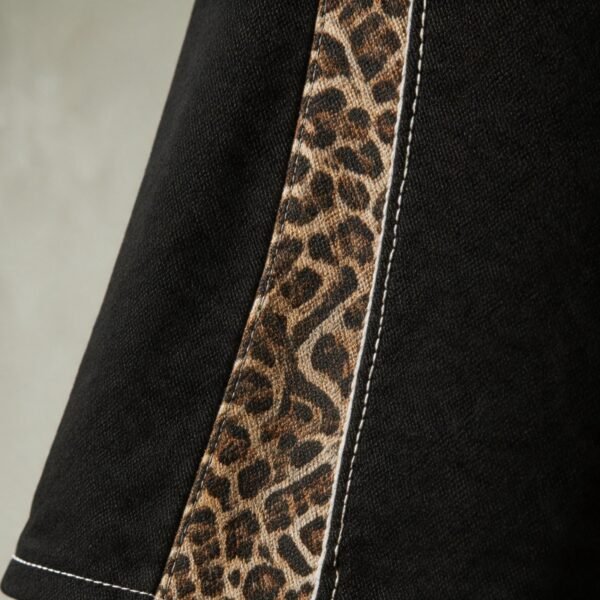
A printed leopard insert has a strong directional presence, while the black denim body provides a quiet frame. Off-grain cutting or inconsistent seam allowance can make one panel appear fuller, creating imbalance that becomes more obvious at the cropped hem.
The image shows both side panels expanding in a comparable manner from the upper leg downward. VeeWen's marker review should record panel grain, matching points, and flare opening so laundering tests measure actual construction behavior rather than isolated fabric change.
Seam Engineering Meets Contrast Stitching
Bright contrast stitching outlines the pockets, fly, and leg seams, making any post-wash displacement easy to see. Stitch tension, seam allowance, and joining order should be coordinated so decorative lines do not amplify twisting at the side-panel connection.
The structured front includes a button fly and high waist, which can stabilize the upper body while leaving the lower inserts more exposed to movement. Buyers should inspect seam tracking from waistband through hem, especially where black denim meets patterned material.
Cropped Hems Reveal Rotation Quickly
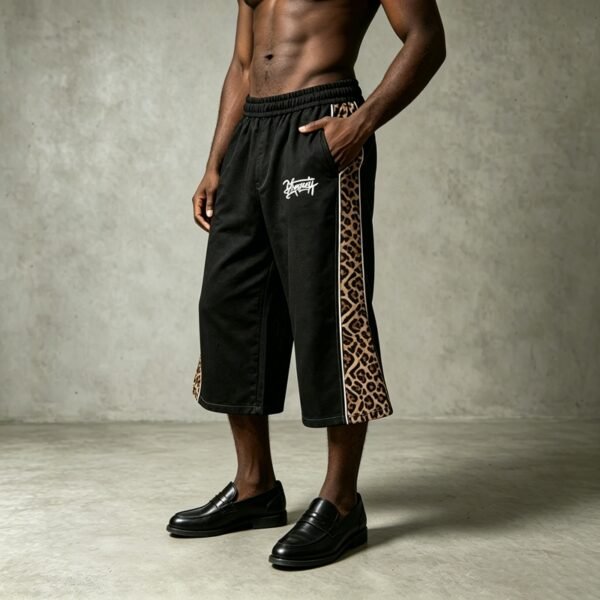
A cropped flare ends above the ankle, so the hem orientation remains highly visible in product photography and on-body styling. If one side seam spirals, the leopard panel may present unevenly, making the legs look mismatched despite identical hem measurements.
The supplied image shows cleanly separated flare boundaries and a deliberate cropped proportion. Approval should require paired-leg inspection on a flat surface and a fit model, checking panel exposure, hem level, and outward flare after the agreed laundering simulation.
Workflow Checkpoint for VeeWen
VeeWen's workflow should begin with a seam-and-panel prototype rather than treating laundering as a late finishing decision. The pattern team can mark grain lines, seam balance points, and flare spread before the first assembled sample is washed.
The next checkpoint is a matched prewash and postwash review using the same measurements and viewing angles. The buyer should approve the construction only when side seams remain visually controlled and leopard panels retain comparable outward exposure.
Trade-Offs Before Production Release
More stabilizing structure can reduce spirality, but it may make the side-panel junction feel firmer and limit the soft movement expected from denim. A lighter construction may improve comfort while increasing sensitivity to laundering and wear.
A conservative flare protects consistency but reduces the dramatic contrast created by the leopard inserts. The buyer should select the final balance after reviewing seam angle, hand feel, panel visibility, cropped length, and laundering appearance together.
Buyer Questions
How can side-seam spirality be evaluated?
Compare marked seam angles and panel exposure before and after the agreed laundering simulation, then review both legs flat and on-body for rotation or imbalance.
Can the leopard panel width change?
Yes, the panel can be redrawn, but widening it increases visual flare and makes grain alignment, seam rotation, and hem balance more consequential.
Is stretch denim required?
Not confirmed from the image. The final fiber blend and stretch level should follow the approved fit, recovery expectations, hand feel, and laundering review.
What is the minimum order?
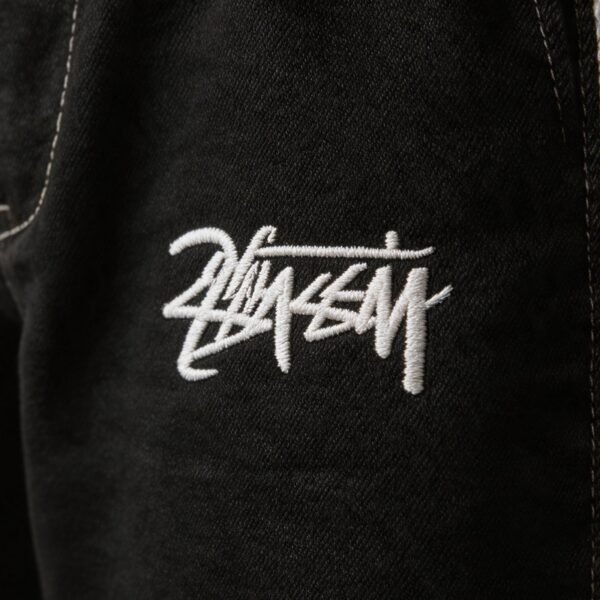
The commercial minimum is MOQ: 100 pieces per style, subject to approved denim, panel construction, embroidery, and laundering specifications before production planning begins.
Approve the Laundered Panel Balance
Share the target rise, flare proportion, wash direction, and panel artwork. VeeWen can prepare a grain-marked prototype and paired laundering review for your construction approval.



Reviews
There are no reviews yet.