
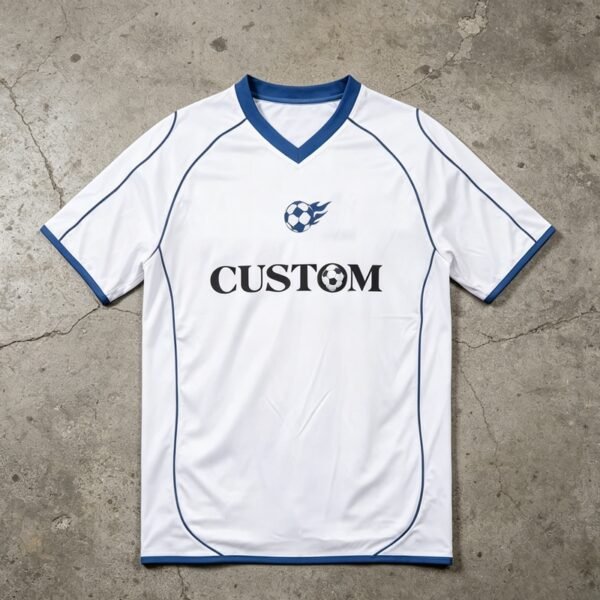
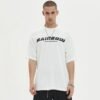



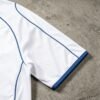

This custom oversized sports jersey T-shirt is best developed as a stress-management exercise, not merely a printed top. Its broad shoulder, extended sleeve, and relaxed body create several movement junctions where carefully placed bartacks can protect seams while keeping the intended drape and graphic balance intact.
Silhouette Creates a Deliberate Load Pattern
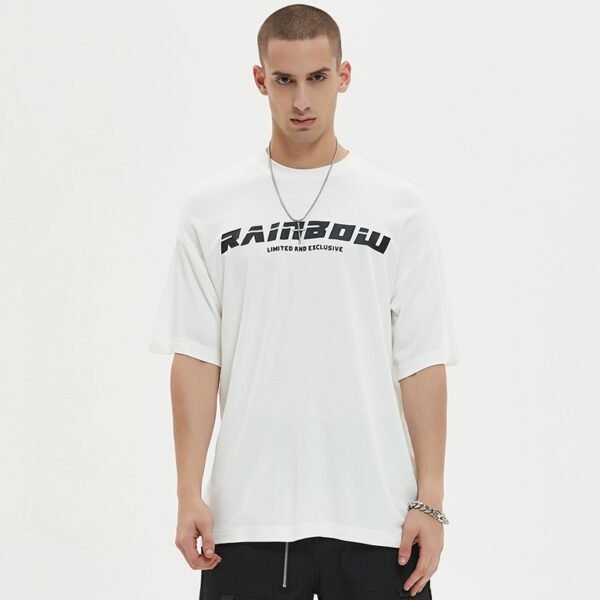
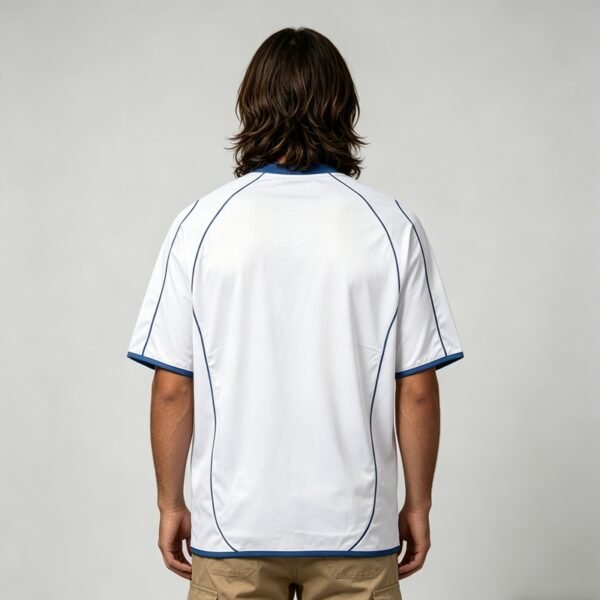
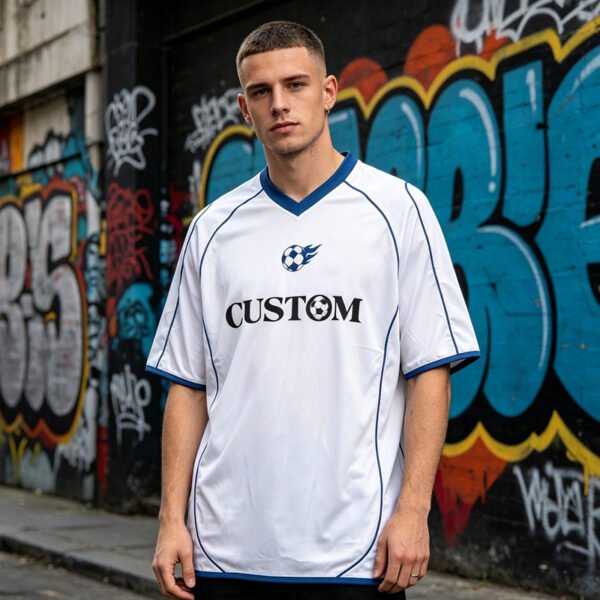
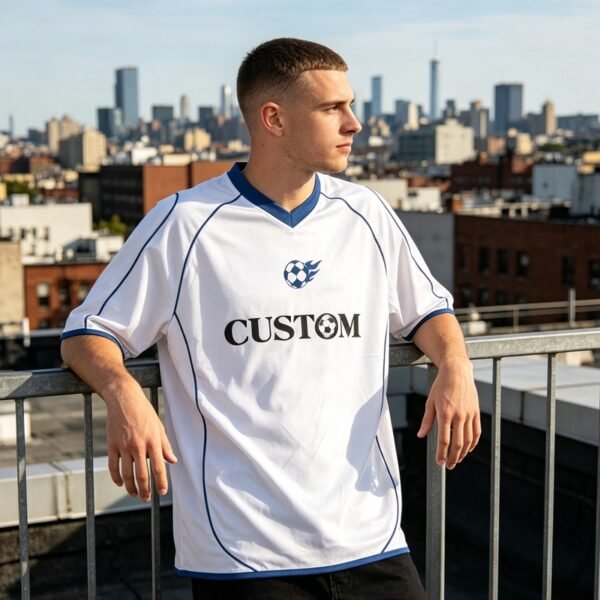
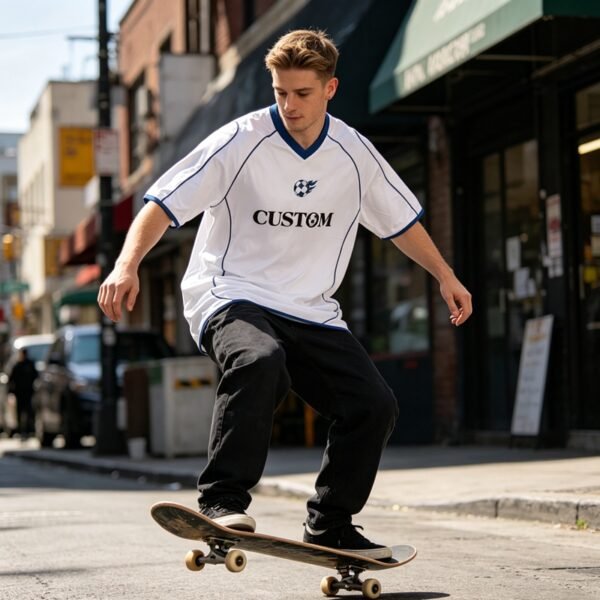
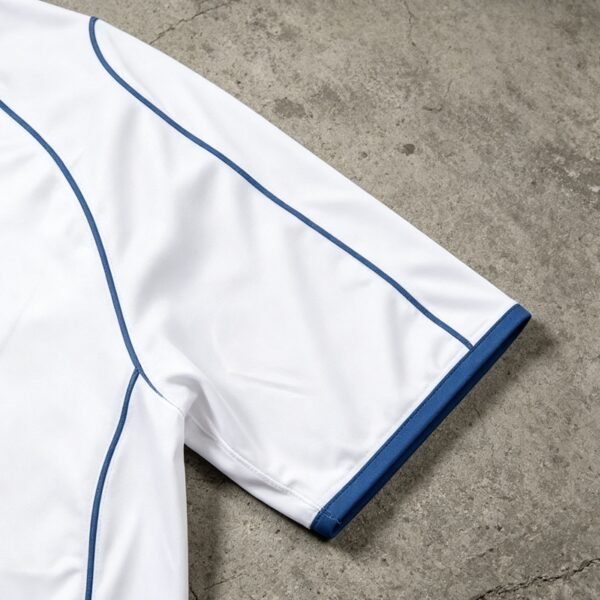
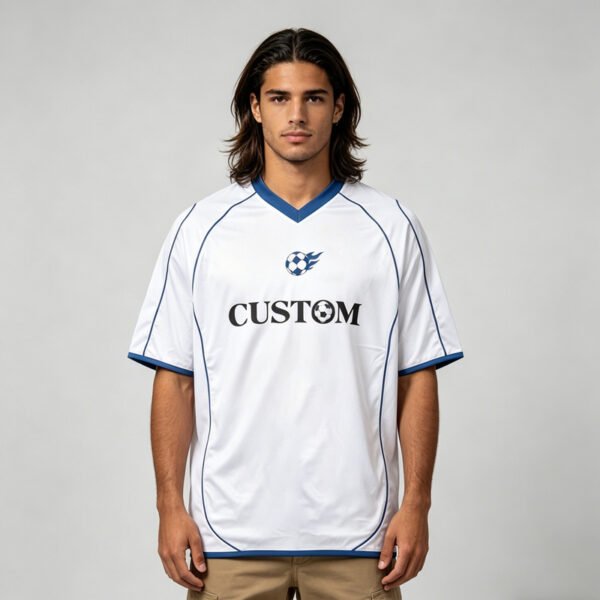
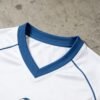
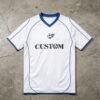
The image presents a loose body, dropped shoulder, and sleeve opening positioned far down the upper arm. That geometry improves visual volume but increases fabric movement around the armhole, shoulder seam, and side seam during dressing, reaching, and casual activity.
Because reinforcement can easily make a soft oversized garment feel rigid, the bartack plan should follow the seam architecture rather than appear as visible decoration. The approval sample should show clean transitions, unrestricted sleeve movement, and no puckering around reinforced points.
Bartacks Should Work With Seam Direction
For this silhouette, bartacks are most useful where seam direction changes or where handling repeatedly concentrates force. Candidate locations include the shoulder-to-sleeve junction, side-seam termination, and any internal opening or label attachment that could create local pulling.
The exact stitch density, length, and thread choice remain development decisions because the supplied evidence does not expose construction details. VeeWen should map each reinforcement against the approved pattern before confirming the production specification.
Graphic Placement Must Survive Movement
The supplied image shows a dark, centered chest graphic spanning much of the upper front. That visual mass establishes the garment's identity, while the relaxed body allows the print area to flex as the wearer moves and the fabric hangs away from the torso.
Reinforcement should therefore stay visually quiet and structurally separate from the main print zone. During sampling, inspect whether shoulder or chest tension distorts the artwork, then adjust pattern balance, print placement, or reinforcement position before bulk approval.
Development Workflow For This Jersey
VeeWen's workflow should begin with a measurement block that records shoulder drop, sleeve length, chest width, body length, and armhole shape from the approved reference. Those measurements define where stress is expected before any bartack location is treated as final.
Next, VeeWen can build a construction sample with marked reinforcement points, then review garment movement and inside appearance with the buyer. The development checkpoint is a signed reinforcement map linked to the approved pattern and artwork placement.
Trade-Offs Buyers Should Resolve Early
More bartacks may improve local seam security, but excessive reinforcement can add stiffness, visual interruption, or concentrated distortion around a lightweight jersey. Fewer bartacks preserve softness but may leave high-movement junctions dependent on ordinary seam construction.
The right balance depends on intended wear, fabric behavior, and seam allowances still to be confirmed. Buyers should decide whether priority rests on maximum flexibility, stronger junction control, or the cleanest interior before approving the final construction package.
Approval Checkpoint Before Production
Review the sample on a moving wearer, not only on a flat table. Lift both arms, extend forward, twist the torso, and check whether bartacks remain secure without pulling the oversized body into unwanted angular shapes or changing the front graphic alignment.
Approval should cover the reinforcement map, stitch appearance, seam comfort, graphic placement, and measurement tolerance together. Once those items are signed, VeeWen can carry the agreed construction logic into the MOQ: 100 pieces per style production plan.
Buyer Questions
Where should bartacks be considered on this jersey?
Start at shoulder-to-sleeve and side-seam junctions, then confirm placement through movement sampling because the image does not reveal internal construction details.
Is the fabric definitely polyester?
Polyester appears in the supplied source wording, but final composition, weight, and finishing remain To Confirm through the approved technical specification.
What makes the oversized fit technically important?
Dropped shoulders and a roomy body increase movement around junctions, so reinforcement must control stress without making the silhouette rigid or distorted.
What must the buyer approve first?
Approve the pattern, reinforcement map, movement sample, artwork position, and measurement tolerances together before releasing the style for MOQ: 100 pieces per style.
Approve the Reinforcement Map
Send the target measurements, artwork, and intended wear profile so VeeWen can prepare a movement-focused sample and confirm bartack placement before MOQ: 100 pieces per style production.


Reviews
There are no reviews yet.