

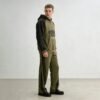
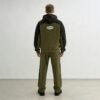
This tracksuit is read as one connected system: olive body, charcoal raglan sleeves, chest decoration, and trouser stripes must maintain alignment across separate pattern pieces. VeeWen's development work should therefore approve the set together, with wash and decoration evaluated against seam positions.
Why Alignment Defines the Set
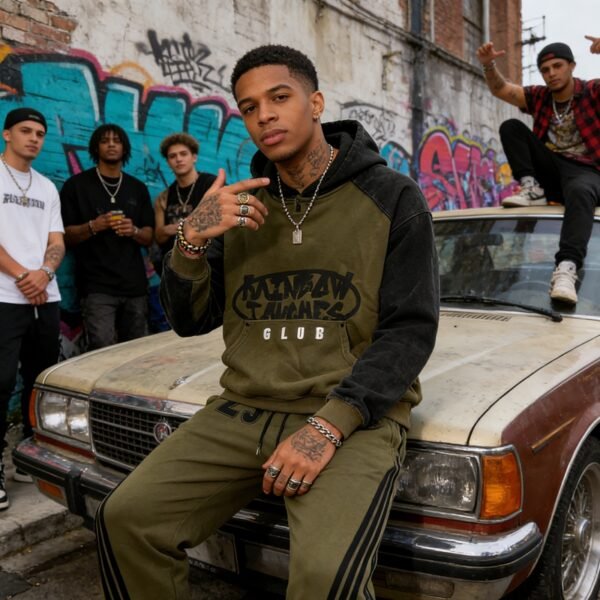
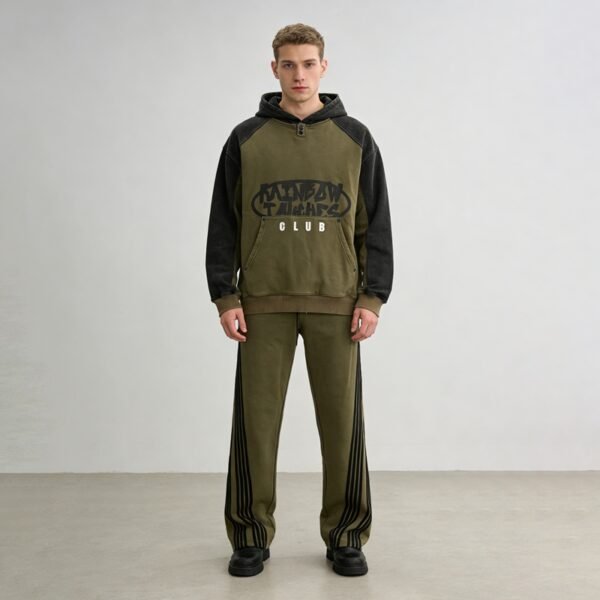
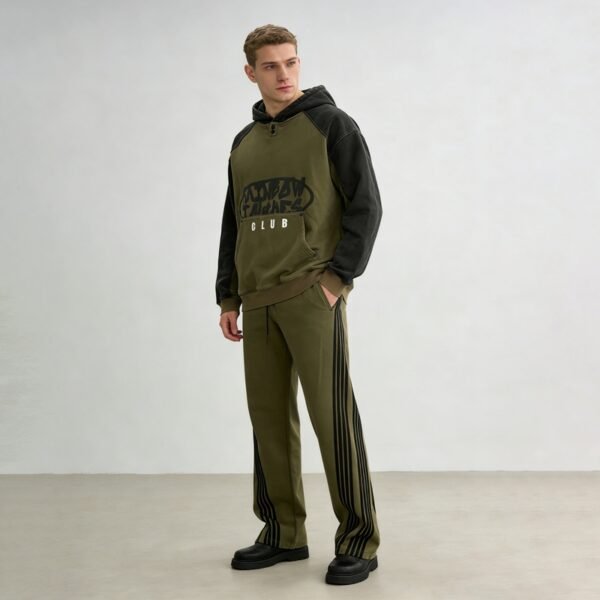
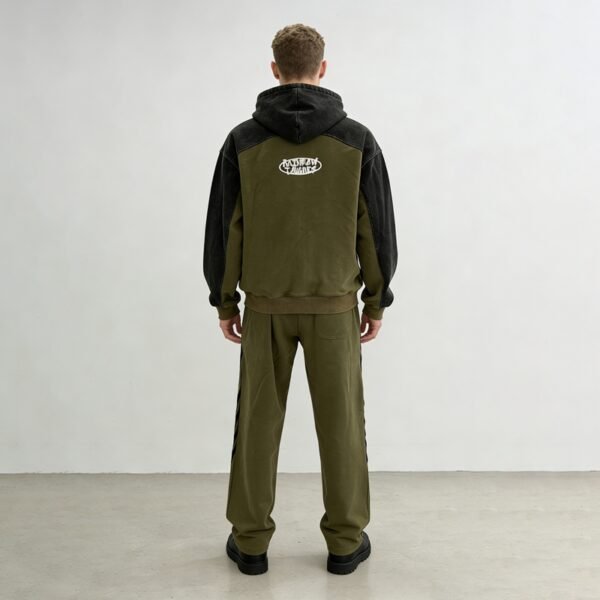
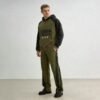
The supplied image shows the sweatshirt and trousers functioning as a single visual outfit rather than unrelated separates. Olive continuity, charcoal sleeve contrast, and dark trouser stripes need deliberate positioning so the set retains rhythm when the wearer moves or sits.
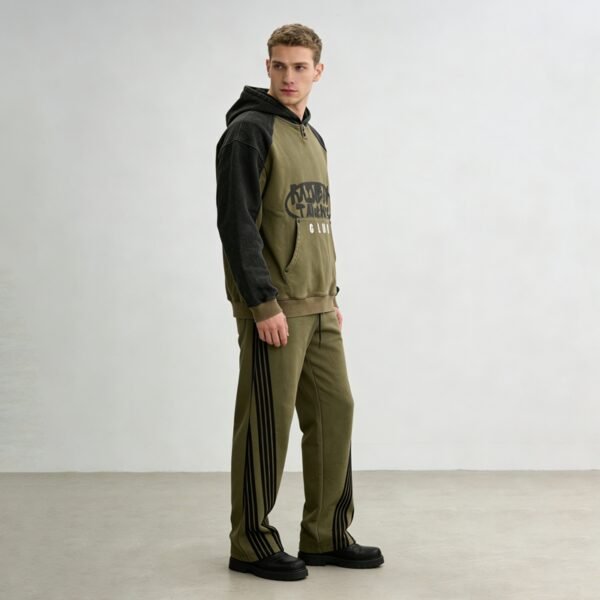
Raglan construction creates long diagonal seams from the neckline toward the underarm, while trouser stripes run vertically beside the legs. Their different directions make placement errors noticeable, particularly when the outfit is photographed frontally or evaluated as a complete collection look.
Raglan Junctions and Shoulder Panels
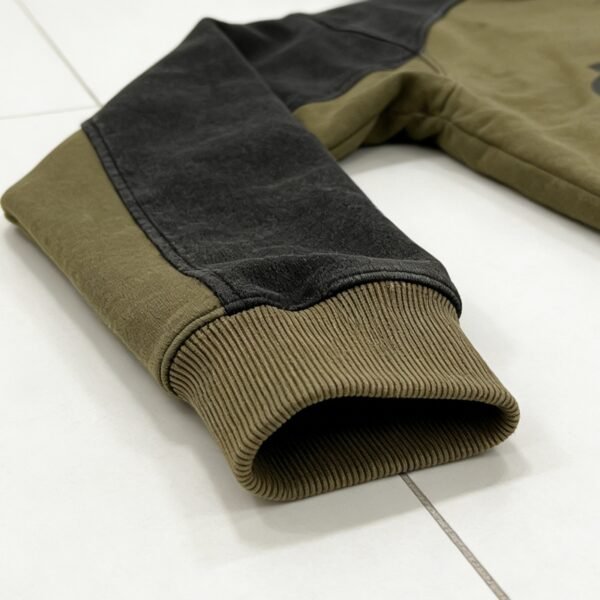
The charcoal sleeve and shoulder areas visibly frame the olive front body. At the neckline, raglan seam, and underarm, small shifts can change the apparent width of the torso or make one sleeve look heavier, so the pattern must preserve balanced reference points.
A technical sample should record neckline position, raglan angle, sleeve panel width, and underarm depth together. This allows the buyer to judge whether the contrast panels remain symmetrical after sewing, rather than approving each component independently.
Keeping Trouser Stripes Consistent
The matching trousers carry dark vertical stripes that reinforce the top's graphic structure. Their placement should be measured from the side seam and waistband, because inconsistent offsets can make the legs appear different widths and weaken the coordinated effect across a pair.
The trouser sample should be reviewed beside the sweatshirt in the same size. Check stripe height, spacing, taper relationship, pocket interference, and hem position, then confirm that the visual center remains balanced when the wearer stands naturally.
Wash Variation and Color Reference
A snow-wash appearance introduces localized variation across olive and charcoal surfaces, so panel boundaries may not remain visually identical from one area to another. The production reference should distinguish intentional wash character from uneven treatment that obscures seam alignment.
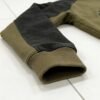
Because the image shows a muted, worn surface, approval should cover color depth at raglan joins, pocket areas, cuffs, waistband, and trouser legs. The buyer should define acceptable variation after reviewing a washed sample, not from a flat digital color alone.
VeeWen Development Workflow
VeeWen can begin with a set-level alignment map covering neckline, raglan seams, chest graphic position, waistband, side stripes, and inseam references. This map turns the visual outfit into measurable checkpoints for pattern development, decoration placement, and wash review.
The next approval should use the sweatshirt and trousers together after representative finishing. Record the accepted panel relationships, stripe offsets, graphic position, and color variation in the production specification so both pieces follow one coordinated reference.
Decoration and Final Approval
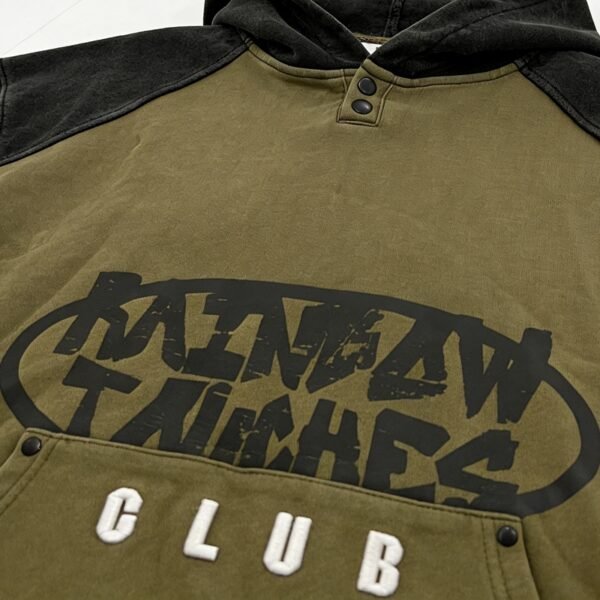
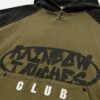
The visible chest artwork combines a dark central mark with lighter lettering, creating another alignment point on the olive front. Screen-print and raised embroidery references should be positioned against the body panel, avoiding raglan seams, pocket openings, and high-stress edges.
Approve the style only after checking decoration scale, placement, and relief alongside the washed surface. Confirm that the top and trousers still read as one set, with balanced panel contrast, consistent stripe logic, and no seam shift that distracts from the design.
Buyer Questions
Why must the top and trousers be approved together?
Their olive continuity, contrasting panels, and stripe placement create one visual system, so separate approval can conceal proportion or alignment problems between garments.
Does snow washing affect panel alignment?
It can alter perceived contrast and surface depth around seams, which is why alignment and acceptable wash variation should be reviewed on representative finished samples.
Can the decoration be repositioned?
Yes, the chest artwork can be adjusted, but placement should respect raglan seams, pocket openings, body balance, and the intended relationship with trouser stripes.
What is the commercial minimum?
The commercial minimum is MOQ: 100 pieces per style, with coordinated set specifications approved before production quantity and final documentation are confirmed.
Approve the Set-Level Alignment
Share your artwork, size range, and wash direction with VeeWen for a coordinated sample review covering raglan joins, trouser stripes, decoration placement, and finished color relationships.


Reviews
There are no reviews yet.