
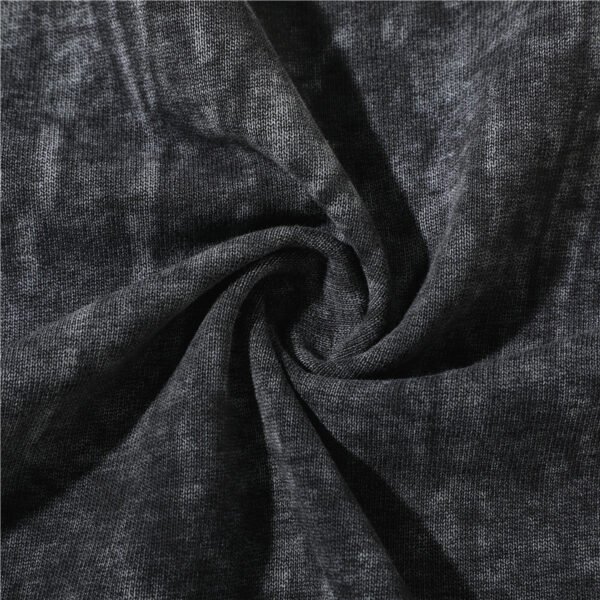


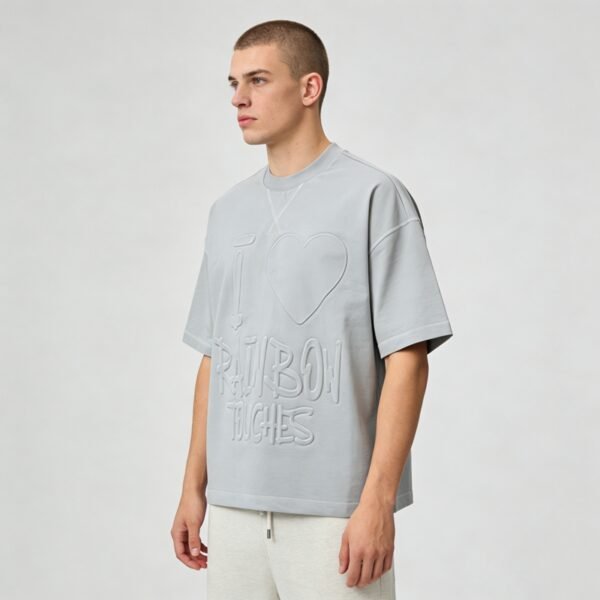
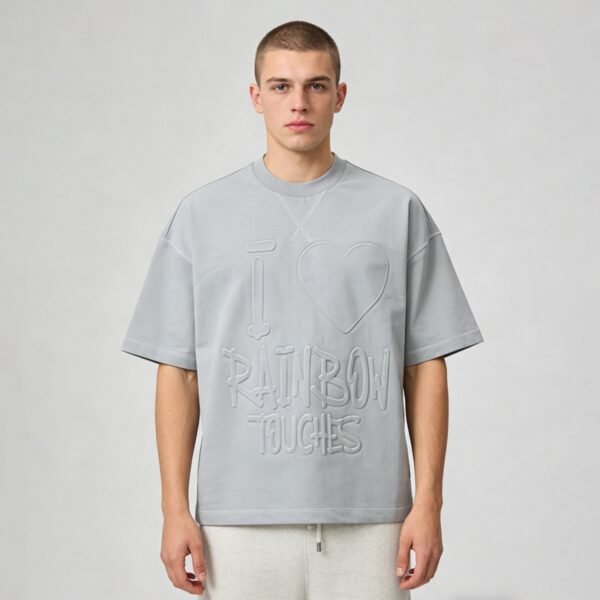

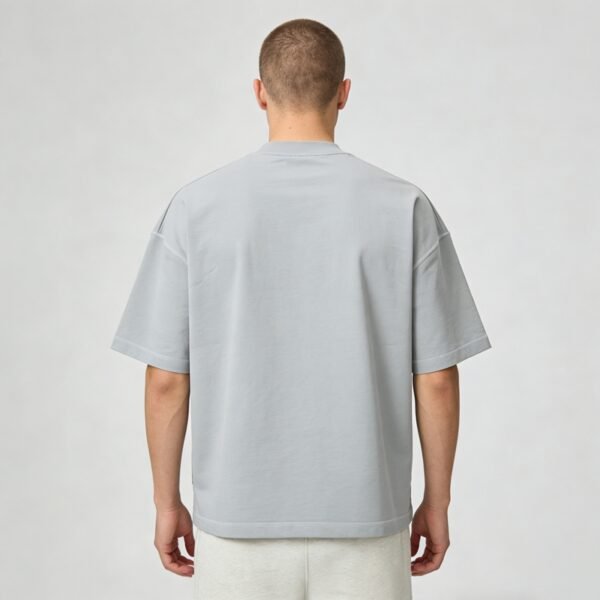
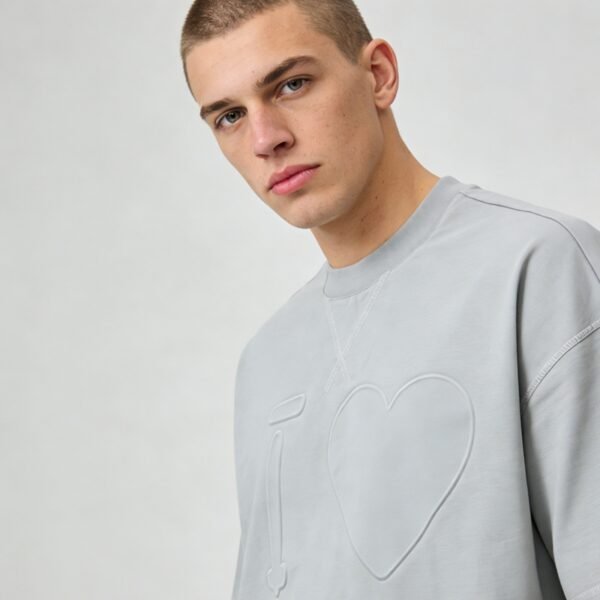

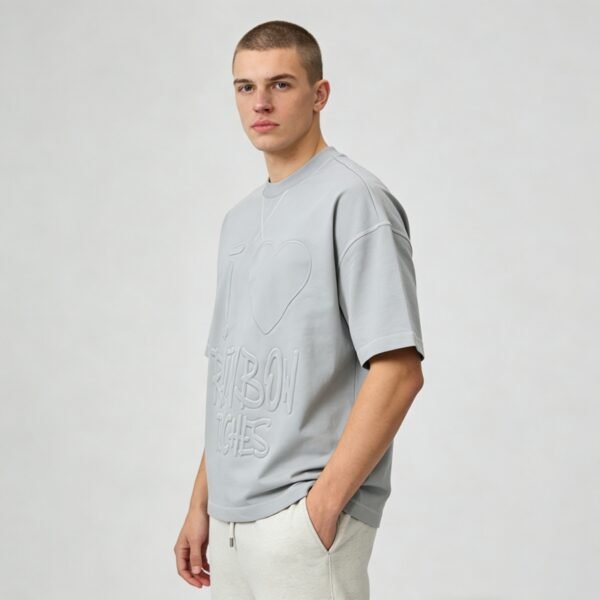








This T-shirt is positioned around graded size-set proportion rather than a single oversized sample. The source wording identifies an oversized fit and embossed heart graphic, while the supplied close-up shows a dark, finely textured knit with visible folds. Scale, drape, and tactile contrast must therefore be approved together.
Oversized Proportion Starts With the Base Block
An oversized T-shirt is defined by relationships, not simply by adding width. Body length, shoulder extension, sleeve volume, neckline opening, and hem position must work together so the silhouette feels deliberate rather than enlarged without control.
The source wording establishes an oversized direction, but the supplied image is a fabric close-up rather than a full garment view. VeeWen should therefore treat the base size block as a buyer-controlled approval point before grading begins.
Grading Must Preserve the Intended Ease
When sizes increase, proportional additions can make an oversized body become disproportionately long, wide, or sleeve-heavy. A measured grading rule should protect the relationship between chest ease, body length, shoulder drop, and sleeve opening at every size.
The trade-off is that uniform increments are easier to manage but may weaken the intended silhouette. A shaped grade can preserve balance more effectively, though it requires closer review of measurements and wear impressions across the size range.
Graphic Scale Needs Its Own Grade
An embossed heart graphic can appear smaller as the shirt grows if its dimensions remain fixed. Conversely, scaling it too aggressively can overpower smaller sizes or move the visual center away from the chest's most stable area.
The buyer should approve a graphic-scale policy alongside garment grading. Options include a fixed size, controlled proportional scaling, or size-banded dimensions, with each choice checked against the finished chest width and neckline position.
Texture Changes Visual Measurement
The supplied close-up shows a dark knit surface with fine texture, folds, and tonal highlights. Such texture can soften edges, deepen shadows, and make an embossed treatment appear broader or less distinct than its measured artwork file suggests.
VeeWen's sample review should compare the approved graphic against the actual fabric surface, not a flat digital rendering alone. The development question is whether the tactile effect remains legible without disrupting the restrained dark appearance.
Neckline and Sleeve Balance Matter
In an oversized T-shirt, a neckline that grades too little can look tight against the expanded body, while excessive grading can reduce structure. Sleeve length and opening also influence whether the shoulder extension reads relaxed or visually unbalanced.
The sample set should record neckline, shoulder, sleeve, chest, and length measurements together. Buyers should inspect adjacent sizes side by side, checking that each retains the same design intent rather than merely meeting isolated measurement tolerances.
VeeWen Workflow Protects the Size Set
VeeWen's workflow for this style should translate the approved oversized base block into a size matrix before finalizing the embossed placement. Each size can then be reviewed for body ease, sleeve relationship, neckline balance, and heart position as a connected system.
After the buyer confirms fabric reference, tactile process, measurement tolerances, and grading increments, the approved size set becomes the production checkpoint. The decision is not only whether one sample looks right, but whether the entire run remains coherent.
Buyer Questions
Is the oversized fit confirmed by measurement?
No. Oversized fit appears in the source wording, but no garment measurements were supplied. VeeWen should confirm the base block, ease targets, and grading increments during development.
What does the fabric image establish?
It establishes a dark knit appearance with fine texture, folds, and tonal variation. It does not establish fiber composition, GSM, stretch, recovery, or finished garment behavior.
How should the heart graphic be graded?
The buyer should choose fixed, proportional, or size-banded scaling after reviewing the base block. Final graphic dimensions must preserve chest balance and tactile readability across sizes.
What is the minimum order quantity?
The commercial minimum is MOQ: 100 pieces per style. Final size ratios, materials, graphic treatment, and specifications should be documented before production approval.
Approve the Complete Graded Size Set
Share the target size range, base measurements, fabric reference, and heart artwork. VeeWen will review proportion, graphic scale, neckline balance, and tactile readability before the size-set approval checkpoint.


Reviews
There are no reviews yet.