





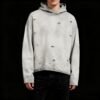



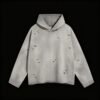
This pullover hoodie is developed around a practical tension: folding improves handling, yet the garment's strongest selling detail sits near the hem. VeeWen can therefore engineer presentation around visibility, abrasion control, and repeatable pack-out decisions before production approval.
The Presentation Problem Is Located At The Hem
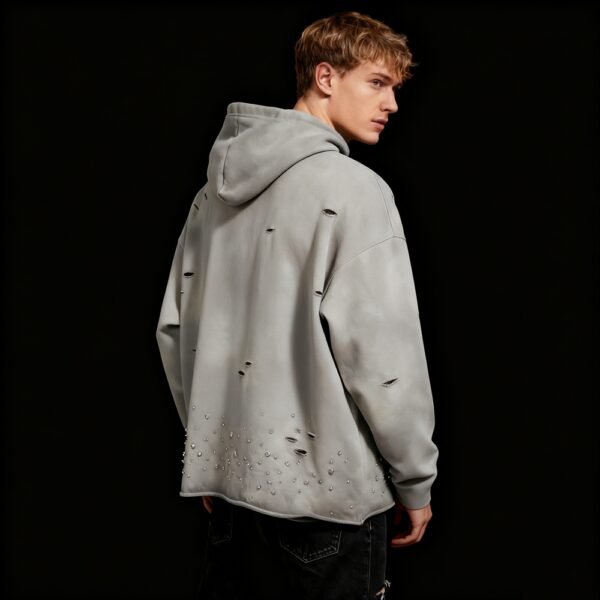
Packaging decisions should protect the hoodie's visual irregularity without flattening its selling story. The rear image shows tears, tonal shading, and a rhinestone field concentrated near the hem, so a folded presentation can either reveal those cues or hide the principal merchandising detail.
Use the fold as a controlled display choice: keep the hood and upper body legible, while allowing the embellished hem to remain visible in carton opening or showroom stacking. This balances protection against abrasion with the buyer's need to understand where sparkle actually sits.
Fold Orientation Should Follow Decoration Geography
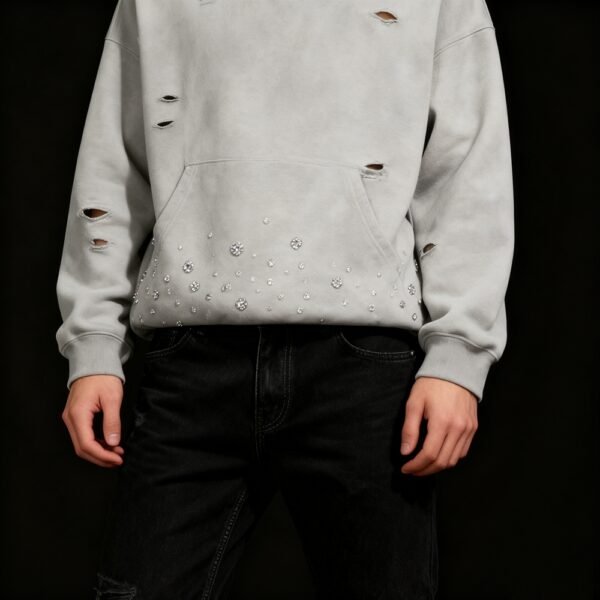
A conventional center fold may place the rhinestones against another garment surface, increasing contact during handling. The safer development question is directional: can the lower back be turned outward, cushioned, or separated so reflective elements avoid unnecessary compression and snag exposure?
VeeWen's sample review should record the approved fold diagram alongside the garment pattern. That links decoration geography to a repeatable packing action, giving production and warehouse teams a visual checkpoint instead of relying on informal handling assumptions.
Acid-Wash Variation Changes Visual Readability
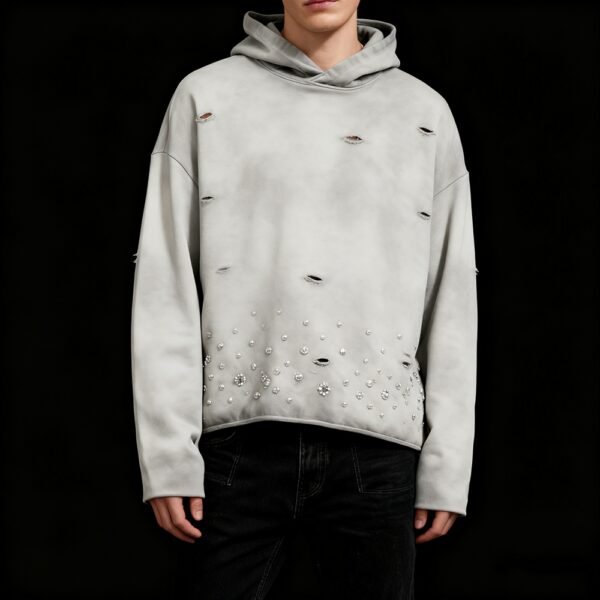
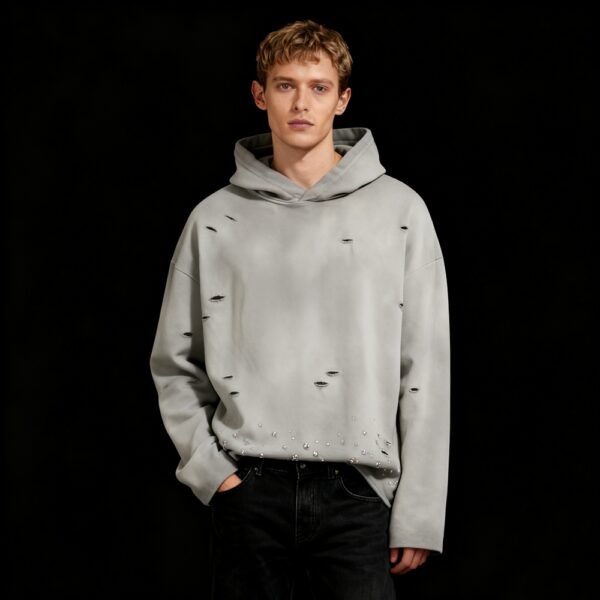
The grey body is not visually flat; tonal wash variation gives the surface depth around tears and seams. Tight folding compresses those tonal transitions, while a looser presentation lets buyers read the contrast between worn-looking openings, clean panels, and reflective embellishment.
This creates a trade-off between compact shipment volume and design comprehension. The buyer should decide whether the commercial channel prioritizes dense carton efficiency or immediate showroom impact, then approve a fold tolerance that preserves the garment's intended visual hierarchy.
Distressing Requires Controlled Contact Surfaces
Visible tears create an intentionally unfinished appearance, but their edges can catch on neighboring garments, polybags, or rough packing surfaces. The image shows openings distributed across the back and sleeves, so contact risk is not confined to one decorative panel during folding.
Development should map exposed distress points before finalizing inner packing materials and fold pressure. The purpose is not to remove irregularity, but to keep the approved openings visually consistent while reducing avoidable snagging, distortion, or accidental enlargement through routine presentation handling.
VeeWen Workflow Turns Styling Into Pack-Out Approval
At VeeWen, this argument belongs in the product-development review after the sample shows confirmed distress placement and rhinestone distribution. The team can compare folded, partially revealed, and display-ready orientations against the buyer's intended channel before approving the final technical package.
The buyer's checkpoint is a documented presentation sample: inspect the hem after folding, reopen the garment, and confirm that embellishment remains secure and visually balanced. Approval should cover both the garment appearance and the handling instruction that protects it at MOQ: 100 pieces per style.
Choose The Commercial Moment The Fold Must Serve
If the hoodie reaches buyers mainly through cartons, the fold should minimize decorative contact while exposing enough of the lower back to communicate value. If it enters a showroom or trade display, a presentation fold can justify more visible hood, back, and hem architecture.
Neither option is universally correct because each serves a different selling moment. Approve the format that matches the channel, then lock the fold orientation, protective layer, and inspection point into the purchase-ready development record.
Buyer Questions
Is the hoodie composition confirmed?
No. The supplied evidence shows appearance only, so fiber composition, fabric weight, and finishing chemistry remain To Confirm in the approved technical package.
Why does folding matter for this hoodie?
Because rhinestones cluster at the hem while distressing spans multiple panels, fold direction affects visibility, surface contact, snag exposure, and presentation consistency.
Can the distressed placement be changed?
Yes, placement can be developed through approved artwork and sample review, but each opening's scale, position, and edge treatment should be documented before production.
What is the minimum order quantity?
The commercial minimum is MOQ: 100 pieces per style, subject to approved specifications, decoration placement, packing requirements, and the final production-ready technical package.
Approve The Fold Around The Selling Detail
Send VeeWen your target channel, size range, and presentation preference so the team can develop a sample pack-out that protects the rhinestone hem while keeping the hoodie commercially legible.



Reviews
There are no reviews yet.