


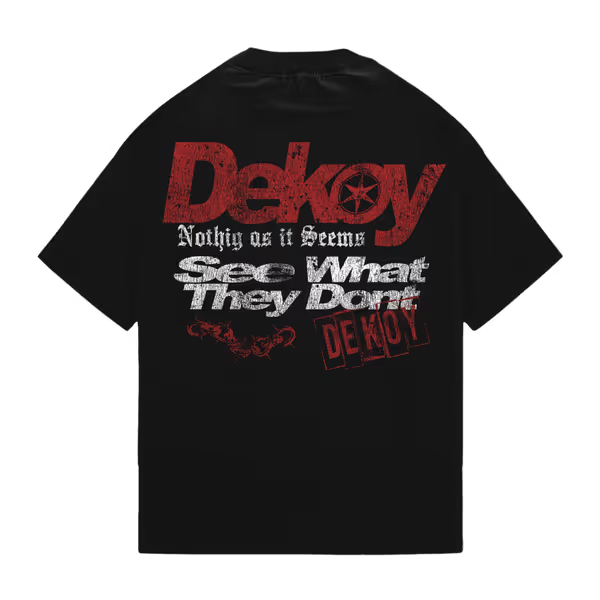

This development record treats the garment as a black hooded streetwear T-shirt where comfort depends on controlled volume above the shoulders. The commercial question is not simply whether the hood looks large, but whether its depth, opening, and neckline pull remain balanced when worn, layered, and moved.
Hood Volume Must Be Patterned, Not Guessed
A hood gains practical comfort from depth, crown shape, and the amount of fabric extending behind the neck. Excess volume can collapse over the shoulders, while insufficient depth can pull the neckline backward. The target is a stable hood that retains presence without distorting the tee silhouette.
For VeeWen development, the hood block should be separated from general T-shirt grading and reviewed through measured checkpoints. Record hood height, front opening, crown width, and overlap at the neckline, then assess those dimensions on a body or mannequin before approving the pattern.
Neckline Pull Reveals the Real Wear Test
Neckline pull appears when hood weight, seam direction, and opening tension work against one another. A narrow opening may lift the front neck; a wide opening may lose containment. The right balance lets the hood sit naturally while keeping the shoulder line visually calm during ordinary movement.
The sample review should include forward reach, seated posture, and light layering because each position changes tension around the neck. VeeWen can use these checkpoints to adjust neckline circumference, seam allowance, and reinforcement placement before grading the approved construction into production sizes.
Seam Geometry Controls the Hood-to-Tee Transition
The hood is visually convincing only when its joining seam transitions cleanly into the T-shirt neckline. Angular joins can create concentrated pull, while uneven seam lengths may twist the hood. This makes seam geometry a functional issue, not merely a finishing preference, particularly in a dark garment.
The development file should identify the neckline seam path, hood attachment sequence, and any stabilization required at stress points. A first sample can then distinguish pattern imbalance from sewing variation, allowing targeted correction instead of broad changes to the entire garment block.
Proportion Must Survive Size Grading
A hood that works in one base size may become shallow, oversized, or overly restrictive after grading. The relationship between hood opening and shoulder width changes across sizes, so maintaining the same visual intent requires controlled increments rather than automatic proportional enlargement.
VeeWen should review at least the base size and the upper and lower planned size boundaries before final approval. Compare hood depth, neckline pull, and shoulder balance across those samples, documenting which dimensions grade linearly and which need construction-specific adjustment.
Decoration Should Respect the Pull Zones
Any front or neck-adjacent decoration can change how pull is perceived, especially when placement crosses the chest, collar, or hood attachment area. Even without a confirmed decoration method, the design review should protect the opening, seam junctions, and areas that flex during dressing.
The product-development workflow should therefore lock the hood and neckline geometry before finalizing artwork placement. VeeWen can position decoration after identifying the garment's tension map, reducing the risk that a visually centered mark becomes functionally misplaced when the hood is worn.
Approval Requires a Wearable Construction Sample
The key approval checkpoint is a physical sample demonstrating hood volume, neckline recovery, and movement balance together. Images can confirm color and overall direction, but they cannot establish how the hood loads the neckline or whether the opening remains comfortable across body positions.
For the production brief, buyers should approve a measurement sheet, construction sequence, and corrected sample before requesting the final quotation stage. MOQ: 100 pieces per style supports a defined development path, while composition, weight, and exact finishing remain open confirmations.
Buyer Questions
Is this garment a hoodie or a T-shirt?
The assigned product type is T-Shirts, while the manufacturing axis identifies a hood. Confirm the final hooded T-shirt construction and neckline specification through sampling.
What fabric composition will VeeWen use?
The supplied evidence does not verify fiber percentages or fabric weight. VeeWen should confirm composition, hand feel, stretch, and shrinkage expectations during material development.
Which sample measurements matter most?
Prioritize hood depth, crown width, front opening, neckline circumference, shoulder width, and pull behavior during forward reach, layering, and seated wear.
What is the minimum order quantity?
The commercial minimum is MOQ: 100 pieces per style. Final pricing, production timing, and material commitments require an approved specification and sample.
Approve the Hood and Neckline Direction
Send the intended size range, artwork requirements, and target hand feel to VeeWen for a measured development brief, then review the hooded T-shirt sample before confirming production.


Reviews
There are no reviews yet.