
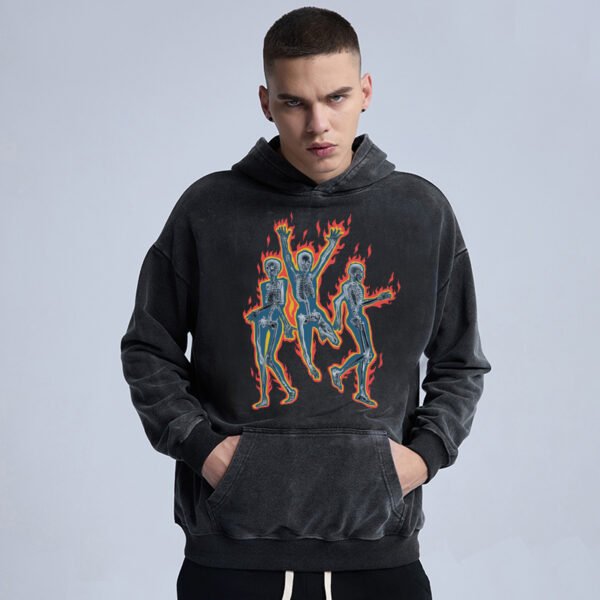
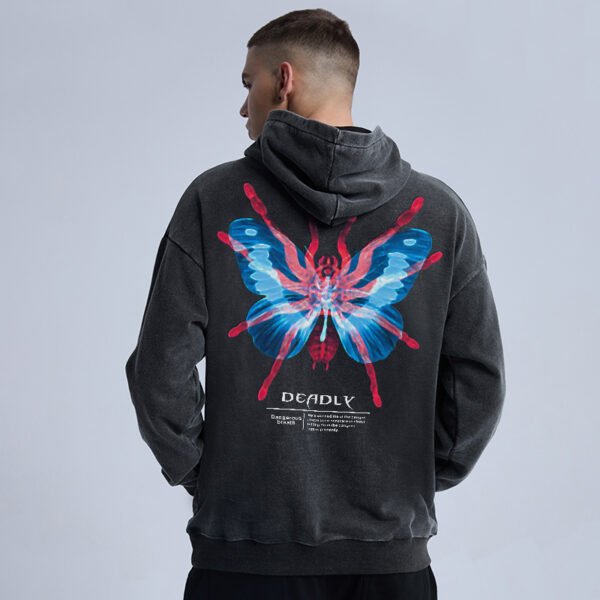
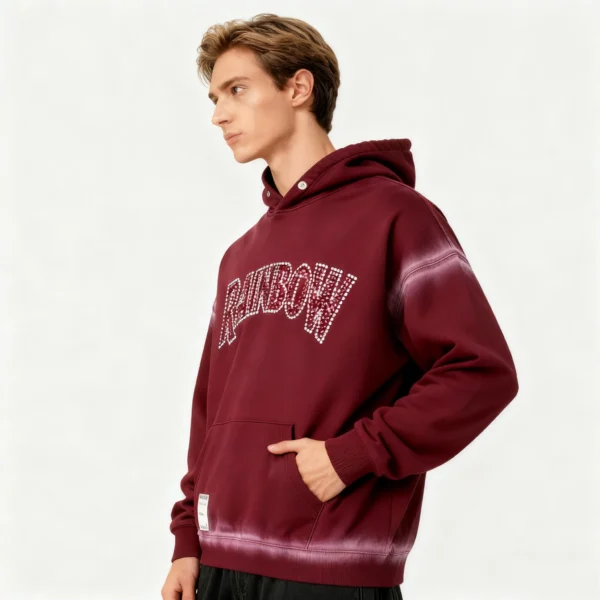
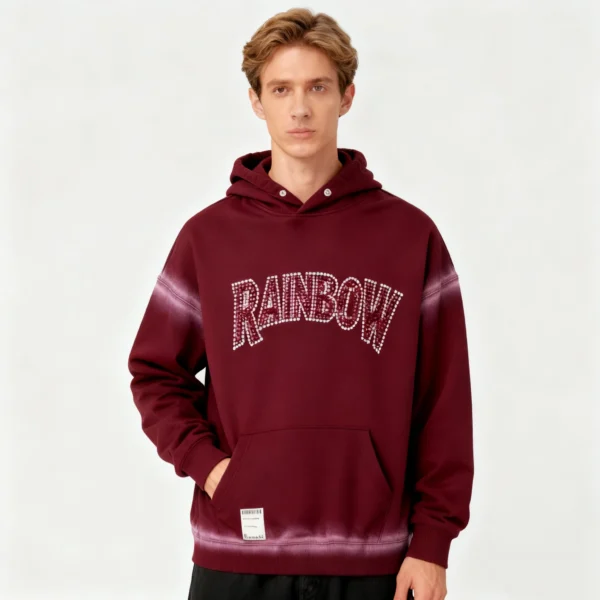
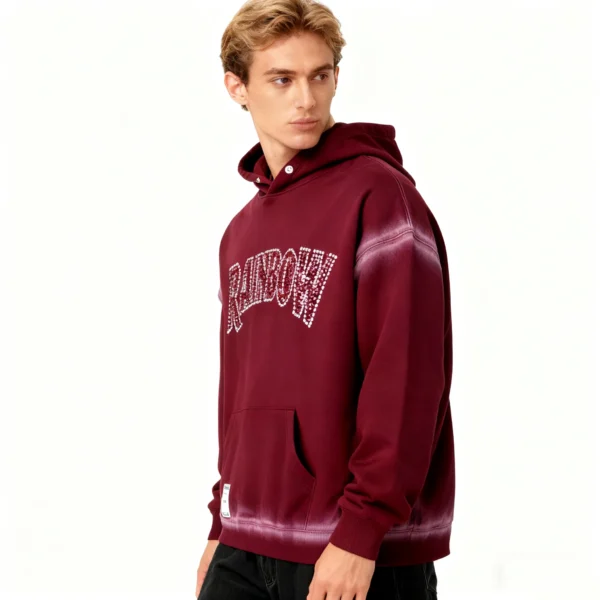


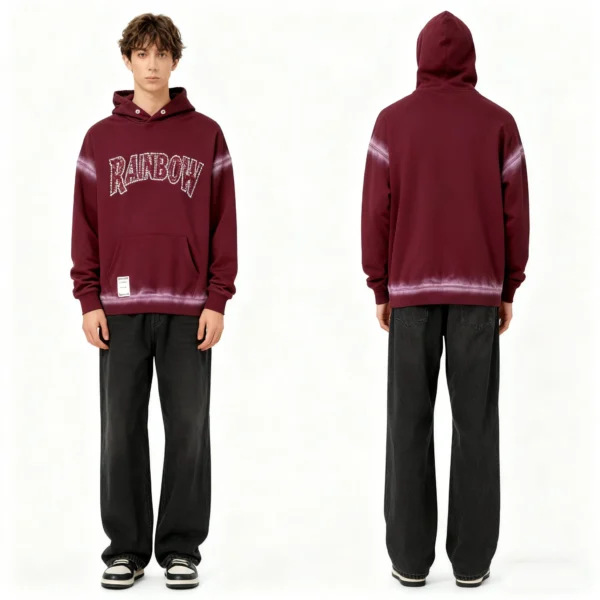




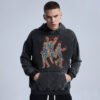










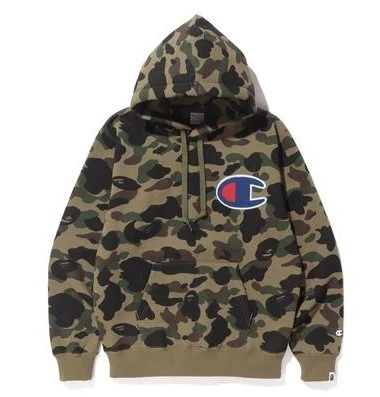
This pullover hoodie is developed around one practical challenge: securing a dense, high-contrast chest embellishment without making the oversized body feel rigid. The supplied image shows a washed black ground, centered multicolor artwork, kangaroo pocket, ribbed cuffs, and a generous hood that define the development brief.
The Containment Principle
A large chest graphic concentrates visual weight in one area, so uncontrolled stitching can create puckering, hard edges, or uncomfortable backing. The development objective is to define an artwork perimeter that holds decorative work securely while preserving the hoodie's flexible front body.
The supplied image supports this approach through a single, centered composition rather than scattered decoration. That concentration gives the production team a measurable placement zone, allowing stitch density, adhesive support, and edge clearance to be reviewed as one coordinated construction decision.
Reading the Supplied Hoodie
The image shows a washed charcoal-black pullover with vivid red, yellow, blue, and green artwork across the chest. The graphic's scale is substantial, making its outer contour, vertical centering, and distance from the pocket especially important during pattern and decoration planning.
The hood, ribbed cuffs, and kangaroo pocket remain visually quiet beside the artwork. This contrast is useful: the embellishment can carry the statement while the surrounding components maintain practical wearability, provided stitch containment does not interfere with pocket openings or front-body drape.
Placement and Stitch Control
For sampling, establish a placement template from the shoulder line, center front, and pocket opening before applying any rhinestones or stitched elements. The template should record artwork height, width, rotation, and minimum seam clearances so every size scales consistently.
Stitch containment should follow the graphic's actual contours rather than forcing a rectangular block around irregular artwork. This reduces unnecessary reinforcement, limits visible backing, and helps the decorative perimeter transition cleanly into the washed ground without creating a heavy frame.
Trade-Offs Buyers Should Review
Higher embellishment density can strengthen visual impact, but it may increase hand feel, weight, and production complexity across a broad chest area. A lighter treatment improves flexibility, while a denser treatment emphasizes sparkle; the correct balance depends on the intended retail positioning.
The acid-washed appearance also introduces a color-variable surface around the artwork. Buyers should decide whether the decoration must remain optically identical across every garment or whether controlled wash variation is acceptable within the approved visual standard.
VeeWen Development Checkpoint
VeeWen's development workflow should translate the artwork into a placement map tied to the hoodie pattern, pocket, hood, cuffs, and size grading. The first approval should confirm that the decoration remains inside the intended body zone after grading, sewing, and finishing.
The next checkpoint is a decorated sample review under movement and close inspection. Buyers should examine edge containment, backing comfort, graphic centering, pocket accessibility, and washed-color interaction together, because approving these elements separately can hide conflicts between appearance and construction.
Production Approval Decision
Approval should be based on a defined decoration boundary, not only on the front image. Confirm artwork dimensions, stitch or attachment method, edge clearance, backing treatment, and acceptable surface variation in the technical specification before releasing the style.
The final buyer decision is whether the visual gain justifies the added handling associated with rhinestone and stitch control. Once the sample demonstrates secure containment without compromising softness or pocket function, the style can proceed toward the stated MOQ: 100 pieces per style.
Buyer Questions
Can the chest artwork be adjusted for a private-label collection?
Yes, artwork dimensions, placement, colors, and embellishment density can be developed to an approved technical brief, subject to sample review and production feasibility.
What should be checked on the decorated sample?
Check centering, contour containment, backing comfort, pocket access, wash interaction, attachment security, and whether the oversized silhouette still drapes naturally.
Is the shown fabric composition confirmed?
No. The supplied evidence does not verify composition or GSM, so shell, lining, trims, and weight should remain To Confirm during development.
What is the minimum order quantity?
The commercial minimum is MOQ: 100 pieces per style, with final production proceeding after artwork, measurements, materials, and construction details are approved.
Approve the Embellishment Boundary
Send the artwork, target measurements, and preferred decoration density to begin a placement-led development review with VeeWen. Request a sample focused on containment, comfort, centering, and washed-surface consistency.



Reviews
There are no reviews yet.