
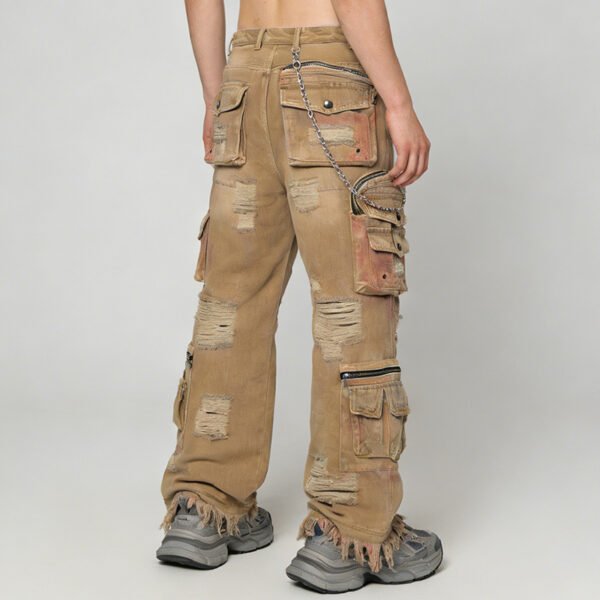
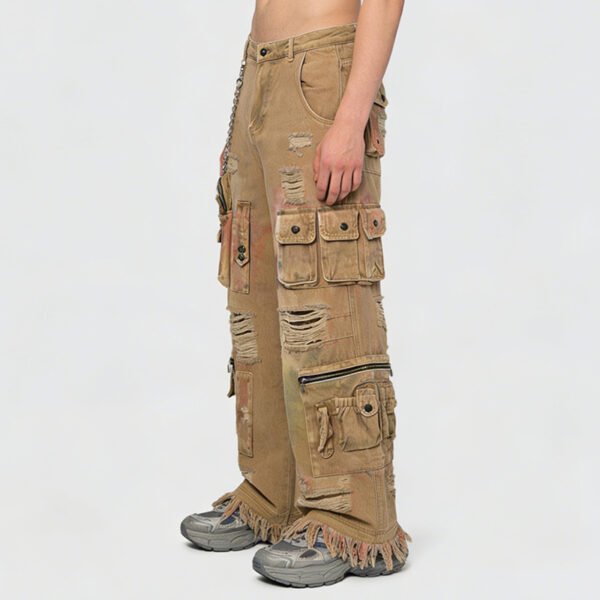
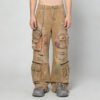
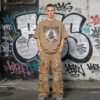
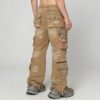
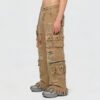
This product record contains a data-integrity checkpoint as well as a trouser argument. The source describes distressed, paint-marked cargo jeans, while the supplied evidence shows waistband engineering and chain hardware. Because no hood or neckline is visible, fit approval must first correct the assigned development axis.
Correct the Assigned Axis Before Sampling
The assigned manufacturing axis refers to hood volume and neckline pull, but the supplied evidence contains only trouser details. Applying that axis literally would create an invalid technical brief. The first development action should therefore correct the record and replace upper-body measurements with waistband, rise, and leg-balance.
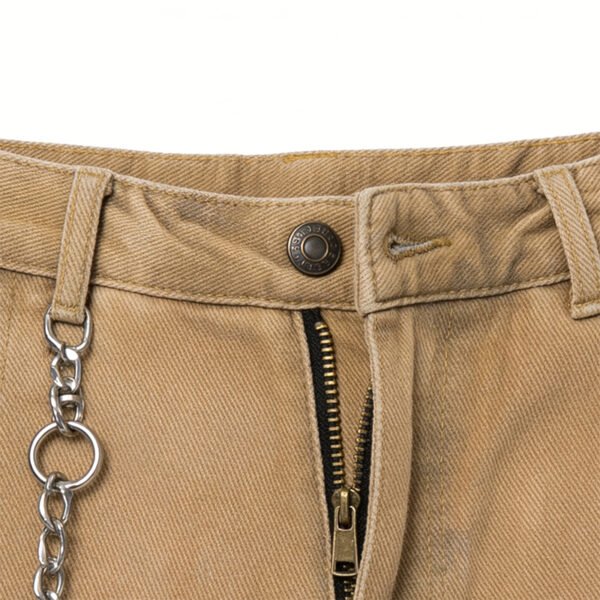
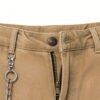
This correction protects later approvals from contradictory instructions. The close-up visibly identifies a waistband, belt loops, button, zipper, and hanging chain, while the source wording identifies cargo jeans. Those facts support a trouser development path, but they do not support any claim about hood volume or neckline.
Waistband Pull Is the Relevant Fit Question
For this garment, the meaningful pull assessment concerns the waistband and zipper area. The supplied image shows a structured front closure with a button and exposed zipper, so the buyer should review whether the waistband lies flat, whether the fly opens cleanly, and whether the chain attachment.
VeeWen should measure waistband extension, front rise, belt-loop spacing, and closure alignment on the approved block. The image confirms the component arrangement but not internal construction, ease, or reinforcement. Those variables remain development decisions that must be verified through the first physical sample.
Wide-Leg Volume Needs Controlled Grading
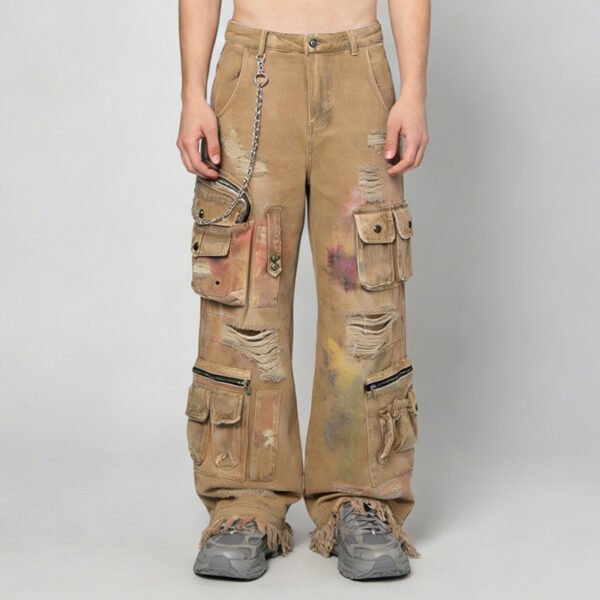
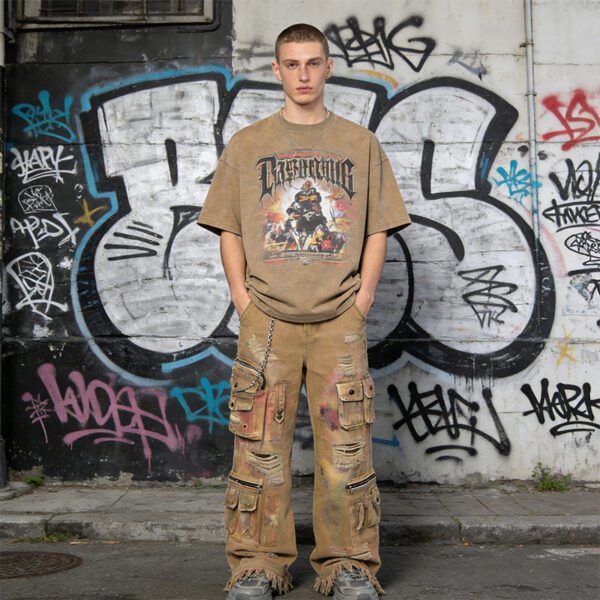
The source wording calls for a vintage wide-leg direction, which makes leg volume a central commercial decision. A wide silhouette can support cargo pocket capacity and distressed graphics, but excessive fullness may overwhelm the waistband hardware shown in the close-up or reduce everyday wearability.
The buyer should compare front, side, and seated views across representative sizes before approval. VeeWen can grade the rise, thigh, knee, hem, and pocket dimensions as one system. The final balance should preserve intentional volume without allowing pocket weight to distort the outer leg.
Surface Effects Must Respect Construction Lines
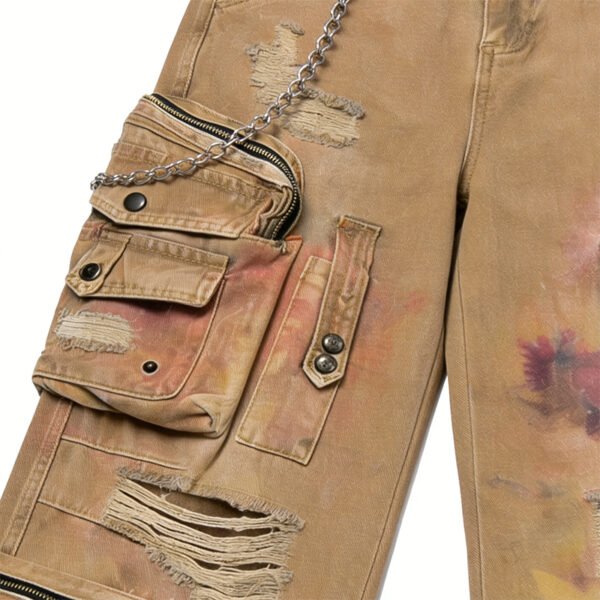
Distressing and splatter paint should be mapped around seams, pocket edges, fly construction, and belt loops rather than applied as unrelated decoration. The close-up shows a clean tan surface and diagonal weave, so the stated distressed paint direction remains a placement decision requiring visual references and sample.
A technical artwork file should identify paint density, distress locations, scale, and acceptable variation by panel. Buyers should also inspect whether treatment obscures closure details or makes the chain attachment appear accidental. Exact application method, durability, and colorfastness remain to confirm from testing or source documentation.
VeeWen Workflow: Rebuild the Trouser Brief
VeeWen's workflow should begin by correcting the product record, then building a trouser block around the visible closure and the stated wide-leg cargo direction. The first sample should combine waistband engineering, pocket placement, chain attachment, and provisional surface artwork for a single coherent review.
After fitting, comments should be separated into measurable corrections and appearance approvals. Lock the rise, leg volume, closure position, pocket proportions, artwork map, and trim references together. This prevents an unrelated hood-and-neckline instruction from entering the final technical package or confusing later production checks.
Approval Gate for a Reliable Development Record
The buyer should approve the corrected axis before judging the sample. Specifically, confirm that this is a trouser program, that the wide-leg block reflects the intended market, and that the waistband, zipper, chain, cargo details, distressing, and paint placement work together visually.
Request a corrected specification sheet and complete sample before progressing. Confirm color, material reference, size range, labels, packaging, and MOQ: 100 pieces per style. Any upper-body component should be documented separately rather than attached to this trouser record.
Buyer Questions
Why does the assigned axis need correction?
The assigned axis concerns hood volume and neckline pull, but every supplied image shows trouser construction. Correcting the axis prevents inaccurate measurements and contradictory development instructions.
What should replace the neckline review?
Review waistband extension, front rise, zipper alignment, belt-loop spacing, leg volume, and pocket balance. These checkpoints directly match the visible garment evidence and stated product direction.
Is the tan material composition confirmed?
No. The close-up suggests a tan twill-like woven surface, but fiber content, weight, stretch, and finishing require confirmation from the approved source specification or sample.
What is the commercial minimum?
MOQ: 100 pieces per style applies. Final quantities, size ratios, artwork requirements, trims, labels, packaging, and development approvals should be recorded before production authorization.
Correct the Brief and Approve the Trouser Block
Share the corrected trouser measurements, artwork direction, material reference, hardware preference, size range, and labels with VeeWen for sample review and MOQ: 100 pieces per style planning.



Reviews
There are no reviews yet.