
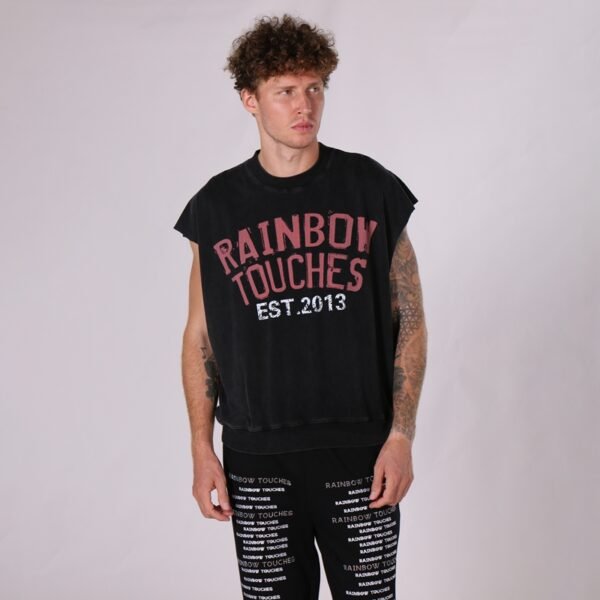
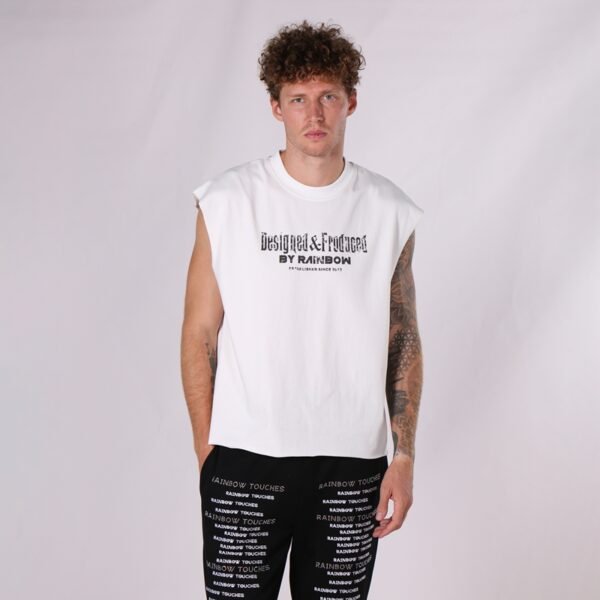
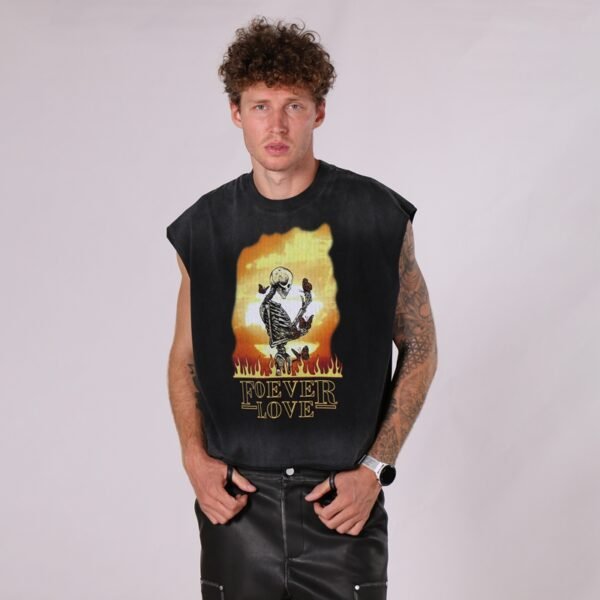
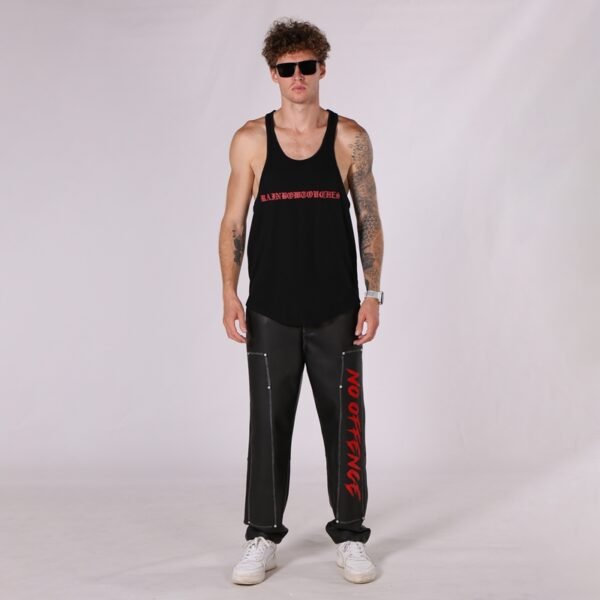
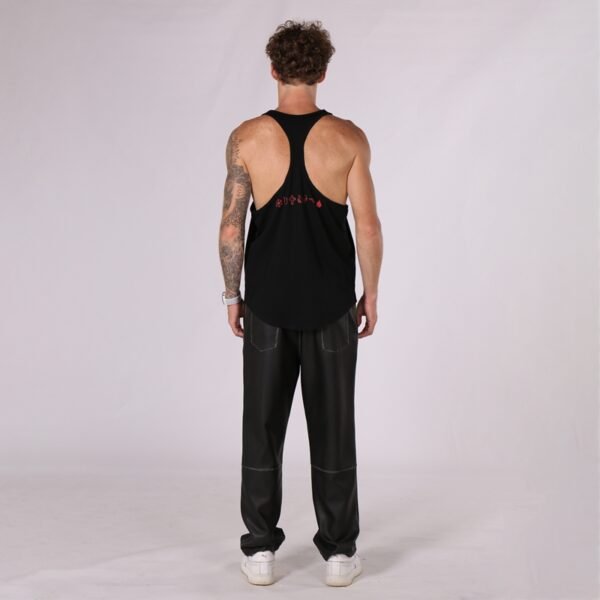
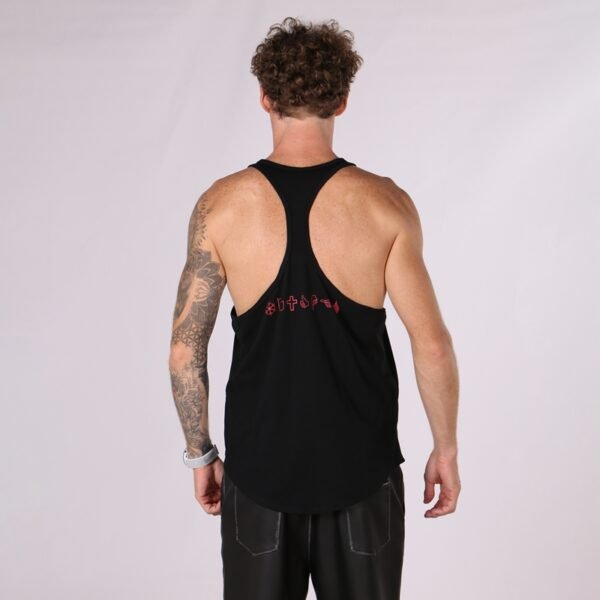
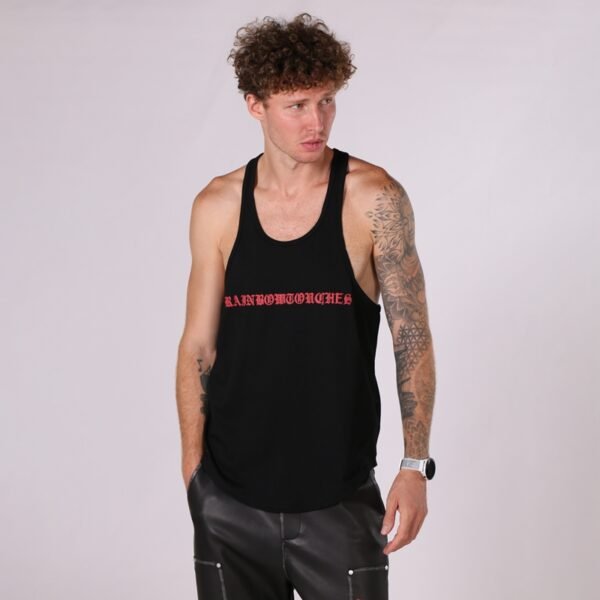

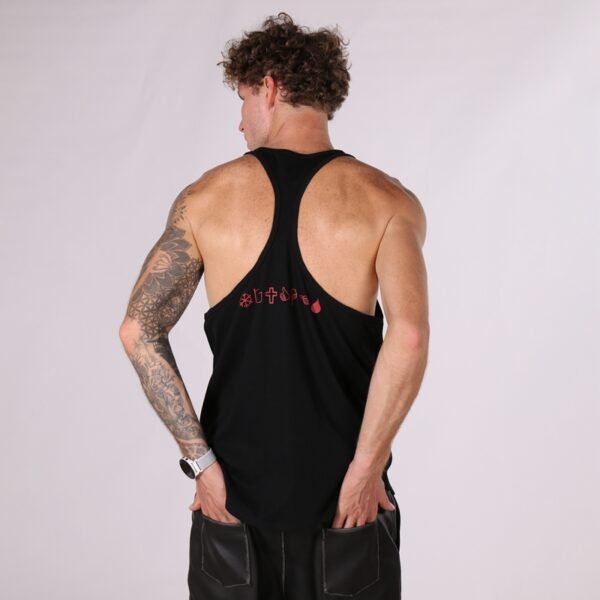

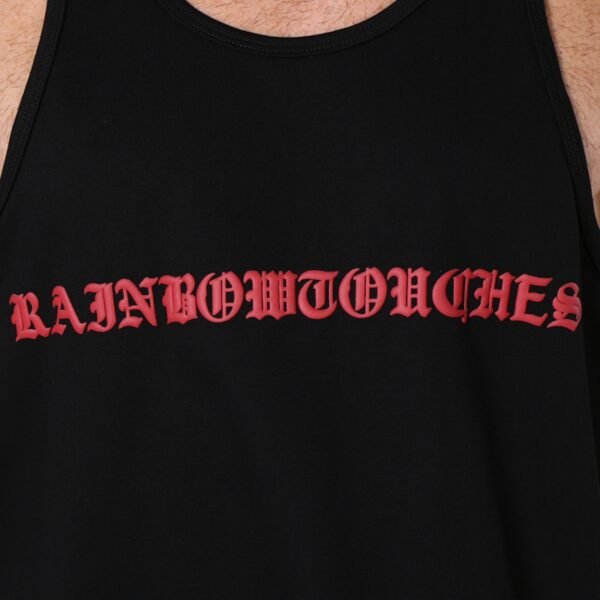

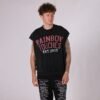





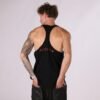

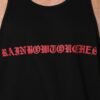

This custom sports tank is organized around a practical wholesale problem: how to fold a decorated sleeveless garment without flattening, creasing, or visually weakening its chest graphic. The supplied model image shows a black tank with a dominant front message, making packaging presentation part of the product specification.
Why folding changes the buying experience
A wholesale tank may spend its first retail-facing moment folded, stacked, or packed tightly. When a large chest graphic sits across the natural fold zone, pressure and repeated bending can change its surface appearance before the buyer evaluates fit, color, or overall garment balance.
The supplied image shows the graphic as the visual anchor on a black sleeveless silhouette. That hierarchy means the folded state cannot be treated as logistics only; it must preserve a readable, intentional front presentation when the garment is opened or displayed.
Puff print creates a packaging variable
Puff print adds raised relief above the fabric, so contact pressure, trapped moisture, heat, and sharp creases may affect how the graphic looks after packing. The exact print height is not supplied, therefore the folding method must be validated against the approved decoration sample.
A compact fold may reduce carton volume but place concentrated pressure across lettering. A broader fold can protect the graphic while using more space. The buyer should choose the balance after reviewing unpacked appearance, stack behavior, and practical handling requirements.
Fold lines and graphic placement
The chest graphic should be mapped against the final body pattern, not judged from artwork dimensions alone. Shoulder width, armhole opening, neckline depth, and body length determine where the garment naturally bends and whether letters fall directly beneath pressure points.
For development, mark the intended fold lines on a decorated sample and compare them with the graphic's key letters and edges. If the fold cuts through high-relief areas, adjust the fold sequence, insert protection, or revise artwork placement before packaging instructions are released.
VeeWen development checkpoint
VeeWen's workflow can connect this axis across decoration, finishing, and packing: approve the tank block, confirm graphic relief, perform a fold trial, then inspect the garment after unpacking. This sequence turns presentation into a documented handoff between product development and production packing.
The buyer should receive or review a packed reference that records fold direction, protective material, graphic orientation, and acceptable post-pack appearance. Changes to decoration height or garment dimensions should trigger another packaging check because they alter contact points.
Trade-offs for presentation and efficiency
A presentation-first fold may require more surface protection or a larger package, increasing material use and handling space. A compact fold may improve efficiency but risk flattening the raised graphic or creating a prominent crease across the chest message.
The correct decision depends on channel expectations and how the buyer receives the product. Define whether the tank is primarily opened for inspection, placed directly on a shelf, or transferred into another packing system, then set the fold around that moment.
Final packaging approval
Before bulk approval, inspect a folded sample from multiple orientations, leave it packed for the agreed evaluation period, and compare the graphic after opening. Check raised relief, letter readability, crease visibility, fabric recovery, and whether the armholes remain visually balanced.
The final packing record should show the fold diagram, protection method, graphic-facing direction, and acceptance notes. This evidence gives VeeWen and the buyer a shared presentation standard that can be checked during production packing and receipt.
Buyer Questions
Is the 180g material specification verified?
The 180g cotton-poly blend is stated in the supplied source wording, but final composition, tolerance, and finished weight should be confirmed against approved fabric documentation.
Why test packaging on a decorated sample?
A decorated sample reveals whether folding pressure, contact, and creasing alter the raised chest graphic, which an undecorated fabric sample cannot demonstrate reliably.
Can the fold be adapted for different channels?
Yes. VeeWen can document channel-specific folds, provided each version protects the graphic and receives approval for appearance, handling, and packing consistency.
What is the minimum commercial quantity?
The exact commercial minimum for this VeeWen style is MOQ: 100 pieces per style, with final assortment details confirmed during order development.
Approve the presentation fold
Share the intended sales channel and packing reference so VeeWen can test a protected fold and document the approved first-open appearance.


Reviews
There are no reviews yet.