
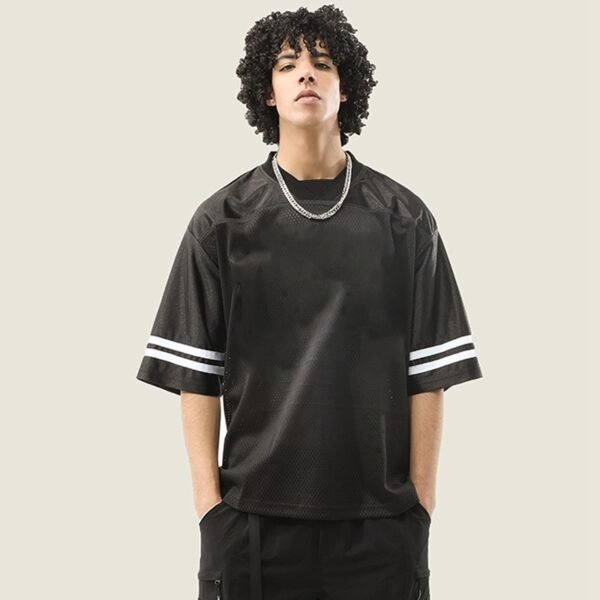
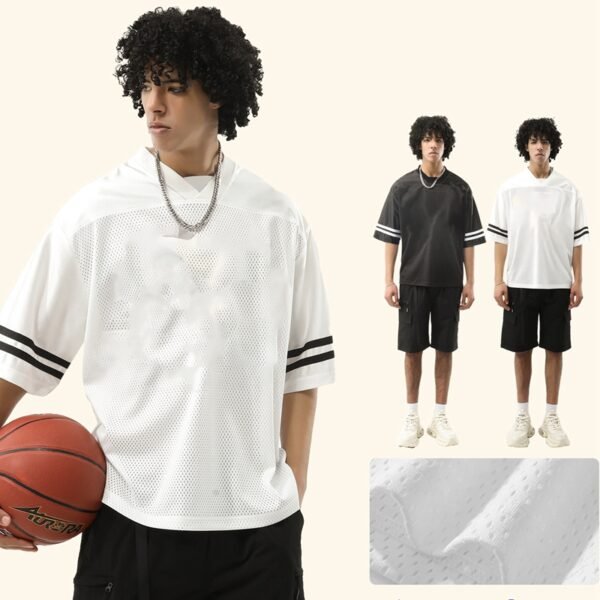
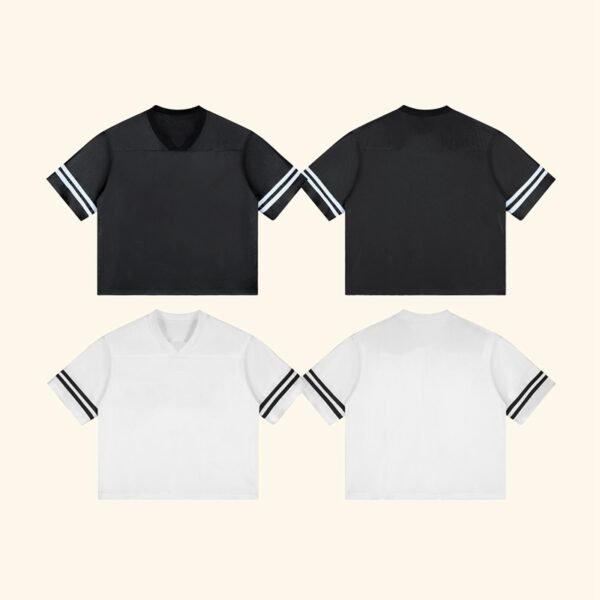
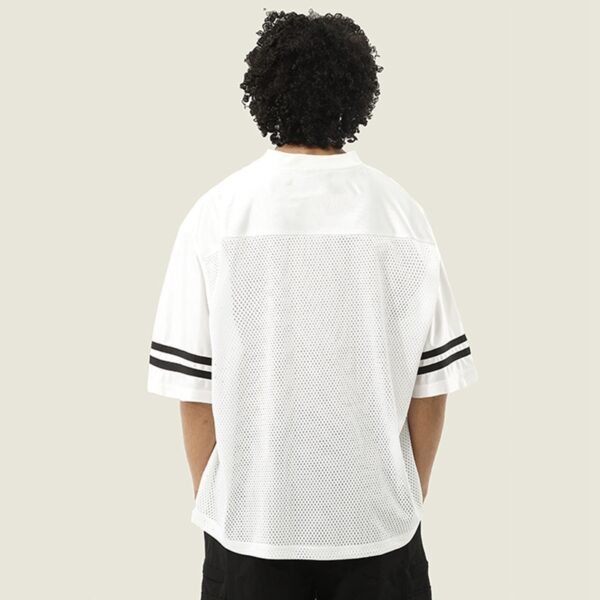
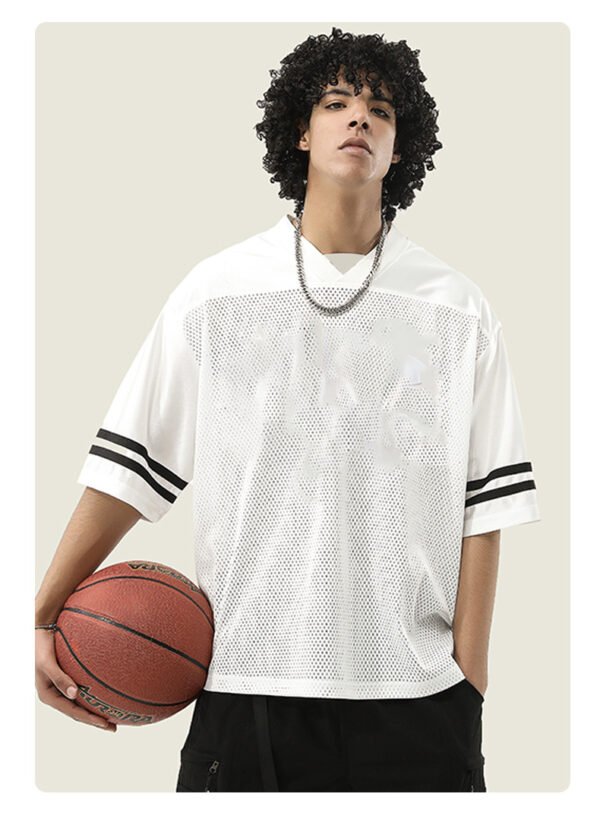
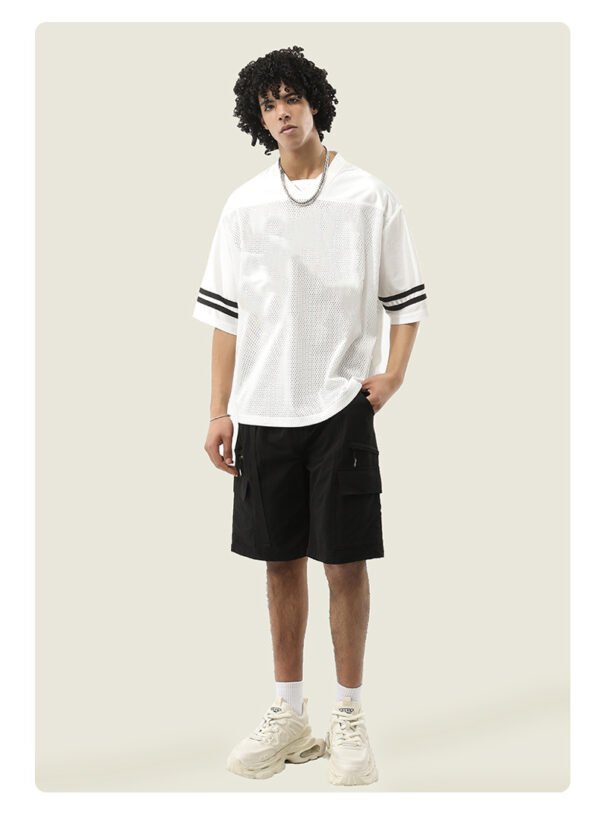
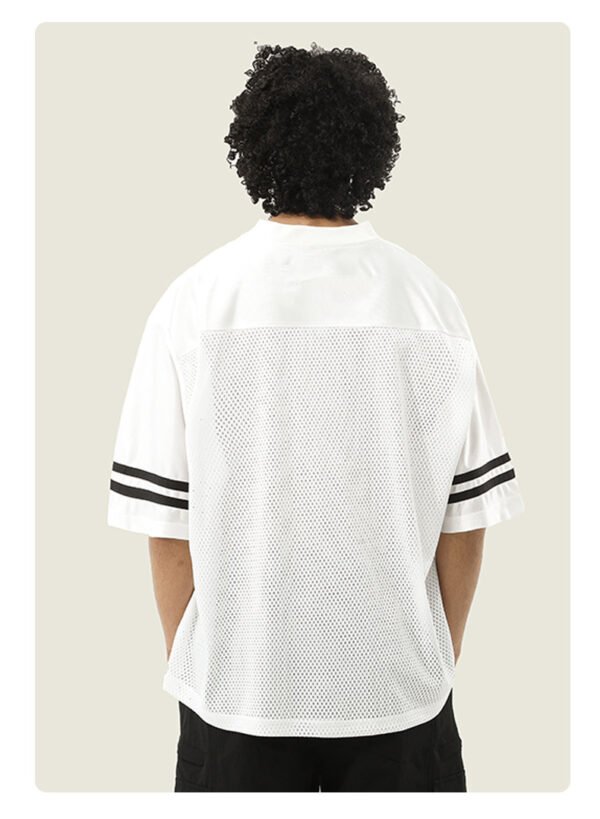
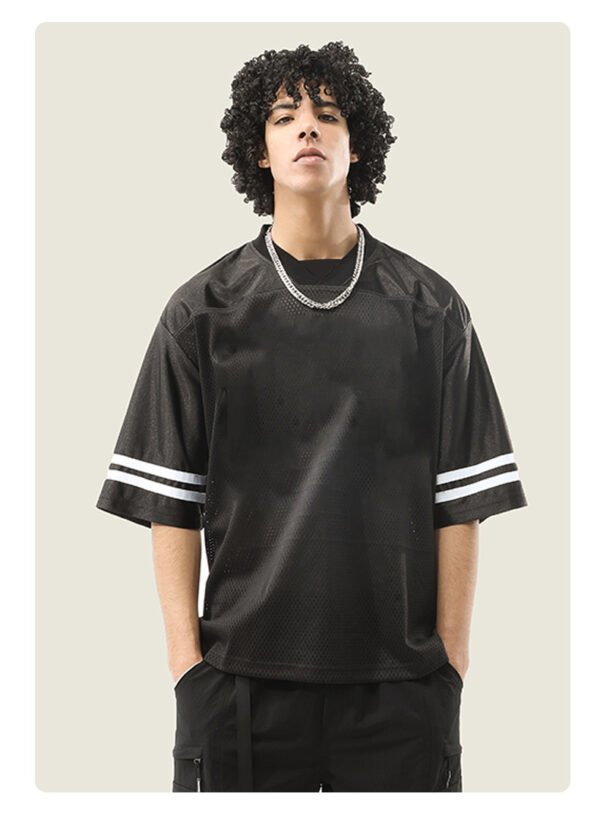
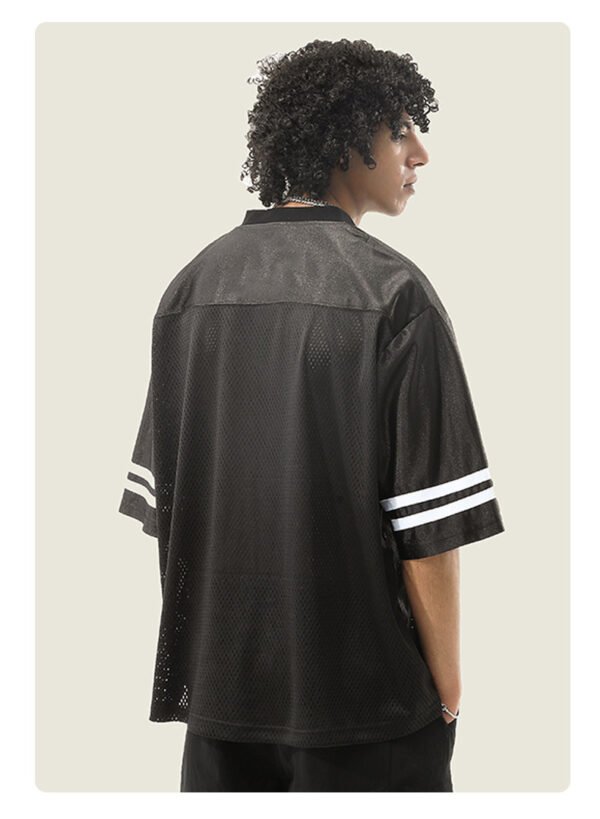



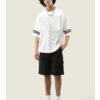
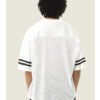
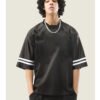
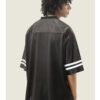

This custom mesh jersey T-shirt is developed around color-block seam accuracy, where small placement errors become immediately visible against black and white contrast. The supplied image shows a relaxed V-neck silhouette, open-texture body, and matched double sleeve stripes, creating a focused approval target for production.
Why Seam Registration Matters
On a high-contrast jersey, the eye reads the sleeve stripes before subtle surface texture. If stripe height drifts between sleeves or sizes, the garment looks improvised. Registration therefore protects the intended graphic proportion while keeping the relaxed silhouette visually controlled during wear.
The image presents paired white bands crossing black sleeves at a consistent horizontal zone. That evidence supports a seam map with measured stripe widths, spacing, and sleeve reference points, rather than relying on freehand placement during cutting or sewing.
Mesh Structure and Joining Risk
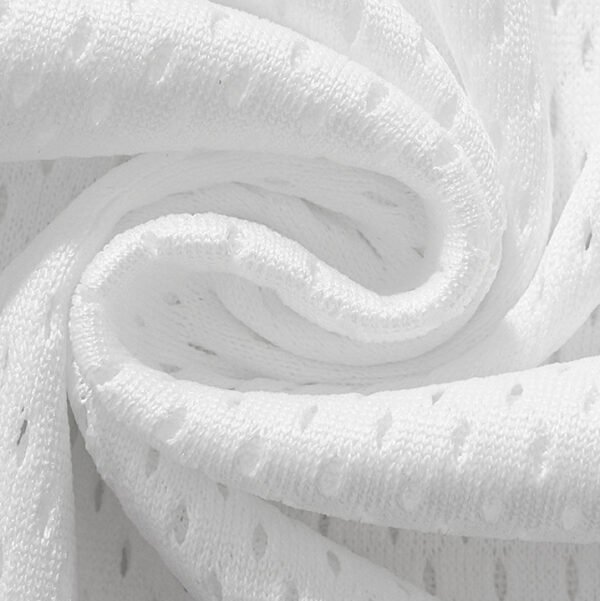
Open mesh can shift under feeding, pressing, and handling, especially where multiple layers meet at the shoulder, V-neck, and sleeve attachment. Stabilization and controlled seam allowances help preserve alignment without flattening the breathable surface or making the neckline appear distorted.
The visible body has a fine perforated texture while the neckline appears darker and more structured. VeeWen should confirm mesh stability, rib compatibility, seam allowance behavior, and SPI expectations through development samples before approving the production construction.
V-Neck Geometry
A V-neck concentrates visual lines toward the chest, so uneven binding tension can pull the point off center. The neckline must be balanced against shoulder width and sleeve stripe position, ensuring the front remains centered when the wearer moves or layers the garment.
For this design, neckline approval should include front-center measurements, rib recovery observation, shoulder seam placement, and the relationship between the V point and sleeve bands. These checks connect the graphic layout to the garment's actual three-dimensional fit.
Sleeve Stripe Execution
The double stripe treatment requires more than attaching white bands to black sleeves. Each band needs controlled width, spacing, turn at the underarm, and clean termination near the side seam. Poor transitions can create visible steps, twisting, or mismatched front and back impressions.
The supplied main image shows both sleeves carrying the same two-band visual language. During sampling, VeeWen can document stripe placement from the sleeve cap, compare left and right panels, and inspect the garment flat before wear testing.
VeeWen Development Checkpoint
VeeWen's product-development workflow should begin with a seam and stripe placement sheet tied to the approved measurement chart. Pattern engineering then translates those references into sleeve panels, neckline components, and graded points that can be reviewed before cutting the confirmation sample.
The useful checkpoint is a coordinated sample review: inspect stripe symmetry, V-neck centering, mesh handling, and size-to-size proportion together. Approval should record tolerances and construction notes so the color-block argument survives from prototype through the MOQ order.
Trade-Offs and Buyer Approval
Sharper contrast placement improves visual authority but increases cutting, sewing, and inspection sensitivity. A very open mesh may enhance visual lightness while making seam stability harder to control. Buyers should decide which surface character and alignment tolerance best support the intended retail positioning.
Approve this style when the sample maintains sleeve stripe symmetry, centered neckline geometry, clean seam transitions, and acceptable handfeel after finishing. The production brief should identify material confirmation, color standards, grading rules, and inspection points before commercial release.
Buyer Questions
Is the 240 GSM specification verified?
240 GSM appears in the supplied source title, so treat it as a source reference until VeeWen confirms the selected fabric, finished weight, and measurement method.
What should the first sample prove?
The first sample should prove stripe height, band spacing, sleeve symmetry, V-neck centering, mesh stability, and clean transitions at underarm and side seams.
Can the stripe colors be changed?
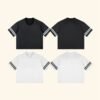
Color changes can be developed through the approved color standard, but each variation requires renewed seam registration checks because contrast affects perceived alignment.
What is the commercial MOQ?
The commercial minimum is MOQ: 100 pieces per style, with final quantities depending on approved specifications, size breakdown, colorways, and production documentation.
Approve the Seam Map for Sampling
Send the target size range, color references, label requirements, and intended quantity so VeeWen can convert the stripe alignment concept into an approval-ready development brief.


Reviews
There are no reviews yet.