


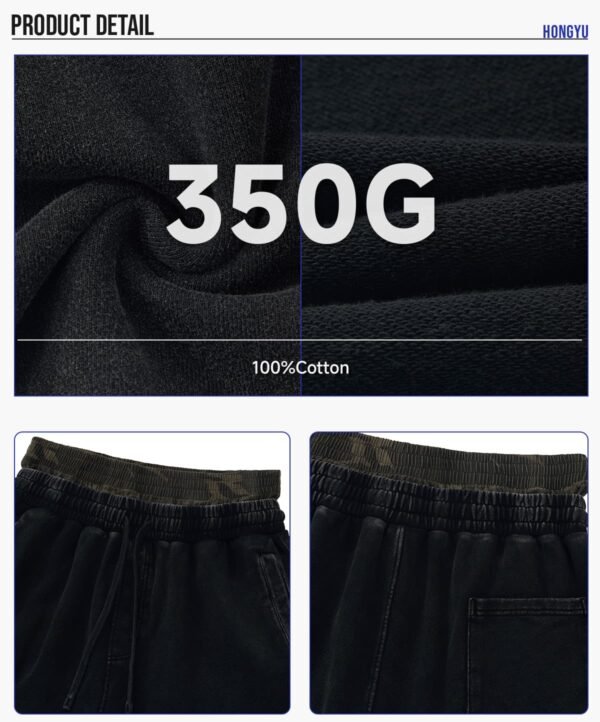






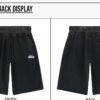

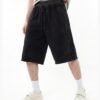
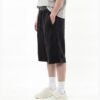



This custom cropped utility short is developed around one approval priority: keeping the adjustable double waistband secure when the wearer tightens, loosens, or repeatedly handles the drawcord. The supplied image provides a practical starting point, while reinforcement decisions must be confirmed through measured sampling and wear-focused review.
The Waist Is the Load-Bearing Detail
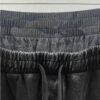
The waistband is not merely decorative here; it controls fit through elastic recovery and cord tension. Each tightening cycle transfers force into the channel, eyelets, and adjacent stitching, making reinforcement essential for consistent adjustment and reduced distortion during repeated wear.
The supplied image visibly shows a substantial gathered waistband, two cord ends, and a centered front adjustment area. That evidence supports a controlled construction brief, but it does not verify stitch density, cord specification, eyelet material, or long-term recovery, which remain development checkpoints.
Eyelet Placement Controls Comfort
An eyelet that sits too close to the center seam can create bulk, rubbing, or a visibly crowded drawcord exit. An eyelet placed too far outward can weaken adjustment symmetry and alter the intended front balance, especially on a cropped garment with a prominent waistband.
VeeWen should map eyelet centers against the front rise, channel width, and seam allowances during pattern review. The first sample should assess finger access, cord angle, backing stability, and whether reinforcement remains visually discreet from the front and inside waist.
Channel Reinforcement Protects Shape
The drawcord channel must carry tension without collapsing the waistband tunnel or pulling the top edge out of alignment. Reinforcement may involve controlled seam placement, suitable interlining, bartack positioning, or localized stitch support, but the final method depends on approved fabric behavior.
This product's double-waist construction creates an additional interface where layers can shift during sewing and wear. Development should therefore compare the channel against the waistband fold, elastic path, and front rise, checking that adjustment remains smooth without creating a rigid or bulky panel.
Distress Must Respect Structural Seams
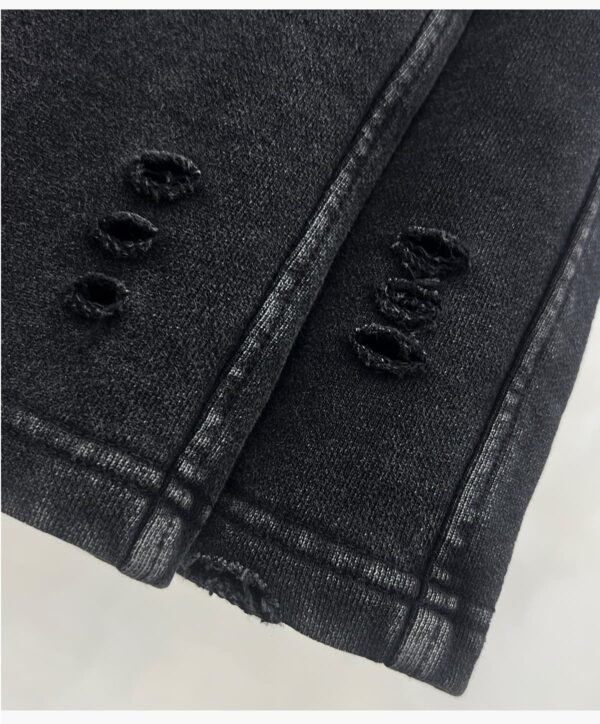
Distressing adds visual character, yet abrasion near the waistband, pocket opening, inseam, or lower-leg hem can remove useful strength from already stressed areas. The source wording identifies a distressed finish, while the supplied image supports a restrained dark appearance rather than a fully defined abrasion map.
The approval sample should separate aesthetic distress zones from structural seam clearance zones. VeeWen can mark each location on the pattern and wash or abrasion brief, then review fray length, edge stability, pocket security, and visual consistency before confirming repeatable production instructions.
VeeWen Development Workflow
VeeWen's workflow should begin with a construction sheet that isolates the waist assembly: elastic dimensions, cord route, channel width, eyelet position, reinforcement method, and seam allowances. The image references guide the visual target, while the pattern and sample translate that target into measurable production decisions.
After the first fit sample, the buyer should review waist adjustment, front appearance, pocket interaction, and distress clearance together. Any approved revisions must be reflected in the graded pattern and construction notes, so the manufacturing team can reproduce the agreed mechanism at the MOQ of 100 pieces.
Approval Checkpoint for Bulk Readiness
Bulk approval should focus on whether the waistband still looks balanced after adjustment, whether the cord exits remain secure, and whether the channel holds its shape through handling. A visually attractive sample is insufficient if reinforcement changes comfort, symmetry, or the intended cropped proportion.
Request confirmation of the final fabric reference, elastic recovery expectation, cord and eyelet selections, distress recipe, and tolerance points before purchase order release. The buyer's decision is to approve the complete waist-and-finish package, not isolated components viewed separately.
Buyer Questions
Can this style be developed in another fabric weight?
Yes, fabric weight can be reviewed during development, but changing weight may alter drape, channel bulk, elastic recovery, and the approved cropped proportion.
What should the first sample verify?
The first sample should verify cord movement, eyelet security, channel flatness, waistband symmetry, pocket interaction, comfort, and distress clearance around structural seams.
Can the distress pattern be adjusted?
Yes, distress placement can be revised through a marked artwork or wash brief, with structural seam clearance protected during sample and approval reviews.
What is the minimum commercial quantity?
The commercial minimum is MOQ: 100 pieces per style. Final material, color, trim, construction, and finish details remain subject to approved development documentation.
Approve the Waist Engineering
Send your target measurements, fabric reference, cord direction, and distress map to begin a focused sample review for this reinforced cropped short with MOQ: 100 pieces per style.


Reviews
There are no reviews yet.