


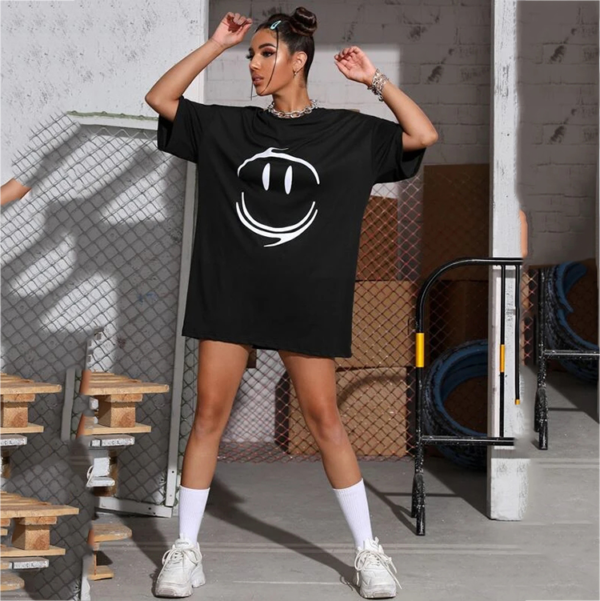
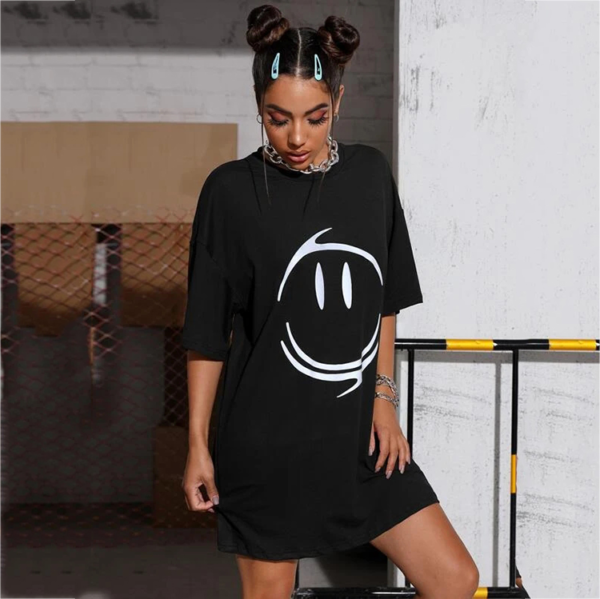



This black oversized T-shirt is defined by the contrast between a dark cotton body and a highly visible reflective chest graphic. Its packaging must make that contrast legible at first opening, while preserving the relaxed proportions that give the garment its streetwear identity.
Reflective Contrast Drives First Recognition
The supplied image shows a bright reflective graphic against an almost entirely black T-shirt body. That contrast is not a minor decoration; it is the clearest visual identifier, so a fold that hides the center front weakens the buyer's first reading of the product.
Packaging review should use both ordinary room light and direct illumination. Record whether the graphic remains discoverable in the folded state, then confirm the unpacked presentation does not leave the front dulled, sharply creased, or visually interrupted by fold lines.
The Graphic Should Guide Fold Placement
The reflective design sits centrally on the front and occupies meaningful vertical space. Folding directly through its strongest visual area can divide the motif, create a temporary crease, or make the packaged unit appear like an unprinted black tee.
Develop a graphic-aware fold with the artwork boundaries marked on the pattern or sample. Compare center-front protection against compactness, and select the arrangement that presents enough of the motif for recognition without adding unnecessary packaging complexity.
Black Fabric Magnifies Surface Changes
A black ground makes lint, pressure shine, dust, and sharp fold marks easier to notice than on a lighter color. The image presents a clean dark field around the graphic, so packaging must protect that visual clarity during folding, stacking, and buyer handling.
The sample review should inspect the front and sleeves after packing and unpacking. Check whether contact points leave visible marks or transfer debris, then define acceptable presentation conditions and a repeatable handling sequence for production packing instructions.
Oversized Proportions Add Fold Volume
The short sleeves extend broadly from the relaxed body, and the hem falls with generous width. Those proportions support an oversized fit but create more fabric to align, increasing the chance that a compact fold will bury the reflective graphic or produce uneven package edges.
VeeWen should test at least one compact and one presentation-oriented sequence against the approved size sample. Compare edge alignment, folded thickness, graphic visibility, and recovery after opening, then select a method that protects both commercial efficiency and silhouette communication.
Reflective Application Needs Handling Awareness
The graphic appears luminous under direct light, but the image alone does not establish its application method, durability, or care behavior. Different applications may respond differently to pressure, heat, abrasion, and repeated folding, making packaging approval dependent on the chosen construction.
During development, pair the graphic sample with the intended fold and handling routine. Confirm whether protective tissue, a placement adjustment, or reduced compression is needed, and keep every decision tied to the actual approved graphic rather than a generic T-shirt packing rule.
Workflow Checkpoint: Validate the Opening Moment
VeeWen's workflow should treat packaging as part of the graphic approval loop for this style. Review the cotton reference, oversized block, artwork placement, application route, and proposed fold together so a visually successful sample is not later compromised by packing decisions.
The buyer's approval checkpoint is a side-by-side review of packed and unpacked units under controlled light. Sign off only when the reflective motif is recognizable, the black body remains clean, and the oversized proportions recover acceptably after opening.
Buyer Questions
Why does packaging matter for this T-shirt?
The reflective chest graphic is the main visual identifier. A poorly positioned fold can hide, divide, or pressure-mark it, reducing recognition before the buyer handles the fully opened garment.
Is 100% cotton confirmed?
The supplied source wording states 100% cotton. Final fabric documentation should still confirm knit structure, weight, finishing, shrinkage, and the approved material specification.
Should the graphic remain visible inside packaging?
That depends on the sales presentation objective, but the buyer should deliberately approve whether partial visibility or full concealment best supports recognition and protects the application.
What is the minimum order?
The commercial minimum is MOQ: 100 pieces per style. Final costing and production planning depend on approved artwork, fabric, measurements, construction, and packaging requirements.
Approve the Reflective Fold Test
Share the artwork, size specifications, and intended sales presentation so VeeWen can validate graphic visibility, black-surface handling, oversized alignment, and the final packing sequence.


Reviews
There are no reviews yet.