


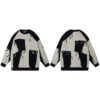
This custom color-block knitwear coat is built around surface direction rather than simple color matching. Its broad contrasting panels and visibly irregular seam details require one-way cutting whenever the chosen knit has a brushed or raised face. VeeWen can develop the look through controlled panel mapping and approval samples.
Direction Can Change the Same Color
A brushed or raised knit can reflect light differently when panels face opposite directions. Even when two pieces share the same color, reversed nap may appear lighter, darker, or more matte. On a large oversized coat, that shift can become part of the visible design unintentionally.
The supplied image presents a light neutral and black body with broad, irregular panel boundaries. If the selected fabric has directional surface character, each panel should be marked face-up and cut consistently, preserving a deliberate visual relationship across the chest, sleeves, and lower body.
Panel Mapping Protects the Patchwork Rhythm
The front shows large geometric blocks rather than a regular repeating check. That arrangement makes panel mapping more important than generic plaid matching, because the buyer is approving the relationship between light areas, dark inserts, sleeve sections, and the central chest motif.
A technical pack should identify every panel, grain direction, color, and seam allowance before cutting. The map should also state whether symmetry is required at the front, whether sleeves mirror one another, and where natural knit distortion may be accepted.
Distressed Seams Need Controlled Variation
Loose yarn and uneven seam edges are visible in the reference, especially where contrasting panels meet. These details can create character, but they also vary with yarn behavior, stitch density, finishing tools, and handling. The development challenge is defining an intentional range rather than promising identical irregularity.
VeeWen's sample review should photograph approved seam examples at close range and record acceptable thread length, edge exposure, and placement. Buyers should decide whether distressing is produced during assembly, finishing, or both, because each route affects consistency and durability.
Oversized Proportions Magnify Surface Errors
The garment's broad torso, dropped shoulder, and extended sleeves create generous fields for color and texture. A reversed nap line or mismatched panel can therefore read as a large block-level error rather than a small variation, particularly under directional retail or studio lighting.
Fit review should include front, back, sleeve, and side views on a person, not only a flat lay. Examine the coat while standing and moving, because relaxed folds can expose direction changes that remain hidden when the knit is pressed flat.
VeeWen Workflow Sets Direction Before Cutting
VeeWen should translate this reference into a directional cutting sheet before pattern approval: surface face, panel arrows, color-block identifiers, seam-distress zones, and grading notes. That document connects fabric inspection, marker planning, sewing sequence, and finishing review around one specific visual mechanism.
During development, the buyer can approve a fabric swatch in multiple orientations, then compare a panel sample before full garment sampling. This staged checkpoint helps confirm whether the chosen knit actually needs one-way cutting and whether the intended texture survives assembly.
Approval Gate for Surface Consistency
The buyer's decision should distinguish deliberate irregularity from uncontrolled inconsistency. Approve the style when the color blocks remain clearly positioned, the surface direction reads consistently, and distressed joins stay within the agreed visual range across the complete garment.
If the fabric shows little or no directional response, one-way cutting may add cost or yield pressure without meaningful benefit. Confirm the nap requirement after swatch testing, then finalize the marker strategy, seam tolerances, and bulk approval standard with VeeWen.
Buyer Questions
Does this knitwear coat definitely require one-way cutting?
Not automatically. The requirement depends on whether the selected knit has a visible brushed, raised, or light-reflective direction, which should be checked through oriented swatch review.
Can the distressed seams be made more uniform?
Yes, the visible fraying can be translated into defined tolerance ranges for yarn length, exposure, and placement. Buyers should approve close-up samples before applying the treatment across sizes.
Is the garment a true woven coat or knitted pullover?
The supplied image and source wording indicate knitwear, including ribbed edges and sweater construction. Exact structure, gauge, fiber blend, weight, and finishing remain To Confirm during development.
What is the minimum order for this style?
The commercial minimum is MOQ: 100 pieces per style. Final knit selection, panel colors, distressing, size assortment, and production details require approval before manufacturing confirmation.
Approve the Directional Knit Sample
Share the target knit, color-block map, size range, and desired seam character with VeeWen. Request oriented swatch checks and a full sample review before locking one-way cutting, marker planning, and bulk tolerances.



Reviews
There are no reviews yet.