

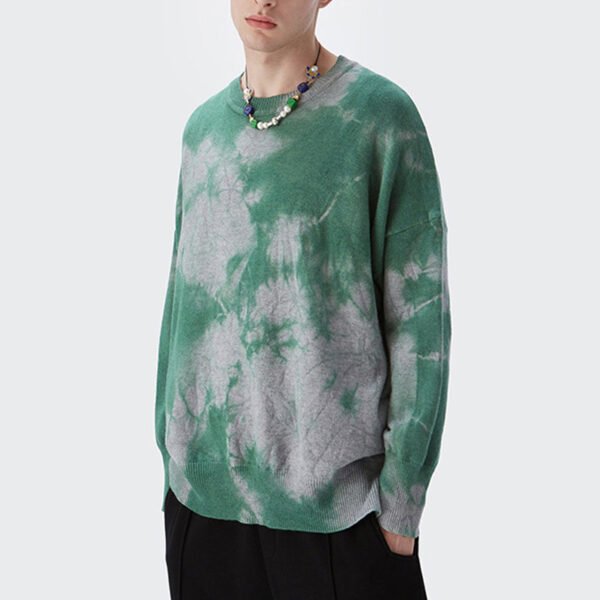




Custom men's oversized tie-dye sweater development centered on trim finish and wash compatibility, ensuring irregular blue color movement does not compromise rib stability or the open lower edge. The supplied rear image shows a relaxed knit silhouette, ribbed cuffs, extended hem, and visible layered styling.
The Core Balance: Wash Expression and Trim Control
The product's defining argument is the relationship between expressive dye movement and disciplined knit finishing. Irregular color can create visual depth, but wet processing and handling may expose weak rib recovery, uneven edges, or unwanted distortion.
The supplied rear image shows blue tonal variation across the body while the cuffs and lower band remain visually organized. That contrast establishes the approval target: expressive surface movement should coexist with stable, intentional boundaries.
Reading the Supplied Visual Evidence
The main image shows a blue and grey knit with irregular dye concentration, long sleeves, ribbed cuffs, and an oversized rear shape. A white layer extends below the hem, confirming that the garment is intended to support deliberate layered proportions.
The source wording identifies an open fork hem, although the rear image gives only partial visibility of the lower opening. The hem shape, split length, edge finishing, and interaction with the underlayer therefore require direct sample confirmation.
Why Trim Finish Changes the Wash Result
Ribbed trims absorb, stretch, and recover differently from the sweater body. Dye penetration, agitation, and drying can make those differences more noticeable, especially around cuffs, lower bands, side openings, and any exposed cut edge.
A firm trim may preserve the silhouette but restrict the open hem's relaxed movement. A softer trim may improve drape while allowing edge growth. Development should compare these outcomes after the intended wash route rather than judging trims only before processing.
Tie-Dye Placement and Knit Behavior
Irregular dye placement can alter how the eye reads the sweater's proportions. Darker concentration near seams or rib transitions may visually tighten those areas, while broad pale zones can make the oversized body appear wider or longer.
The supplied image suggests broad, organic movement rather than a rigid repeat. Buyers should approve the acceptable placement range, tonal contrast, and seam interaction so production variation remains intentional without implying an unverified performance claim.
VeeWen Workflow Checkpoint for This Style
VeeWen's workflow should convert the visual direction into a knit specification covering gauge, body measurements, rib dimensions, hem opening, dye placement method, and wash sequence. The goal is to make trim compatibility part of the garment brief from the beginning.
During sample review, inspect the sweater before and after the planned wash process. Measure cuff and hem recovery, examine the fork opening, compare dye movement across panels, and confirm that the oversized silhouette still supports the intended layered styling.
Trade-Offs Before Production Approval
A stronger rib finish can provide cleaner edges and longer visual definition, yet it may reduce softness or movement at the openings. A looser finish can enhance the relaxed streetwear attitude but may demand tighter process control to prevent uneven growth.
The buyer's decision should prioritize the collection's desired balance between expressive wash character and repeatable trim appearance. Approve the style only after the washed sample demonstrates stable edges, acceptable tonal variation, and comfortable oversized proportions.
Buyer Questions
What should be tested before approving this sweater?
Test the intended wash route on the complete knit, then check color movement, cuff recovery, lower-band stability, fork-hem behavior, and finished measurements against the approved sample.
Can the tie-dye effect be made more consistent?
Yes, placement guides and approved tonal ranges can improve repeatability, although irregular dye character will still require defined tolerance across panels and trim transitions.
Which trim areas need the closest review?
Review sleeve cuffs, lower band, fork-hem edges, and any exposed openings because these areas combine stretch, dye contact, handling, and visible silhouette control.
What is the commercial minimum for this style?
The commercial minimum is MOQ: 100 pieces per style, with knit specifications, dye direction, wash approvals, measurements, and construction details documented before production.
Approve the Washed Trim Result
Share the preferred knit hand, dye contrast, oversized measurements, and hem opening with VeeWen for development review. We will organize sampling around trim recovery, wash compatibility, and controlled visual variation.



Reviews
There are no reviews yet.