
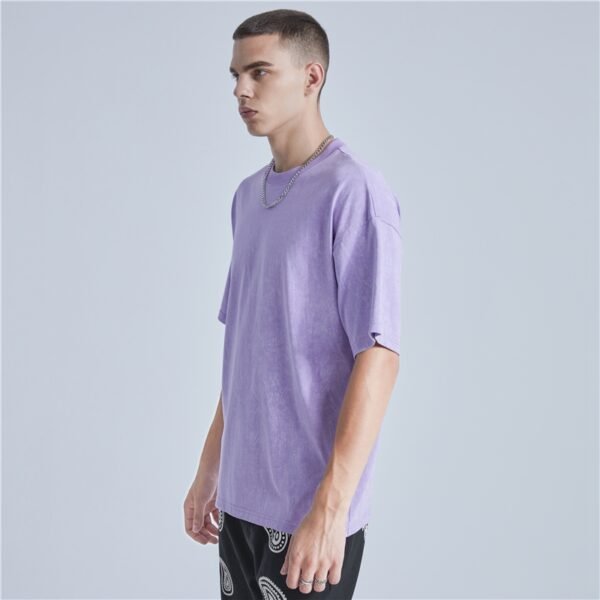

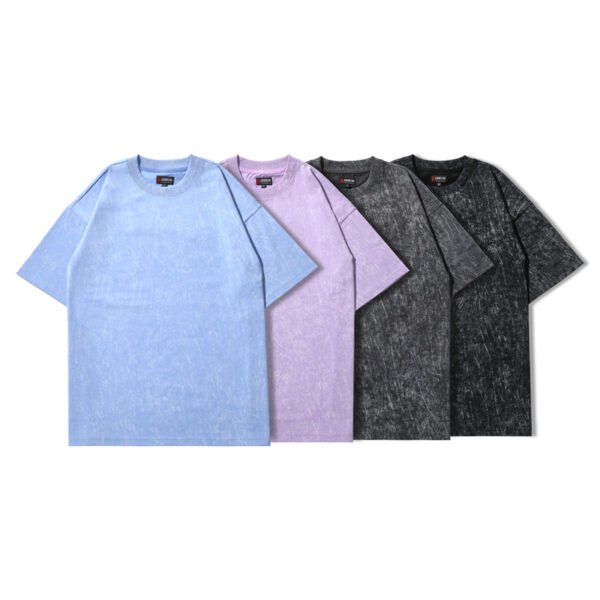

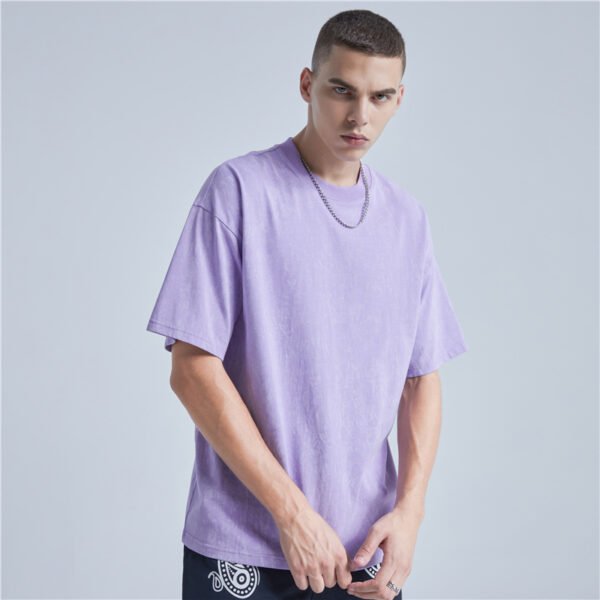
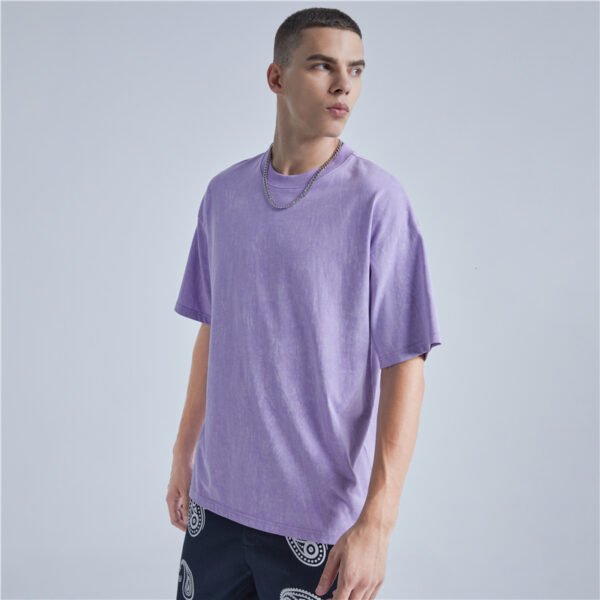


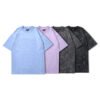
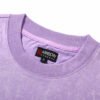

This purple acid-wash T-shirt is a development base for artwork that must remain legible after a visibly irregular wash. The 220 GSM reference and relaxed silhouette provide a substantial starting point, while embroidery density becomes the key approval variable before sampling.
Why Wash Variation Changes Embroidery Risk
An acid wash alters shade concentration across the surface, so a dense embroidered motif may appear uneven even when stitch execution is consistent. The purple reference visibly carries lighter and darker zones, making artwork scale, thread contrast, and placement inseparable decisions.
Needle penetration can compact the knit locally, while wash movement can exaggerate puckering or create a halo around heavily decorated areas. A stable result therefore depends on testing the actual body fabric, backing, stitch count, and wash recipe together rather than approving them separately.
Base Fabric Stability Before Artwork Density
The stated 220 GSM reference suggests a more substantial T-shirt platform than lightweight jersey, but weight alone does not prove recovery, shrinkage, or embroidery support. VeeWen should confirm the knit structure, usable stretch, and panel behavior before fixing a dense chest or back design.
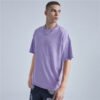
A relaxed oversized shape increases the visible decorated area and can magnify distortion if the shoulder or side seam shifts during finishing. The development sample should measure the embroidered panel against the garment after wash, checking alignment at the neckline, shoulder, side seam, and hem.
Placement Around the Relaxed Silhouette
The image shows dropped shoulders, broad sleeves, and a generous body, giving the buyer useful canvas for centered back embroidery or a controlled chest placement. Artwork should remain clear when the garment hangs naturally, not only when the jersey is pulled flat on a table.
For dense motifs, avoid crossing shoulder seams or placing heavy coverage too close to the rib collar, where seam tension and neckline recovery can compete with the embroidery. A measured placement grid should define edge clearances, artwork scale, and acceptable visual movement after laundering.
Managing Thread Coverage and Hand Feel
Dense embroidery increases local stiffness, especially on a washed surface intended to feel soft and broken-in. Excessive fill can create a rigid patch effect, while insufficient support may allow letters or fine lines to collapse. The buyer should approve hand feel alongside visual sharpness.
A practical test can compare satin stitch, fill stitch, and lighter outline treatments on the same purple fabric. The chosen construction should preserve readable detail without overwhelming the garment's washed character, particularly if the design occupies a broad front or back panel.
VeeWen Workflow for This Decoration
VeeWen's development workflow should begin by converting the approved artwork into a stitch-density map tied to the T-shirt's actual panels. The sample room can then position backing and hoop marks away from seams, allowing the wash trial to evaluate decoration and base stability as one system.
The next checkpoint is a post-wash review using the intended silhouette, color target, and embroidery scale. Buyer approval should record acceptable puckering, color irregularity, thread contrast, and panel measurements before grading, ensuring later sizes do not quietly change the visual balance.
Approval Gate for Production Release
Release this style only when the buyer has compared pre-wash and post-wash samples under consistent lighting and confirmed that the motif remains intentional across tonal variation. The decision should cover stitch density, backing visibility, hand feel, neckline relationship, and dimensional change.
If the embroidery becomes too stiff or the wash obscures fine detail, reduce coverage, enlarge critical elements, or move the motif to a more stable panel. The final tech pack should lock the artwork file, placement tolerances, wash direction, and inspection points before bulk cutting.
Buyer Questions
Is embroidery already shown on the supplied garment?
No. The supplied image shows a plain purple acid-wash T-shirt, so embroidery density, backing, placement, and post-wash appearance require a dedicated development sample.
Does 220 GSM confirm the complete fabric specification?
No. The source wording states 220 GSM cotton, but composition percentages, knit structure, recovery, shrinkage, and finishing behavior still require confirmation.
Where should dense embroidery be positioned?
A centered chest or back panel is a logical starting point, provided the artwork clears the rib collar, shoulder seams, side seams, and hem.
What must the buyer approve before production?
Approve the washed embroidered sample, including legibility, puckering, hand feel, backing behavior, placement tolerances, dimensional change, and size-graded artwork balance.
Submit Your Embroidery Development Brief
Send VeeWen the artwork, target wash character, preferred placement, and size range. We will organize the sample checkpoints needed to approve stability, density, hand feel, and production details.


Reviews
There are no reviews yet.