

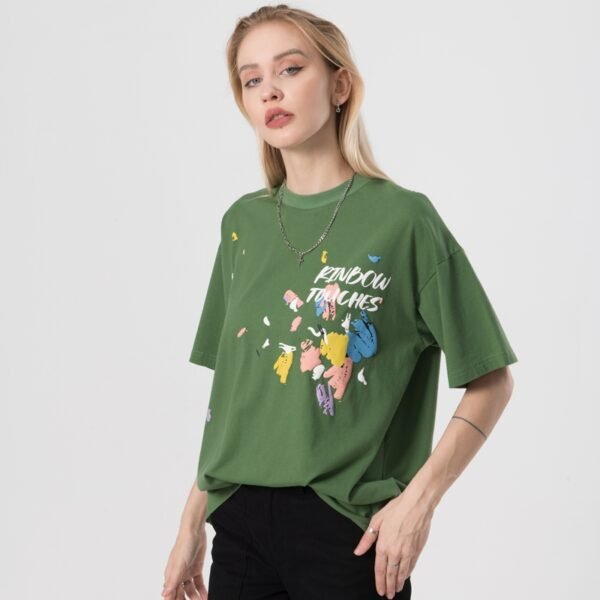
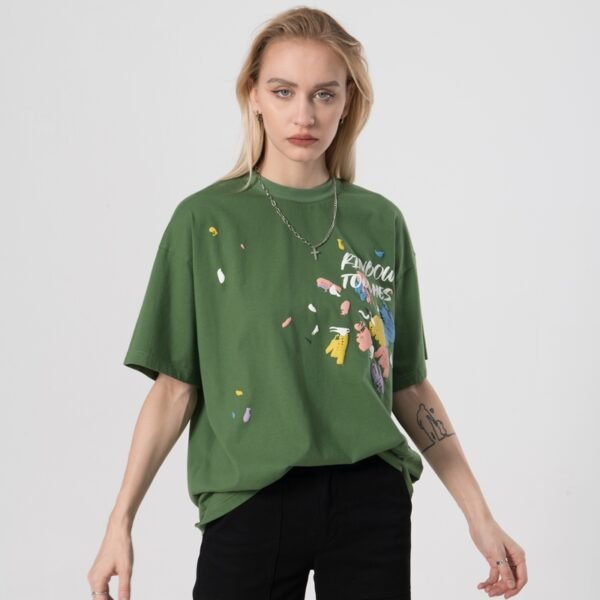

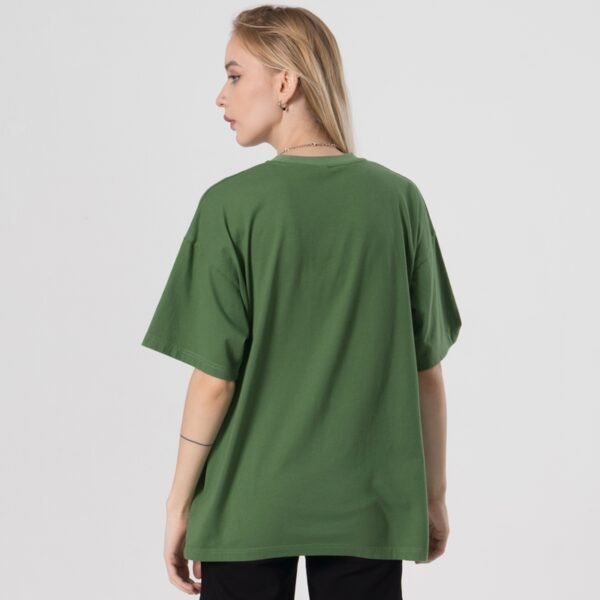
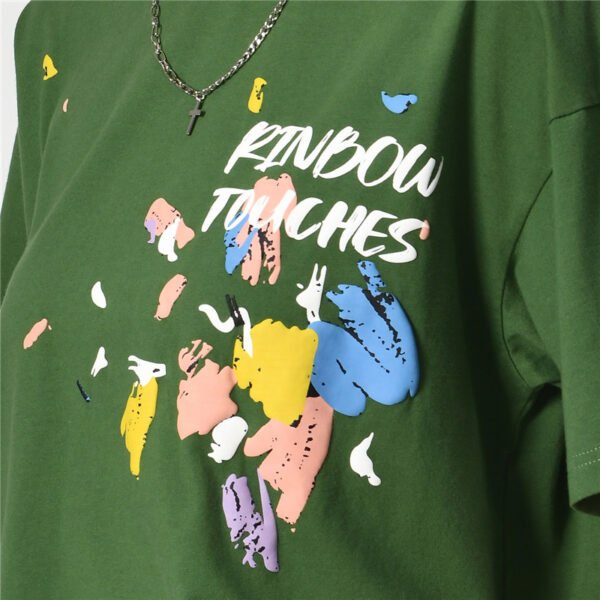

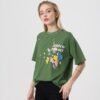
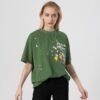
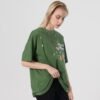


This custom washed women's T-shirt is developed around one production variable: binding width and stretch control. The supplied image shows a clean narrow crew neck, relaxed proportions, and a raised multicolor chest graphic, so neckline recovery must be approved alongside the garment's visual softness and movement.
Why Binding Width Controls the Product's Wear Experience
A narrow neck binding gives this relaxed T-shirt a cleaner visual frame, but it has less material available to absorb tension. If cut too narrow, the opening can ripple, twist, or lose recovery after repeated dressing and washing cycles.
A wider binding would distribute tension more generously and may improve stability, yet it could make the neckline look heavier against the soft washed body. The development target is therefore a balanced width that feels secure without overpowering the graphic-led front.
Reading the Supplied Image as a Construction Brief
The main image shows a level crew neckline, compact edge treatment, and no obvious gaping around the collar. It also shows a relaxed body and sleeves, meaning the neck opening becomes the primary point controlling perceived neatness.
The green washed appearance and scattered raised artwork create a casual surface story, while the neckline remains comparatively restrained. That contrast should guide sampling: preserve the softened body character, but keep the binding visually precise and consistently seated.
Stretch Recovery Requires a Defined Measurement Method
Binding approval should record relaxed opening circumference, extension force, and post-release recovery using the same test method across development samples. These measurements reveal whether the rib or self-fabric binding is carrying tension consistently.
Recovery should also be reviewed after the planned wash route, because washing can change both fabric relaxation and binding length. The buyer should compare before-and-after measurements, then approve a tolerance that protects appearance without making the opening restrictive.
Managing a Raised Graphic Near a Flexible Neckline
The visible chest graphic sits below the neckline, but its raised, multicolor forms add visual and possibly physical weight to the upper front. That area can influence how the shirt hangs when the collar is stretched during dressing.
Artwork placement should maintain a clear buffer from the binding seam and avoid loading the neckline with unnecessary print overlap. A placement template, approved artwork scale, and defined print height can reduce interaction between decoration and collar recovery.
How VeeWen Should Develop This Specific T-Shirt
VeeWen's development workflow should begin with a neck-binding trial attached to the chosen washed cotton reference, followed by a fit sample carrying the actual chest artwork position. This isolates collar behavior before broader styling decisions become fixed.
The next checkpoint is a wash-and-recovery review using the same binding width, seam allowance, and finishing route intended for production. VeeWen can then revise the pattern or rib specification from measured evidence rather than relying on appearance alone.
Buyer Approval Checkpoint Before Bulk Cutting
Approve this style when the neckline remains level, comfortable, and visually narrow after handling and the planned wash evaluation. Confirm that the relaxed body still hangs freely and that the graphic does not distort the upper front.
The final approval pack should identify binding width, rib or self-fabric choice, seam allowance, opening measurement, recovery tolerance, wash route, and graphic placement. Those details convert the image direction into a repeatable manufacturing standard for MOQ: 100 pieces per style.
Buyer Questions
Can the neckline use rib binding instead of self-fabric?
Yes, both routes can be developed, but the choice changes recovery, surface contrast, and binding behavior. Approve the construction after comparing measured stretch and washed appearance.
Does the supplied image confirm a puff-print process?
No. The raised appearance is visible, while the exact print process, height, curing method, and durability remain To Confirm through artwork and production sampling.
What should the buyer measure on the first sample?
Measure binding width, neckline opening, seam flatness, extension, recovery, and post-wash change. Compare those results with the approved fit block and comfort expectations.
What is the commercial minimum for this style?
The exact commercial minimum is MOQ: 100 pieces per style. Final quantities, color assortment, artwork versions, and production details remain subject to approved specifications.
Approve the Neckline Before Artwork Lock
Send the target measurements, wash direction, artwork file, and preferred binding material to begin development. VeeWen will align the sample review around neckline recovery, graphic placement, fit, and MOQ: 100 pieces per style.


Reviews
There are no reviews yet.