


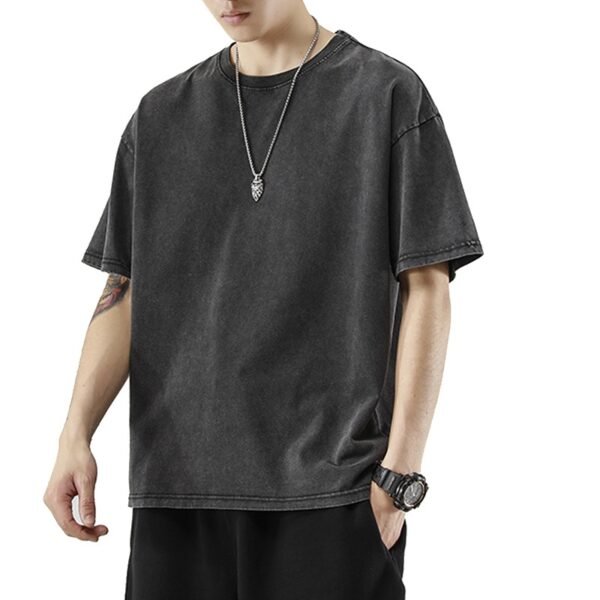
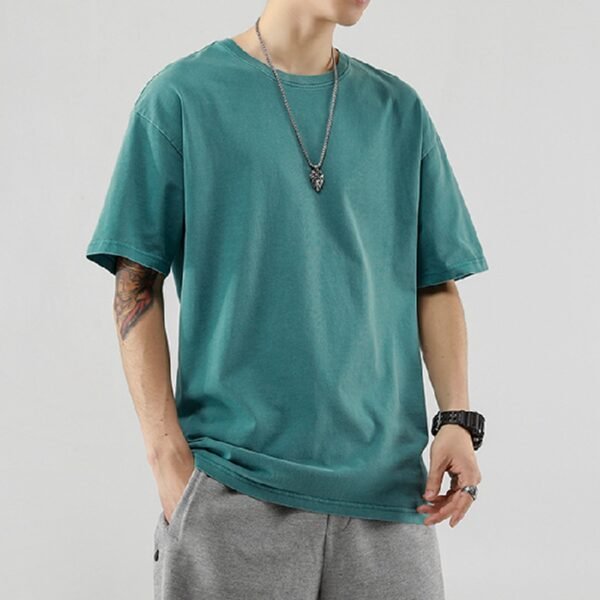
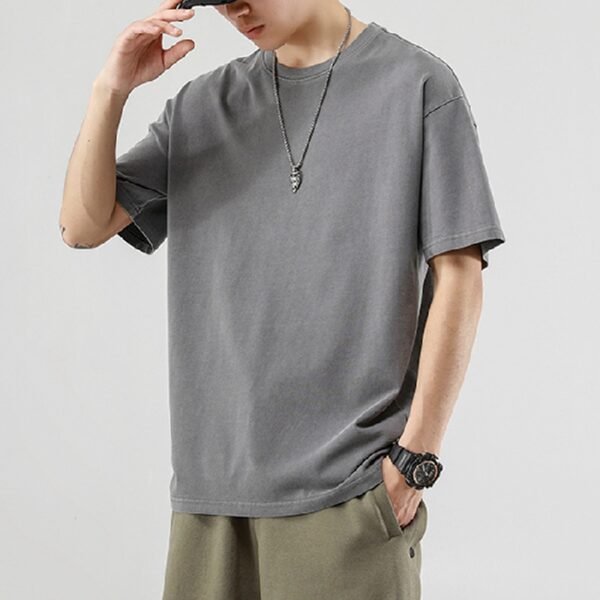
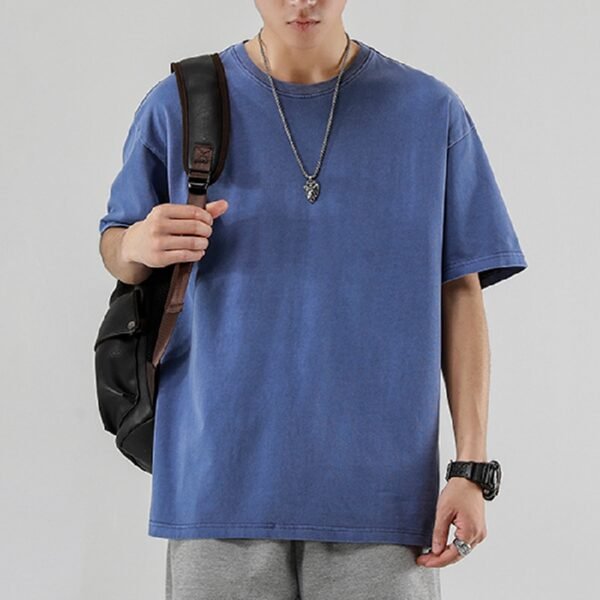
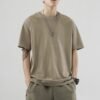
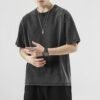
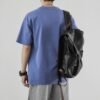
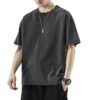
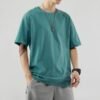
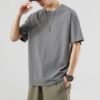

This men's oversized T-shirt is developed around neck rib recovery and neckline shape. In the supplied image, a broad taupe body, dropped shoulders, and wide sleeves depend on the crew neck to anchor the upper frame. VeeWen's product-development focus is therefore collar geometry, rib behavior, and measurable approval.
The Collar Anchors the Oversized Shape
An oversized body creates visual width across the shoulders and chest, so the neckline must provide a stable point of focus. In the supplied image, the crew neck separates the upper torso from the surrounding volume and keeps the relaxed silhouette deliberate.
If the collar opening is too wide, the shirt can appear loose or collapsed. If it is too tight, the fabric gathers and restricts the intended casual proportion. The target is a balanced opening that supports movement while retaining a clean front profile.
Rib Recovery Protects the First Impression
Neck rib recovery describes how the collar returns toward its intended opening after stretching. On a broad, relaxed T-shirt, poor recovery can make the neckline ripple, flatten, or stand away from the body, changing the garment's perceived quality and fit.
The buyer should inspect recovery after repeated controlled stretching and after laundering according to the intended care process. This does not prove a laboratory performance result, but it gives a practical approval checkpoint for the collar's visible behavior.
Shape and Width Must Be Measured Together
A neckline is defined by more than rib width. The opening circumference, front depth, shoulder seam position, binding or rib height, and seam allowance work together to establish the collar's shape. The image shows why those relationships matter against a wide upper body.
A taller rib may create stronger framing but can make the style feel more formal or restrictive. A lower rib appears lighter and more casual, yet may offer less visual structure. The approved sample should settle this proportion using measurements and photographs.
Dropped Shoulders Increase Collar Responsibility
The supplied image shows shoulder seams falling outward from the neck, with sleeves beginning lower on the arm. This construction enlarges the upper silhouette and places greater responsibility on the collar to keep the garment visually centered.
Pattern changes should be reviewed at the neckline and shoulder junction together. Moving the shoulder seam without revisiting the collar can make the neck look off-center or stretched. The trade-off is between a stronger dropped-shoulder effect and the stability of the upper frame.
VeeWen Workflow for This Product
VeeWen can translate the reference into a collar-led technical brief covering neckline measurements, rib composition direction, seam construction, shoulder placement, fabric behavior, and the intended logo or decoration zone. The neckline is approved as part of the full garment, not as a detached trim.
The workflow checkpoint is a complete sample review after fitting and laundering observation. The buyer records opening dimensions, rib height, seam alignment, recovery judgment, and approved appearance before releasing the MOQ: 100 pieces per style order.
Approval Should Include Wear and Care Review
A collar can look correct on a hanger yet change during dressing, movement, and care. Buyers should check the neckline while the model raises the arms, turns the head, and wears the shirt naturally, then compare the result after the agreed care process.
The decision is to approve the neckline as a repeatable construction standard. If recovery, opening, or shape remains uncertain, revise the rib or pattern before production, because later correction is more disruptive than an early sample adjustment.
Buyer Questions
Why is neck rib recovery central to this style?
The relaxed body creates width, so the collar must retain its opening and shape to keep the oversized silhouette centered, clean, and intentional during wear.
What neckline details should be approved?
Approve opening circumference, rib height, seam alignment, front depth, shoulder junction, stretch response, and appearance after the intended laundering process.
Can the shirt support custom logos?
The source wording references customizable logo use. Artwork size, placement, decoration method, and compatibility with the selected fabric require separate development approval.
What is the minimum order quantity?
The commercial minimum is MOQ: 100 pieces per style. Confirm colors, sizes, decoration requirements, and the approved neckline specification before ordering.
Lock the Crew-Neck Standard
Share your target measurements, color direction, logo artwork, and care expectations for a collar-focused sample, then approve production after recovery and neckline shape are documented.


Reviews
There are no reviews yet.