



This custom plaid shirt is developed around laundering stability, where side-seam rotation can disrupt the visible check pattern. Its relaxed silhouette, short sleeves, button front, distressed surface, and bold chest treatment create a distinctive sample that demands both visual and dimensional approval.
Why the Plaid Grid Exposes Rotation
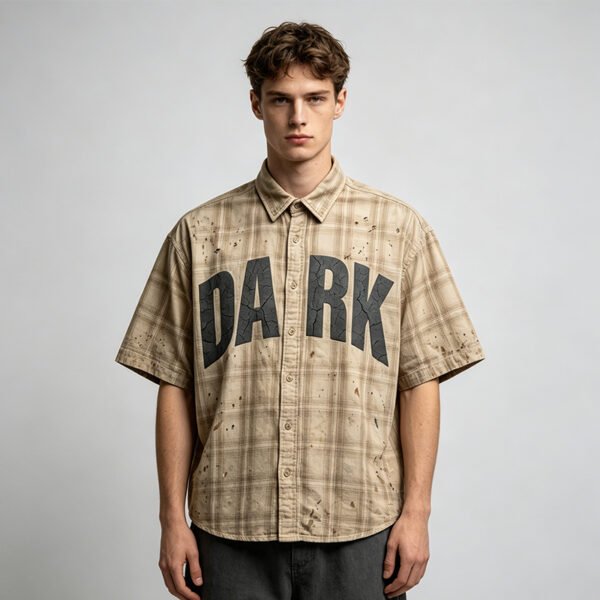
Side-seam spirality is a laundering-controlled fit risk in this shirt because the plaid grid makes rotation immediately visible. The front image shows a straight button line, level hem, and orderly vertical checks, creating a clear approval reference before wash testing.
VeeWen development should lock the grain direction, panel alignment, and seam allowance at pattern stage, then inspect side seams after a controlled laundering sample. This sequence separates fabric relaxation from sewing distortion, so corrective action can target pattern balance, cutting, or assembly rather than guesswork.
Pattern Balance Before Cutting
A check fabric requires more than nominal measurements because visual lines reveal imbalance across the front, back, sleeves, and side panels. The sample should document center-front alignment, hem relationship, sleeve pitch, and matching expectations before marker planning begins for this graphic shirt.
VeeWen's workflow can translate those observations into a measurement sheet and cut-panel approval set. The buyer should review the first sewn shell against the image reference, confirming that the plaid remains intentional around the placket and that the relaxed shape does not create avoidable twisting.
Wash Testing the Construction
Laundering can release tension unevenly through woven panels, seams, and applied artwork, changing how the shirt hangs even when its dry measurements appear acceptable. Spirality review therefore belongs after the agreed wash process, with side seams compared against the original grain and hem reference.
The development checkpoint should record prewash and postwash body length, width, sleeve position, and seam rotation. Because no laundering specification is supplied, VeeWen should confirm the buyer's wash recipe, testing tolerance, and inspection method before treating the sample as bulk-ready.
Managing Distressed Surface Variation
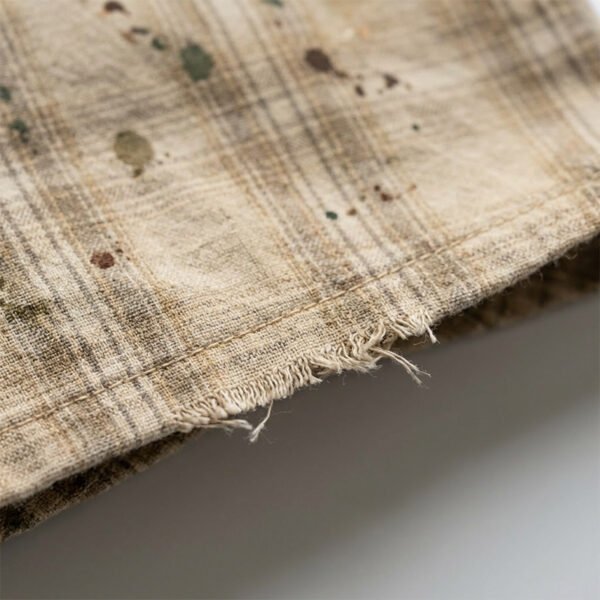
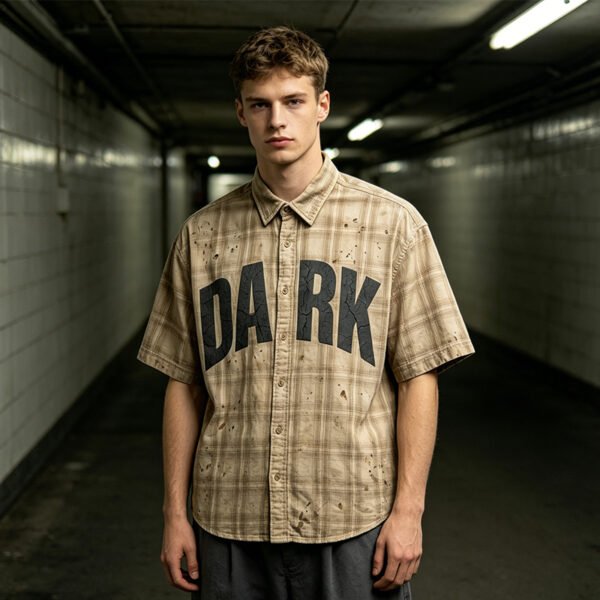
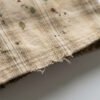
The image shows scattered dark marks across the beige plaid, giving the surface an irregular vintage character rather than a uniform solid appearance. That treatment can complicate approval because placement, contrast, and abrasion intensity may visually obscure or exaggerate minor construction movement.
VeeWen should isolate surface development from fit approval by reviewing an untreated construction sample and a finished-effect sample. The buyer can then approve the distressed distribution separately, protecting plaid alignment decisions from being changed merely to accommodate an uneven appearance.
Graphic Placement and Seam Stability
The large charcoal chest lettering crosses multiple plaid columns and sits centrally between the sleeves, making the button line and front balance important to perceived quality. Any postwash twisting can shift the graphic's relationship to the placket, neckline, and hem even without print damage.
During development, VeeWen should confirm artwork dimensions, application method, registration, and placement coordinates after the pattern is stabilized. The buyer's approval should cover both the graphic's visual center and its postlaundering relationship to the shirt's structural landmarks.
Bulk Approval Checkpoint
The correct production decision is not simply whether the shirt looks vintage; it is whether its deliberate distortion remains limited to the surface treatment. A passed sample should retain a readable plaid grid, balanced side seams, level hem, and centered front artwork after laundering.
VeeWen can carry the approved pattern, construction notes, wash method, and image-marked tolerances into the production file. Before confirming bulk, the buyer should sign off on seam rotation limits, surface variation, graphic placement, and material details still marked To Confirm.
Buyer Questions
Why is spirality especially important for this shirt?
The plaid grid makes rotated side seams easy to see, while twisting can disturb the button line, graphic placement, hem balance, and overall relaxed silhouette after laundering.
What should the first sample prove?
It should demonstrate grain alignment, balanced panels, stable side seams, level hem behavior, graphic registration, and agreed postlaundering measurements before bulk construction receives approval.
Can the distressed effect vary between pieces?
Some visual variation may be inherent to an irregular finish, so the buyer should define acceptable placement, contrast, and intensity ranges before production documentation is finalized.
What information remains unconfirmed?
Fiber composition, fabric weight, laundering recipe, exact surface process, artwork method, dimensional tolerances, and production timing require confirmation through the approved development brief.
Approve the Wash-Stable Shirt Direction
Send the target measurements, laundering recipe, artwork file, and material preferences so VeeWen can prepare a focused development brief for approval before MOQ: 100 pieces per style.


Reviews
There are no reviews yet.