
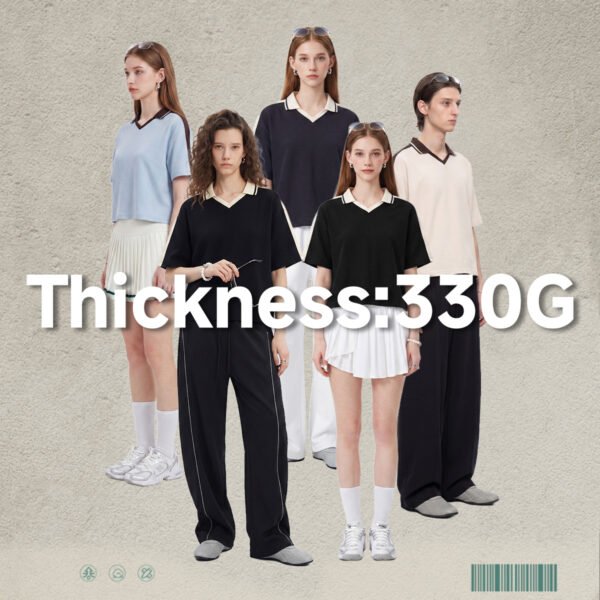

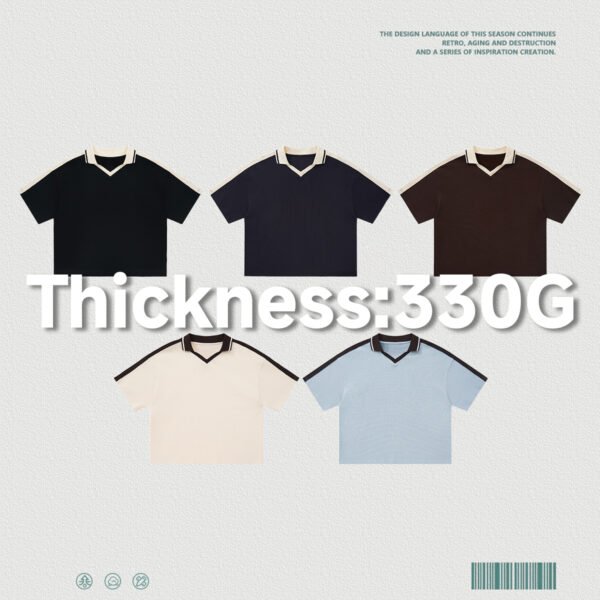


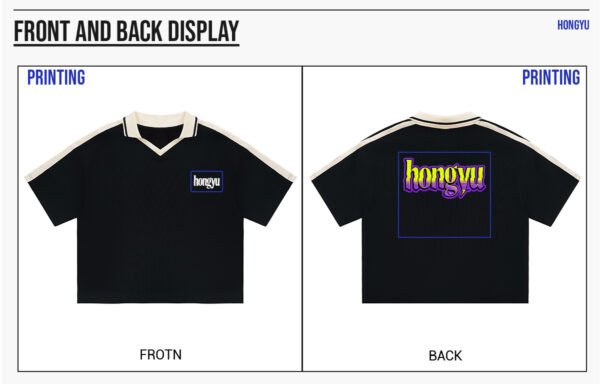
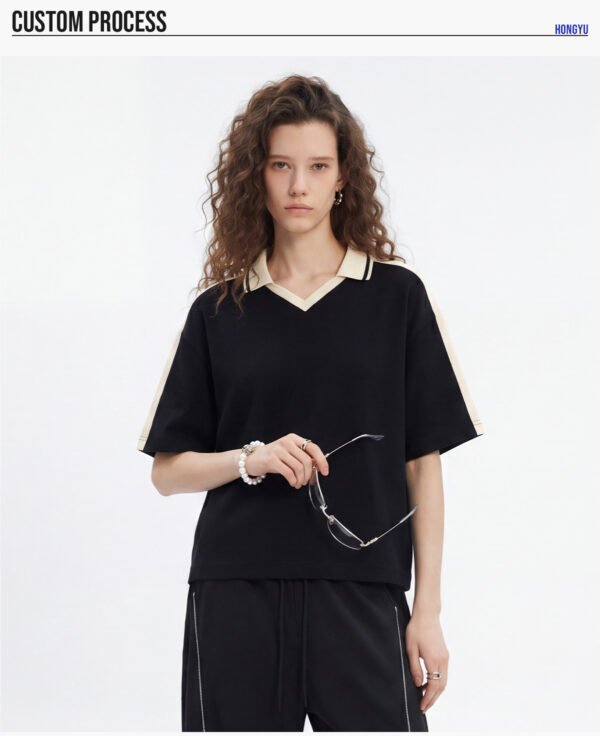

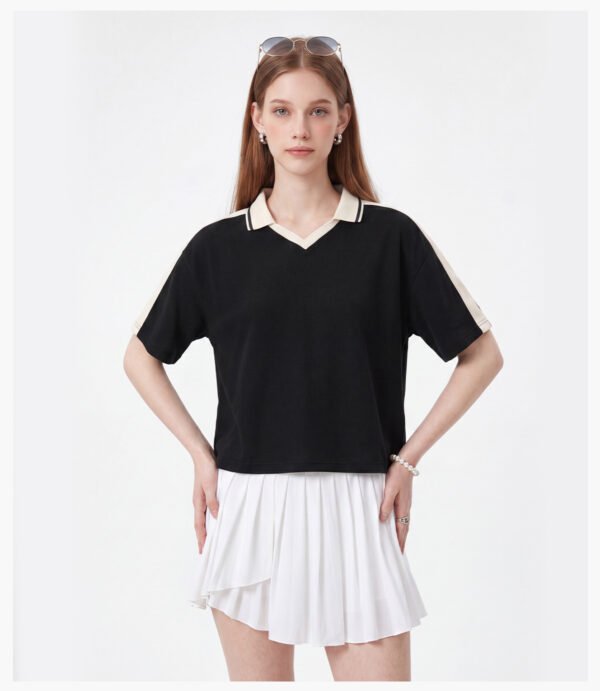
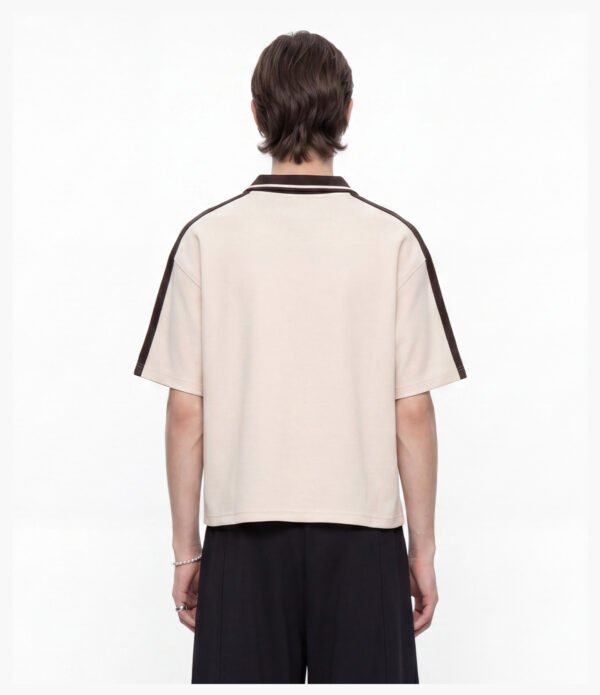
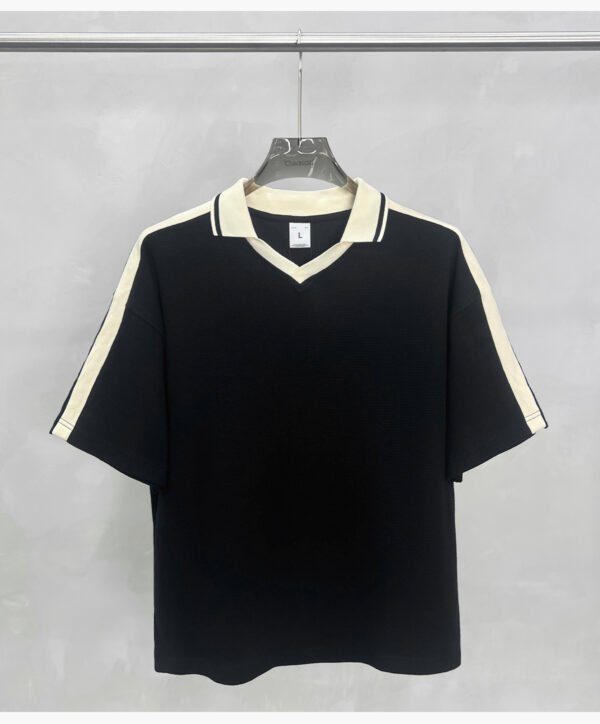

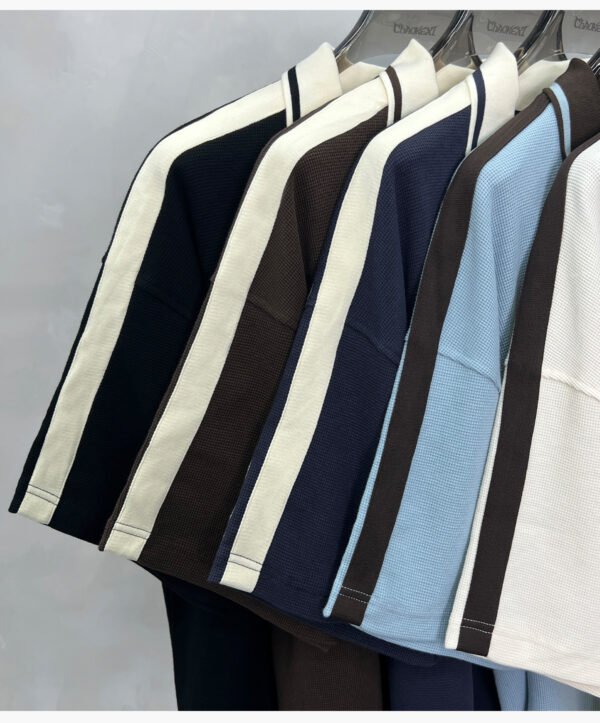

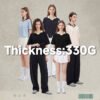


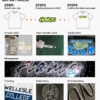


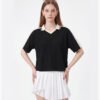

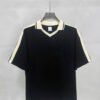

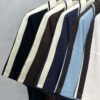

This custom waffle knit polo is developed around a compact cropped silhouette and a size-graded print-placement system. The supplied visual shows a large central typographic treatment, contrast collar options, and several color references, making artwork geometry as important as the garment block itself. MOQ: 100 pieces per style.
The Placement Problem Begins With the Cropped Block
A cropped polo reduces the vertical area available for artwork, so the print cannot be positioned from shoulder measurements alone. The supplied image shows oversized lettering crossing the central torso, demonstrating why chest width, crop length, and collar depth must be reviewed together.
Across sizes, the same nominal artwork coordinates can move upward, downward, or toward the side seam as proportions change. VeeWen should establish a reference point from the finished body measurements, then convert the artwork map into graded placement instructions before sampling.
Use the Visual Evidence as an Artwork Boundary
The main image provides a useful boundary study: its large white lettering occupies the central field while the collar and sleeve edges remain visually legible. For a production style, that relationship should be translated into measured clearances rather than copied as unverified finished-garment evidence.
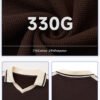
The contrast V-neck creates a second alignment cue near the upper chest. Artwork that rises too close to the collar may compete with the neckline, while artwork set too low can exaggerate the cropped proportion. Both risks should be tested on the actual block.
Waffle Texture Changes Print Behavior
Waffle knit introduces a textured surface that can affect edge definition, ink coverage, and perceived alignment. The source wording supplies a 330g reference, while the image visibly emphasizes a substantial textured construction; the final print system and composition still require technical confirmation.
A buyer should decide whether the design needs a flatter print area, a texture-compatible decoration, or no production print at all. VeeWen can use the approval sample to inspect coverage, hand feel, registration, and distortion after the selected finishing process.
Colorways Require Separate Optical Checks
The supplied visual shows black, navy, pale blue, cream, and white references, so a single artwork approval cannot assume identical contrast across the range. Dark grounds may require a different underbase approach, while pale grounds can expose edge softness or placement imbalance.
Color approval should therefore include a controlled artwork review for each proposed ground, even when the block remains unchanged. The buyer should confirm whether the visual target is tonal, high-contrast, or deliberately understated before bulk specifications are frozen.
VeeWen Workflow: Grade the Artwork With the Pattern
VeeWen's workflow should connect the artwork map directly to the graded pattern and measurement chart for this style. The development checkpoint is not simply a graphic proof; it is a combined review of chest width, crop length, collar geometry, sleeve opening, and print coordinates.
At sampling, each size should be assessed for optical centering on a dressed or laid-flat garment. Any correction should be recorded as a size-rule adjustment, not an informal visual preference, so the approved placement remains reproducible through cutting, decoration, and final inspection.
Approval Checkpoint for Production Release
Before release, the buyer should approve the finished silhouette, collar contrast, colorway list, artwork dimensions, and placement tolerances by size. The source image supports these as development questions, but it does not verify composition percentages, decoration method, or finished performance.
The strongest approval decision is a signed size-by-size artwork map attached to the approved sample and technical pack. If the graphic is still exploratory, hold production release until the crop balance and texture interaction are acceptable across the complete order range.
Buyer Questions
Is the 330g reference a confirmed fabric specification?
It is a source reference visible in the supplied wording and image. Fiber composition, tolerance, fabric construction details, and laboratory verification remain To Confirm before production approval.
Does the supplied image prove the polo has a production print?
No. The image shows oversized typography as visual placement evidence, but the final decoration method, artwork status, and production application must be confirmed separately.
How should artwork be graded for this cropped silhouette?
Build placement rules from finished chest width and crop length, then review collar clearance and optical centering at every size before approving the technical pack.
What is the commercial minimum for this style?
The commercial minimum is MOQ: 100 pieces per style. Final color allocation, artwork variants, and size distribution should be agreed within that order structure.
Approve the Size-Graded Artwork Map
Send the intended artwork, size chart, color direction, and target collar contrast to VeeWen for a coordinated polo block and print-placement review. MOQ: 100 pieces per style.


Reviews
There are no reviews yet.