

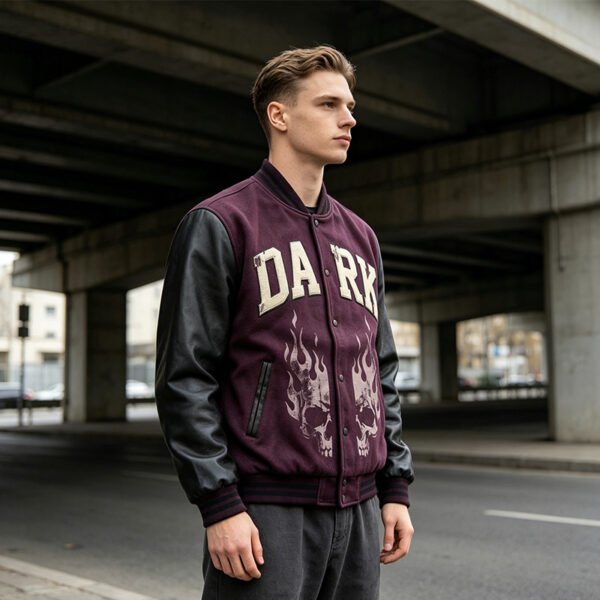
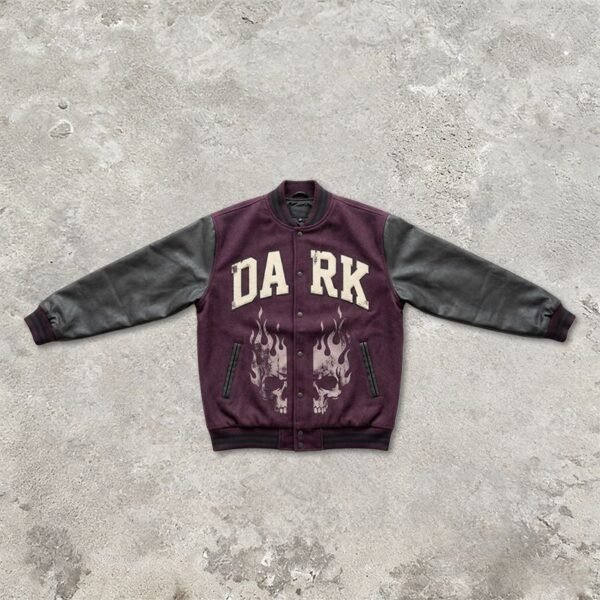

This custom purple varsity jacket is developed around fabric width and consumption planning, where shell panels, rib, lining, and embellishment zones must coexist efficiently. VeeWen can connect marker planning to construction approvals, with MOQ: 100 pieces per style.
Why Usable Width Drives the Marker
A varsity jacket combines large front and back panels with sleeves, cuffs, collar, pocket components, and facings. When usable width is narrower than expected, the marker may require extra joins, altered direction, or additional yardage that changes both appearance and consumption.
The supplied image shows a plush-looking purple surface whose visual consistency may depend on direction, nap, or pile behavior. Those characteristics are not verified, but they should be treated as planning questions before cutting and marker efficiency approval.
Shell, Rib, and Lining Allocation
The visible striped rib collar is not interchangeable with the shell: it needs its own width, recovery, stripe alignment, and quantity calculation. The black lining also introduces separate width and shrinkage considerations around the collar and front opening.
A complete consumption plan should isolate shell, rib, lining, interlining if required, thread, snaps, and embellishment support materials. This prevents a visually small detail, such as the collar, from becoming an unplanned source of shortage or mismatch.
Nap Direction and Color Consistency
If the purple outer fabric has directional surface behavior, every shell panel may need a consistent nap orientation. That choice can reduce marker efficiency, but rotating pieces could create visible shade or texture differences between sleeves, fronts, and back.
The buyer should choose between maximum yield and directional uniformity only after reviewing the actual fabric. A small cutting test can establish whether orientation changes are visually acceptable, while documenting the approved direction for production markers.
Mixed Applications Need Dedicated Zones
Screen print and towel embroidery consume more than artwork area alone: they require spacing, backing decisions, seam clearance, and handling allowances. On a varsity jacket, those requirements must be plotted against panels before seams, snaps, rib, and lining are finalized.
The source wording references both screen print and towel embroidery, but the supplied image primarily evidences construction details. Application scale, locations, stitch density, print method, backing, and durability therefore remain To Confirm through artwork files and sampling.
VeeWen Development Workflow
VeeWen should first confirm the fabric roll width and usable width, then create separate shell, rib, lining, and support-material consumption records. Marker options can be compared against nap direction and panel symmetry before the sample pattern is locked.
The workflow checkpoint is a construction-ready yield sheet linked to the graded pattern and embellishment map. Buyers should approve the selected width assumptions, directional rules, trim quantities, and waste tolerance before materials are ordered.
Commercial Approval Checkpoint
Approve the purple shade, shell hand feel, collar stripe proportions, snap finish, lining reference, seam architecture, and application zones together. These choices interact: changing collar depth or graphic scale can alter panel yield and the marker's efficiency.
Request confirmation of width, composition, GSM where applicable, nap behavior, shrinkage, application process, backing, and final measurements. After review, approve the pre-production sample and consumption basis for MOQ: 100 pieces per style.
Buyer Questions
Why is fabric width important for varsity jackets?
Large panels and multiple components compete for usable width. Width planning affects marker efficiency, directional consistency, extra yardage, and whether visual symmetry can be maintained across the finished jacket.
Is the outer fabric specification verified?
No. The image suggests a plush purple surface, but composition, GSM, weave or knit structure, usable width, and directional behavior require source confirmation and physical review.
How should mixed embellishment be planned?
Map each application against panel edges, seams, snaps, and rib before cutting. Confirm backing, clearance, scale, and process through artwork review and sampling before approving the production marker.
What is the minimum order?
The commercial minimum is MOQ: 100 pieces per style. Buyers should approve the consumption basis, materials, graded measurements, embellishment map, and inspection requirements before production release.
Approve the Yield and Application Plan
Share the fabric width, artwork files, size range, and trim preferences. VeeWen can align marker planning, panel direction, lining allocation, and sample approval before MOQ: 100 pieces per style.


Reviews
There are no reviews yet.