
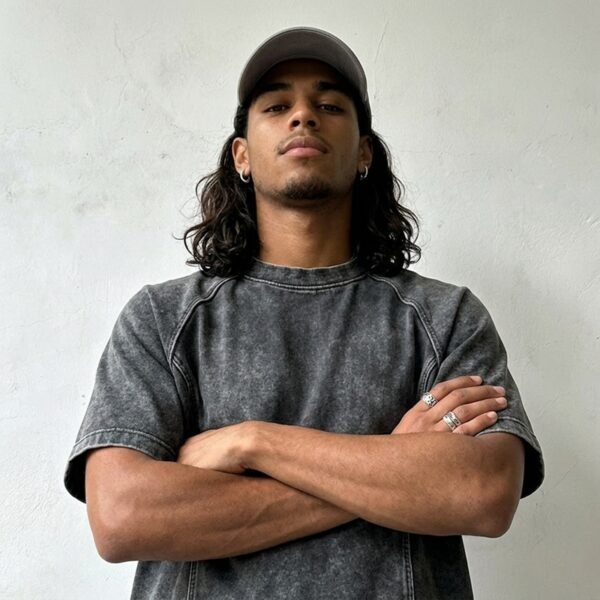
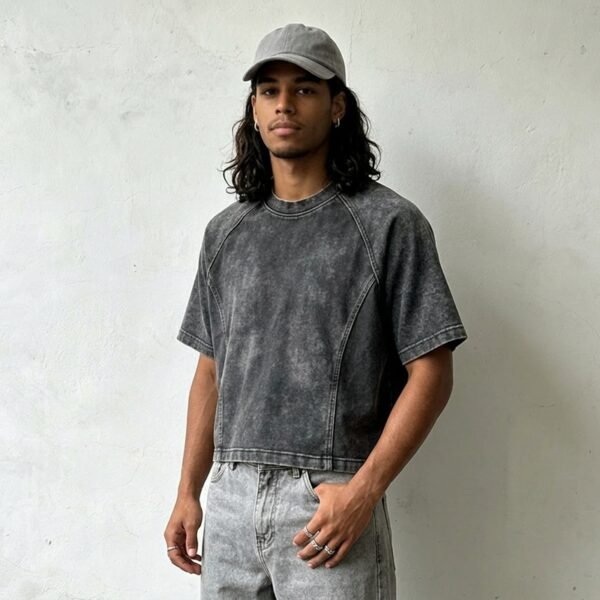



This custom vintage washed T-shirt is developed around one approval question: can visible trim details remain controlled when the body receives a worn, uneven finish? The image's charcoal surface, contrast stitching, and curved shoulder seams make trim-and-wash compatibility the central production decision.
Why Trim Compatibility Controls the Vintage Result
A vintage wash acts on more than the fabric panel. It also reaches thread, neckline components, seam edges, labels, and any stabilizing materials. If those elements shrink, abrade, or absorb color differently, the finished shirt can lose the deliberate contrast visible in the supplied image.
The image shows a charcoal surface with lighter seam definition, so the trim is part of the visual architecture rather than a hidden utility. VeeWen should therefore evaluate thread color, stitch density, neckline structure, and edge behavior as one wash-compatible package before size grading.
Reading the Supplied Visual Evidence
The front view shows a softly irregular grey-black body, pale stitching around the crew neck, and curved lines running over the shoulders. Those observations support a washed streetwear direction, but they do not verify composition, fabric weight, stitch specification, or finishing chemistry.
The visible sleeve edges appear darker and structured against the body, while the neckline retains a clear ring shape. That contrast creates a useful inspection target: after washing, the buyer should compare edge definition, neckline recovery, and tonal balance against the approved reference.
Physical Mechanism Behind Wash Risk
Different materials react differently to heat, moisture, abrasion, and dye transfer. A thread that contracts more than the body fabric can draw a seam inward; a trim that resists the wash can look too new; a softening finish can reduce edge clarity. These changes become obvious around.
The curved seam path increases the importance of balanced construction because tension is distributed along changing directions. Controlled stitch length, suitable thread selection, and pre-wash sampling help separate intentional vintage irregularity from avoidable puckering or distortion.
VeeWen Development Workflow Checkpoint
VeeWen's workflow should begin by mapping every visible trim against the intended wash route, then building a development sample with the proposed neckline, shoulder seam, sleeve edge, and thread contrasts. The purpose is to approve interaction between components, not merely the unwashed appearance.
At the wash-review stage, the buyer should receive a side-by-side assessment of before-and-after samples, focusing on neckline shape, seam waviness, contrast retention, and surface consistency. Any change to thread, binding, label, or wash sequence should trigger renewed approval because the visual argument depends on coordinated aging.
Trade-Offs the Buyer Should Resolve
A stronger neckline stabilizer may improve shape retention but can make the collar feel firmer than the relaxed body suggests. Softer trims may create a more natural worn effect, yet they can lose definition sooner. More pronounced contrast stitching improves visibility but exposes every tension imbalance.
The buyer must decide whether the target is a controlled, repeatable vintage appearance or a more irregular artisan-like result. Both directions are possible, but they require different tolerance language for shade variation, seam character, and trim aging at the production approval stage.
Final Approval for Production
Approve this style when the washed sample demonstrates a stable crew neck, clean curved shoulder lines, and contrast stitching that remains intentional after the agreed treatment. The body's tonal variation should read as designed rather than as accidental unevenness or component mismatch.
Before releasing the order, confirm composition, wash recipe, trim materials, thread specification, measurements, labeling, and acceptable shade tolerance in the technical package. Commercial production begins at MOQ: 100 pieces per style, with the approved post-wash sample serving as the visual control reference.
Buyer Questions
Is the cotton composition verified for this T-shirt?
No. Cotton appears in the source title, but the exact fiber composition requires documentation or laboratory confirmation before the buyer approves production specifications.
What should the first sample prove?
The first sample should prove neckline stability, contrast-thread retention, curved seam control, surface variation, and acceptable hand feel after the agreed wash process.
Can the vintage appearance be made more uniform?
Yes, process controls can narrow variation, although the buyer must balance repeatability against the naturally irregular character expected from a vintage washed finish.
What is the minimum order quantity?
The commercial minimum is MOQ: 100 pieces per style, subject to finalized specifications, approved samples, and confirmed production documentation.
Approve the Wash-Ready Trim Direction
Send the target measurements, artwork or labeling requirements, and desired wash character to VeeWen. We will structure the development review around trim compatibility, post-wash appearance, and the final approval sample.


Reviews
There are no reviews yet.