
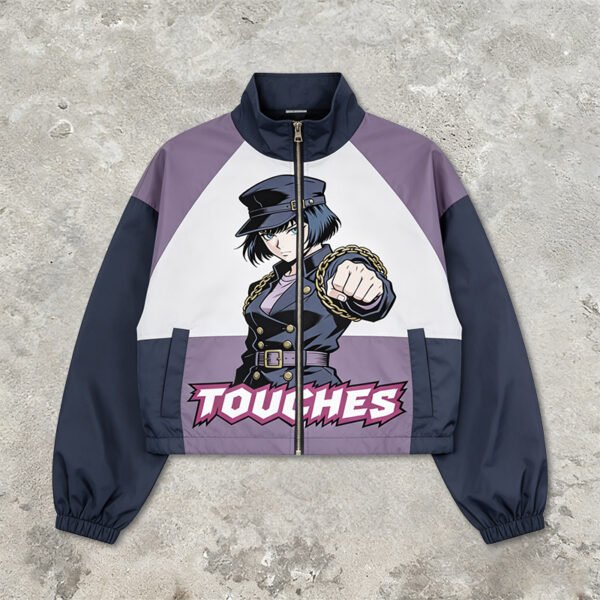
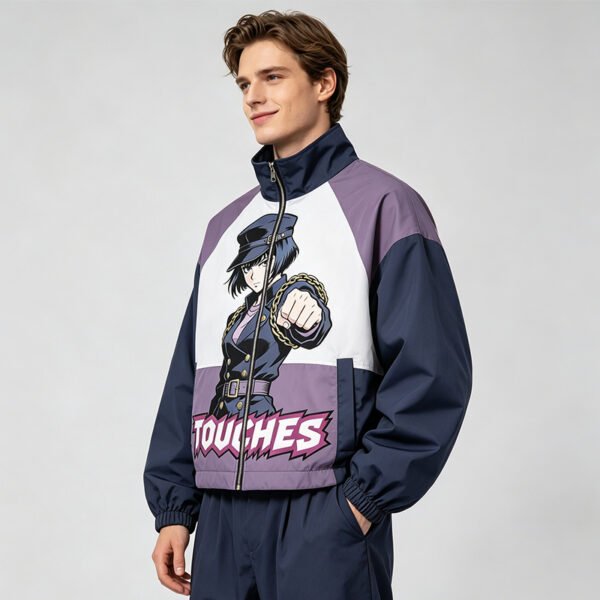
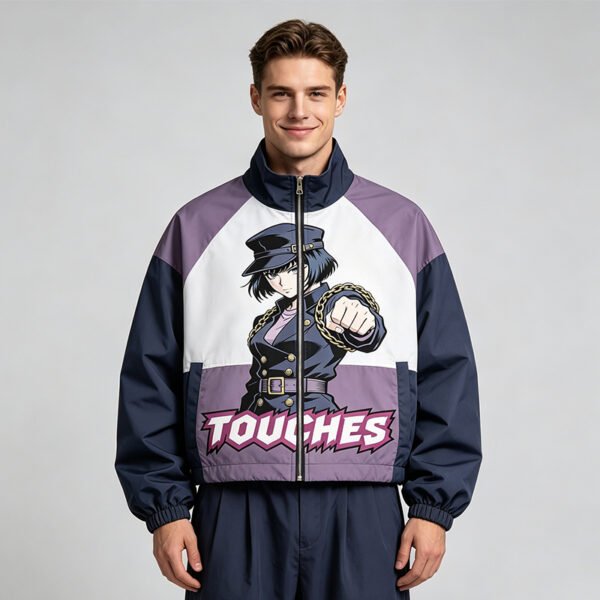
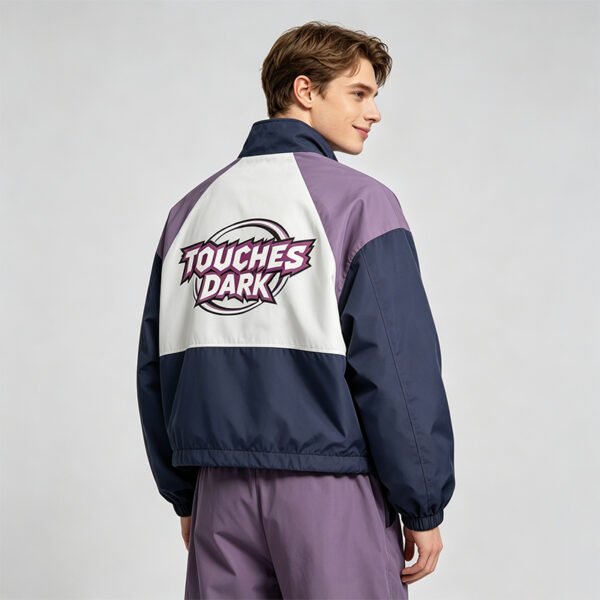
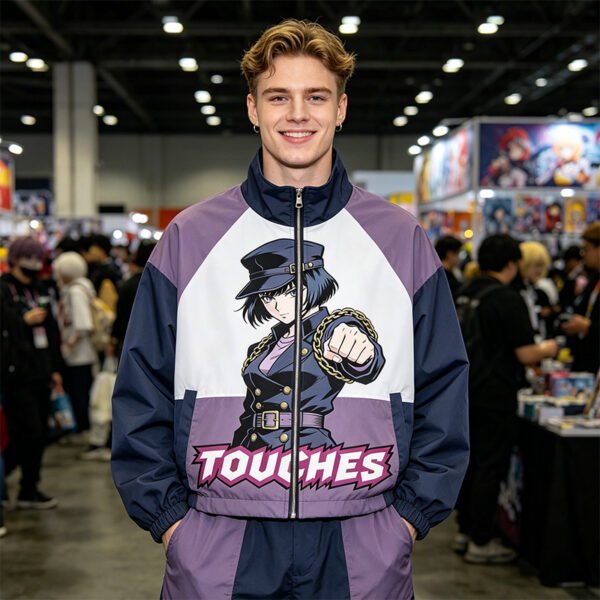
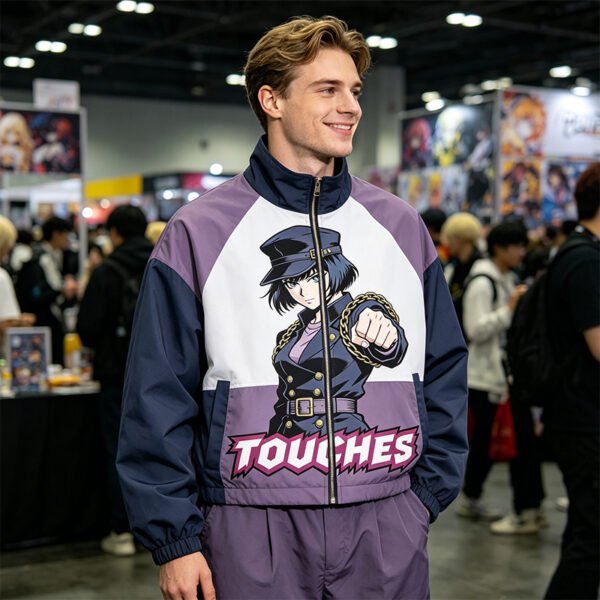
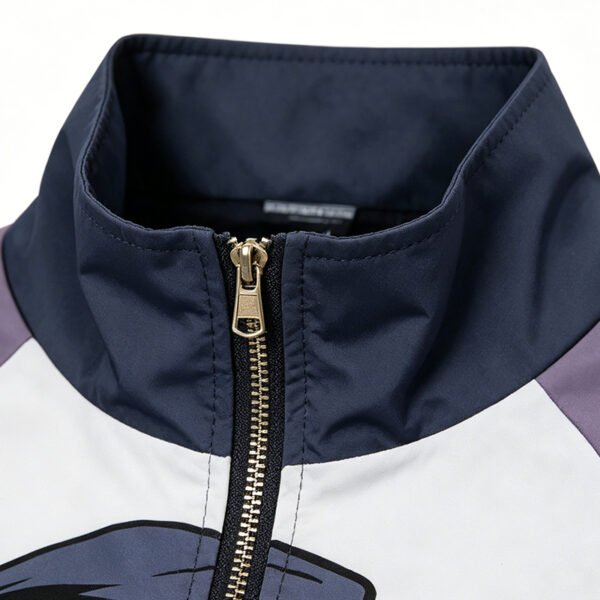
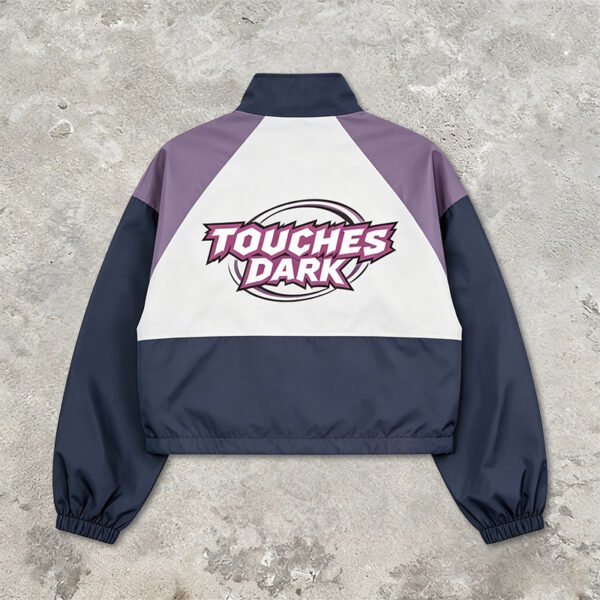
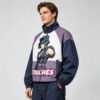
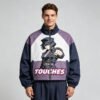
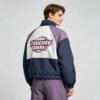



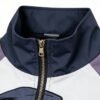
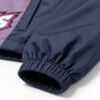

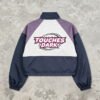
This cropped color-block windbreaker is developed around neckline shape and recovery. The supplied image shows a compact stand collar, centered zipper, contrasting upper panels, and elastic cuffs, so collar engineering directly affects face framing, comfort, visual balance, and the jacket's perceived finish.
The Collar Sets the First Impression.
The stand collar occupies a prominent position because it surrounds the zipper and frames the wearer's face. Too little height can make the jacket appear flat, while excessive height can feel restrictive, especially when the shell has limited softness or the zipper is closed.
The image indicates a compact, upright neckline rather than a loose folded collar. VeeWen's first development checkpoint should establish collar height, opening circumference, and seam placement together, ensuring the shape remains intentional without creating pressure beneath the chin.
Recovery Controls Repeated Wear.
A rib or rib-like neckline component must return to its intended opening after stretching, but excessive tension can pull the zipper tape inward or create rippling at the collar seam. Insufficient recovery can leave the neckline collapsed and weaken the cropped jacket's visual structure.
Development samples should compare relaxed measurements with extended opening measurements, then reassess recovery after laundering or appropriate wear simulation. The buyer should approve a comfort range that protects shape while allowing normal layering and movement through the neck opening.
The Zipper Reveals Alignment.
The centered zipper creates a straight visual axis from collar to hem, making even small neckline distortions easy to notice. If the collar stretches unevenly, the zipper may appear off-center or the upper color-block panels may no longer meet with a clean transition.
VeeWen can review zipper installation, collar attachment, and panel matching on the same sample. This workflow links the assigned neckline axis to pattern balance and sewing sequence, giving the buyer a practical approval point before grading and bulk cutting.
Panel Contrast Magnifies Shape.
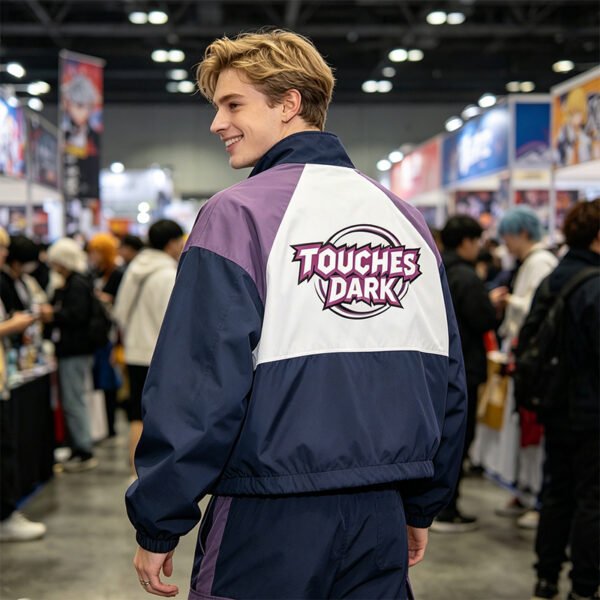
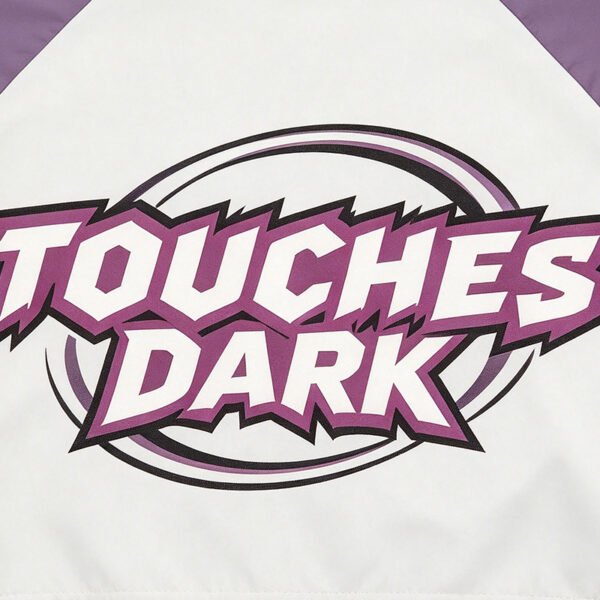
Navy, lavender, and white areas divide the upper body into visible blocks, so the neckline must maintain its own proportion within the color architecture. A collar that spreads or twists can change how much contrast is seen around the face and shoulders.
The collar color and adjacent panel seam should be approved under both open and closed zipper positions. This confirms that recovery supports the graphic layout rather than introducing an unintended break across the highest-visibility area of the jacket.
Cuffs Provide a Useful Comparison.
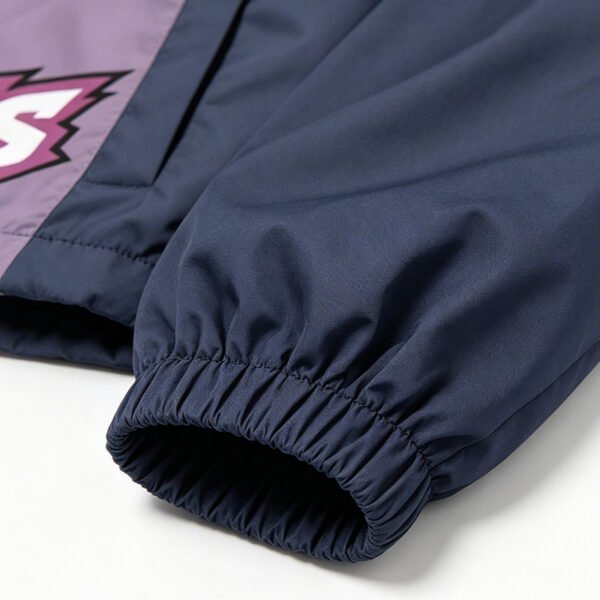
The elastic sleeve cuffs visibly gather the fabric at the wrists, demonstrating how controlled recovery can finish a relaxed outer layer. Their tension should not be copied automatically at the neck, because wrist comfort, neck comfort, and opening geometry require different stretch behavior.
During product development, VeeWen can document cuff and neckline measurements separately while checking their visual relationship. The buyer's decision should consider whether the collar feels supportive and clean without making the garment seem tighter than the sleeves suggest.
Approve the Neckline in Context.
A successful neckline is not simply upright; it must recover consistently, sit comfortably, and preserve the zipper's straight path. These requirements become more demanding when the body is cropped and the upper shell uses multiple contrasting panels.
The final checkpoint is a complete finished sample review with the zipper operated, collar worn open and closed, and panels inspected for alignment. Approve the style when neckline behavior supports the intended silhouette and MOQ: 100 pieces per style.
Buyer Questions
Why is neckline recovery important for this jacket?
Recovery helps the collar return to its intended opening after wear, preserving face framing and zipper alignment while avoiding a collapsed neckline or uncomfortable excessive tension.
Does the image prove the collar is rib knit?
No. The image shows a structured stand neckline, but its exact component construction, fiber content, and recovery performance require source confirmation and sampling.
Should the collar be approved open or closed?
Both positions matter. Open wear checks flexibility and spreading, while closed wear checks comfort, zipper alignment, collar height, and whether the neckline maintains its intended shape.
What is the commercial minimum for this jacket?
The exact commercial minimum is MOQ: 100 pieces per style. Production planning follows approval of the collar, zipper, panels, materials, measurements, and finishing requirements.
Approve the Neckline and Zipper.
Share your preferred collar height, opening comfort, zipper direction, and layering intent with VeeWen. We will develop the neckline against panel alignment and recovery checkpoints for approval.


Reviews
There are no reviews yet.