
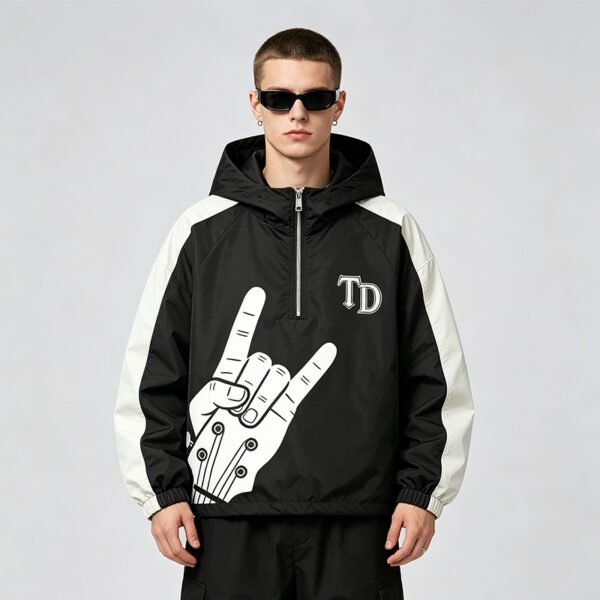
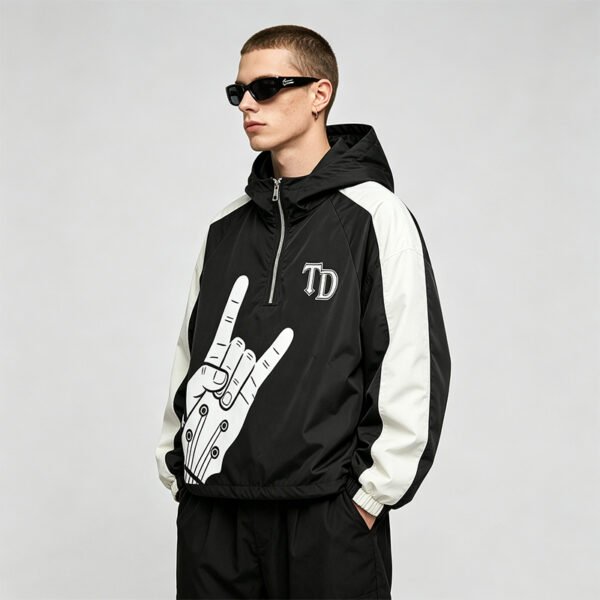
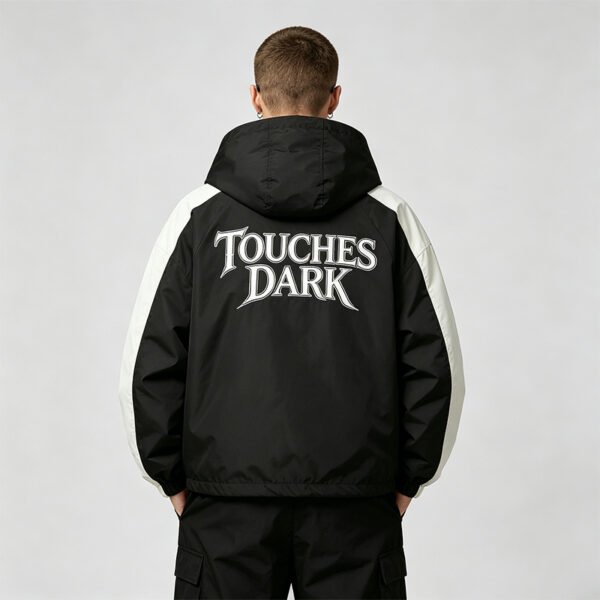
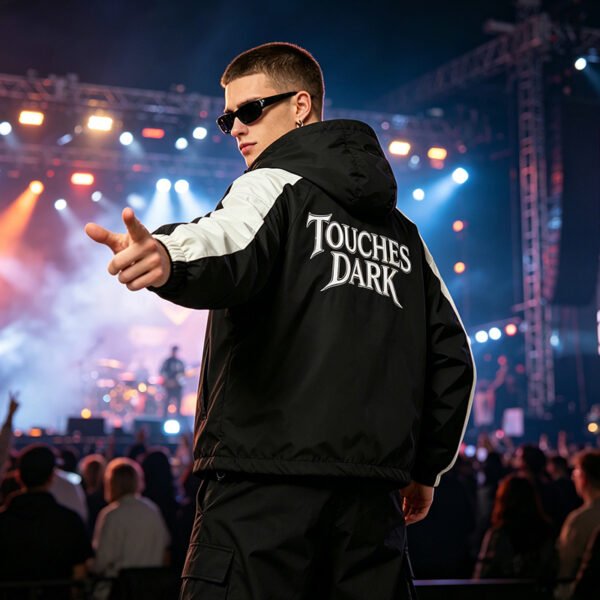
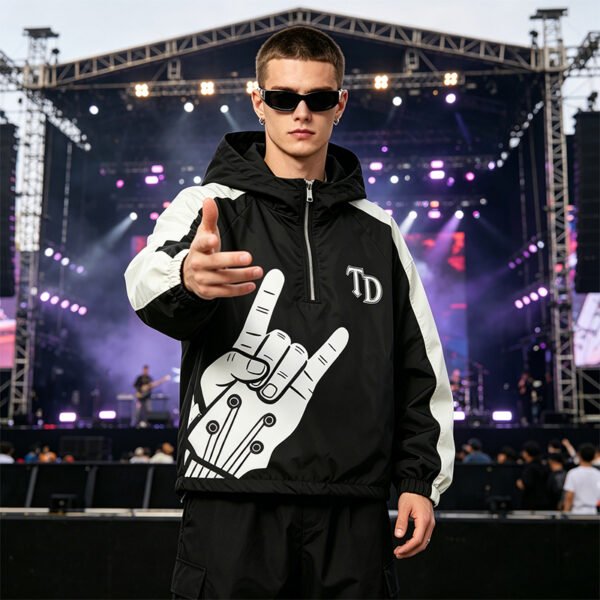
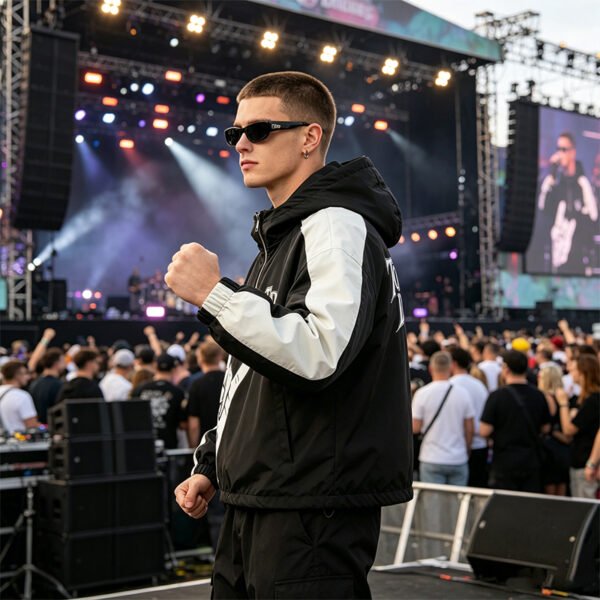
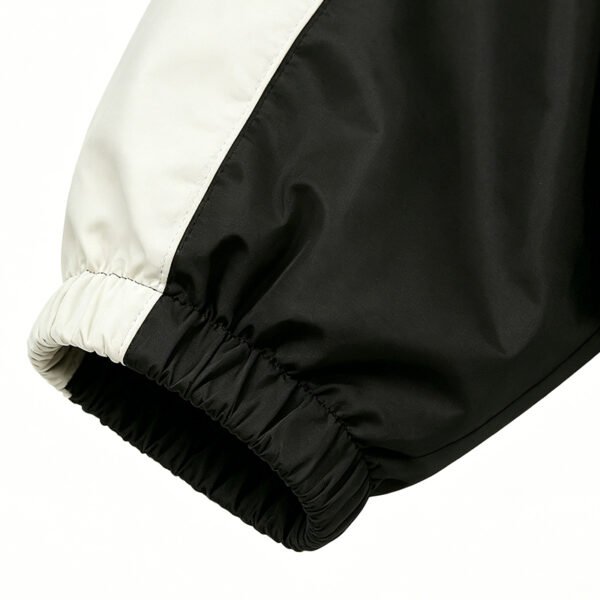

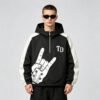





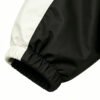
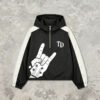
This custom hooded anorak is developed around a practical tension point: adjustable openings must stay secure without disrupting a bold graphic front. The visible black body, white sleeve panels, gathered cuffs, and oversized hand motif create a focused platform for controlled drawcord and channel engineering.
Why the Adjustment Zone Leads Development
The front hem is not a neutral edge here. It visually terminates the oversized hand illustration, so uneven gathering, exposed cord movement, or a crowded channel could make the artwork appear distorted. The adjustment system therefore needs a measured, repeatable relationship with the print boundary.
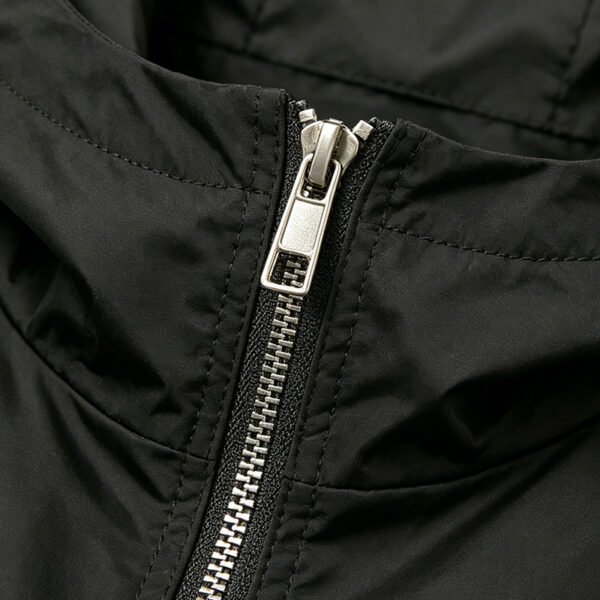
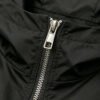
At the hood, the central opening and zipper line establish a second tension path. A reinforced channel should distribute repeated pulls through stable layers, while a clean eyelet or cord exit prevents abrasion from becoming visible during wear, packing, and laundering.
Channel and Eyelet Engineering
For sampling, VeeWen should map each channel's width, seam allowance, and reinforcement layer before finalizing artwork placement. The eyelet location must leave enough surrounding material for secure setting, especially where contrast panels or curved raglan seams alter the available support.
The objective is controlled movement rather than maximum stiffness. Excess reinforcement can make the hood or hem feel rigid and flatten the relaxed silhouette, while insufficient support can cause puckering. A graded reinforcement plan should match cord diameter, opening load, and fabric behavior.
Graphic Placement Under Tension
The supplied image shows the hand graphic extending toward the lower front, with the gathered hem immediately below it. This makes vertical artwork clearance important: the buyer should review the graphic at relaxed, partially tightened, and fully tightened states before approving the production-size screen or applique artwork.
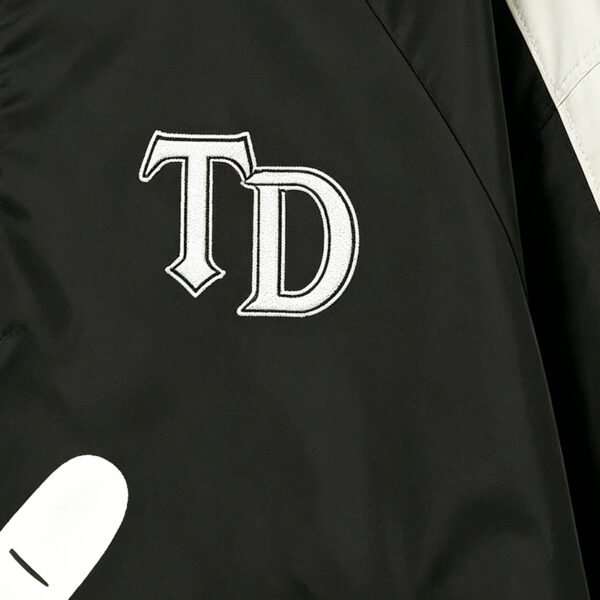
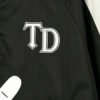
The chest lettering and large lower motif also create distinct visual weights. Keeping the drawcord path visually quiet preserves that hierarchy. Artwork files should identify safe zones around channels, eyelets, zipper components, and seam intersections so decoration remains legible after assembly.
Contrast Panels and Stress Transitions
The white sleeve panels are visually prominent and meet black body sections along long curved transitions. Those joins can amplify distortion if the garment twists under hood or hem tension, so reinforcement must support the adjustment points without creating a visible ridge through the contrasting fabric.
VeeWen's development review should inspect the channel ends where stress changes direction near seams. Tapered reinforcement, secured stitching, and carefully positioned bartacks may be considered after sample testing, with the final choice guided by appearance, hand feel, and confirmed construction drawings.
VeeWen Workflow Checkpoint
VeeWen can convert this concept into a development map linking the artwork boundary, opening measurements, cord route, eyelet specification, and reinforcement detail. The first approval sample should show these relationships together, rather than treating graphics and adjustment hardware as separate decisions.
At the fit review, the buyer should request front, hood, and hem checks in multiple tension positions. Approval should record channel dimensions, eyelet finish, cord emergence, stitch security, and graphic clearance, creating a reproducible reference for the 100-piece style minimum.
Trade-Offs and Production Approval
A cleaner hidden channel may protect the graphic and preserve a premium appearance, but it can require more precise assembly and tighter tolerances. A visibly robust external solution may simplify inspection, yet it could compete with the illustration or change the intended streetwear proportion.
The final buyer decision is therefore visual and mechanical together. Approve the style when the adjusted silhouette remains balanced, the cord exits stay secure, and the graphic remains undistorted across agreed tension positions. Record unresolved shell composition details as To Confirm.
Buyer Questions
Can the front graphic be replaced with our artwork?
Yes, artwork can be developed around the approved panel, seam, zipper, channel, and hem clearances. Final decoration method, dimensions, and color count require a reviewed production sample.
What should we inspect on the first sample?
Inspect hood and hem tension, eyelet security, channel alignment, cord emergence, seam transitions, and graphic distortion at relaxed and tightened positions before approval.
Is the shell fabric already confirmed?
No. The supplied evidence shows appearance only, so shell fiber, weight, coating, lining, and care requirements should remain To Confirm during technical development.
What is the minimum order for this style?
The commercial minimum is MOQ: 100 pieces per style. Colorways, size ratios, decoration requirements, and final specifications should be confirmed before production booking.
Approve the Reinforcement Map
Send your artwork, target measurements, and preferred cord details for a focused development review covering channel geometry, eyelet security, graphic clearance, and MOQ: 100 pieces per style.


Reviews
There are no reviews yet.