
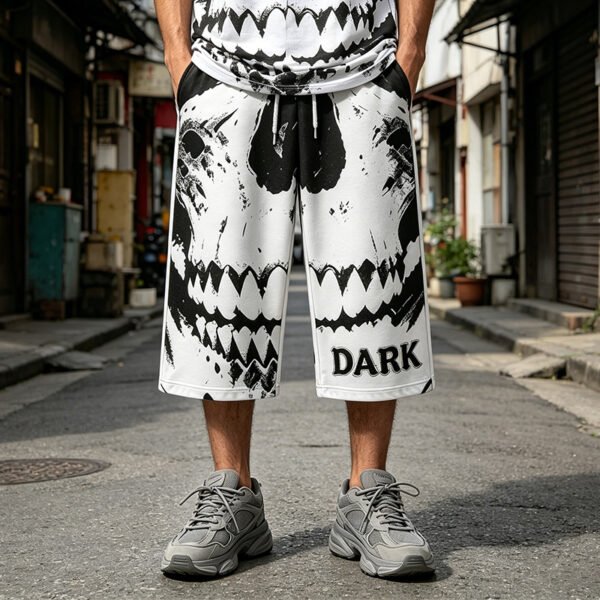
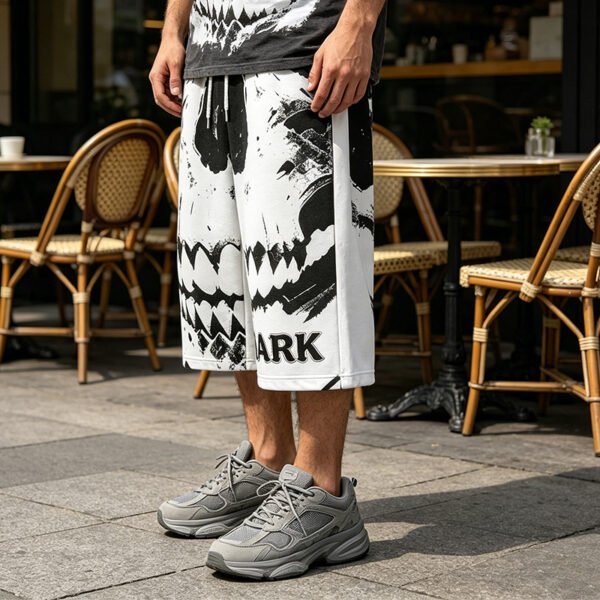
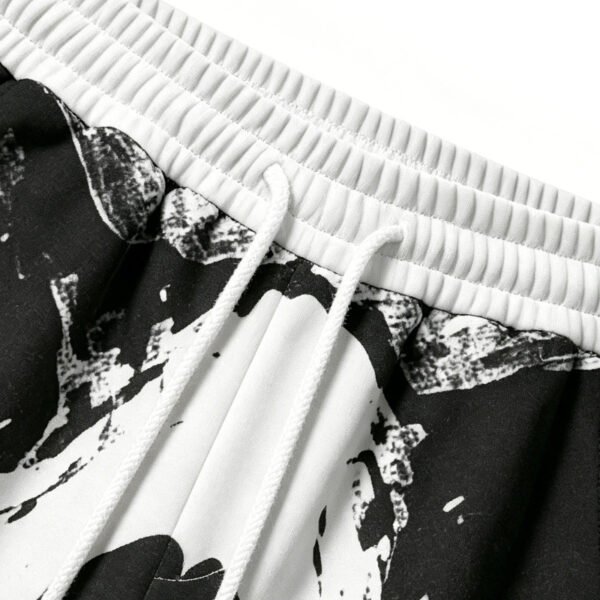
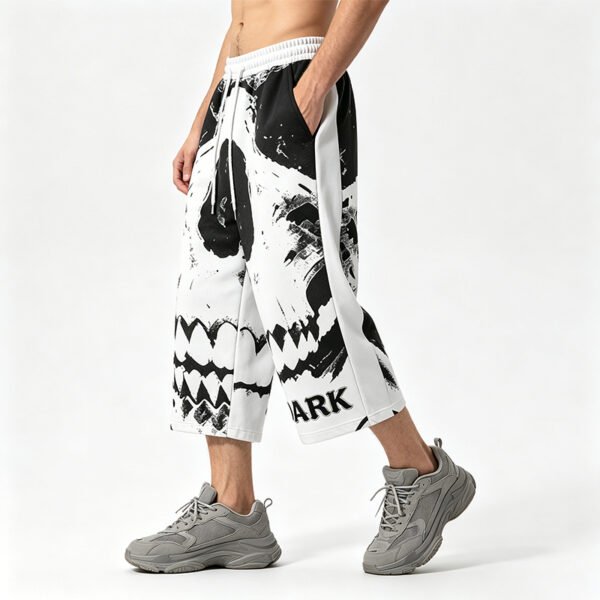
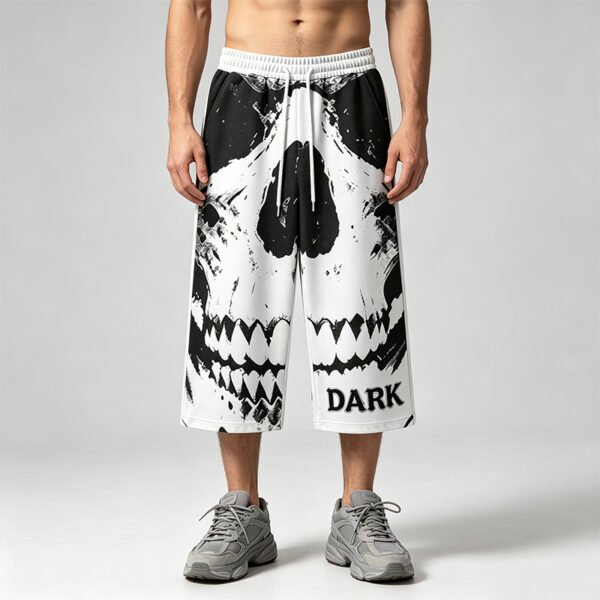
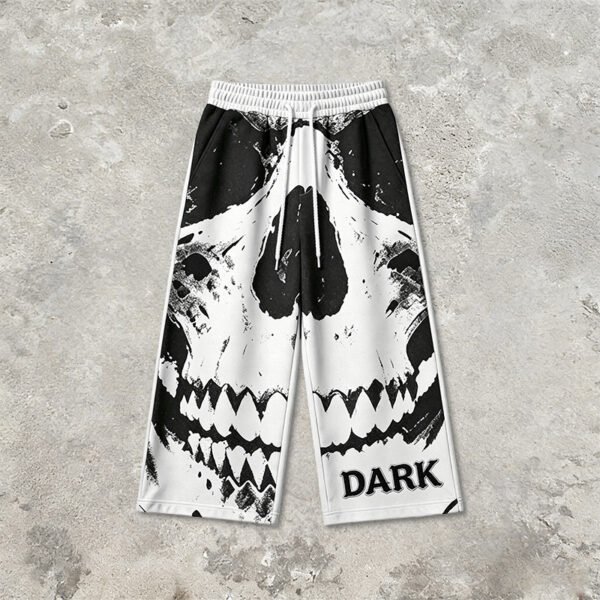
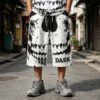
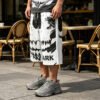

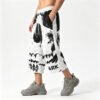
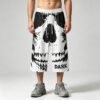
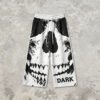
This cropped sweatpant concept depends on disciplined graphic grading. The supplied image shows skull artwork crossing two separate legs, waistband, and hems, so every size needs a placement map that protects facial balance, center alignment, and visible negative space while preserving the relaxed streetwear silhouette.
Why Placement Is the Product Argument
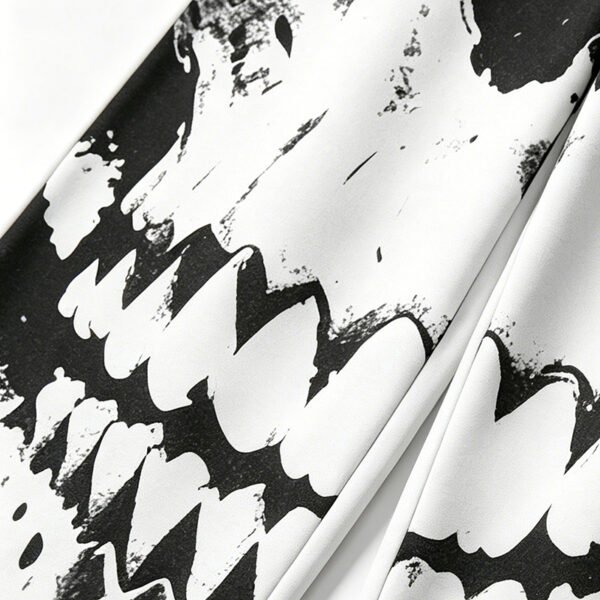
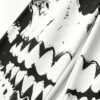
The skull artwork is not confined to one panel. It wraps visually across the front legs, with teeth, eye sockets, and splatter marks approaching seams and hems. That arrangement creates a recognizable rhythm, but grading can stretch faces or shift them away from the centerline.
VeeWen should therefore treat the artwork as a mapped construction input rather than a single print file. The development brief should identify waistband, inseam, outseam, knee, and hem landmarks, then define acceptable movement for each graphic feature at every approved size.
Landmark Mapping Before Grading
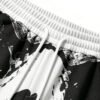
The drawcord opening and center front provide useful anchors for the upper skull artwork, while the hem edge controls the lower jaw and tooth placement. Mapping these points establishes whether the design remains visually intentional when rise, thigh width, and leg length change.
A buyer should review a technical placement sheet alongside the pattern. The sheet should show artwork boundaries, seam interruptions, mirrored or non-mirrored treatment, and the specific features protected from trimming, preventing artwork decisions from being hidden inside production assumptions.
Managing Scale Across Sizes
Larger sizes may need more than uniform artwork enlargement because width, rise, and cropped length do not increase identically. Uniform scaling can make central motifs oversized while leaving side areas visually empty, or push lower graphics below the finished hem.
The preferred development route is controlled re-spacing supported by size-specific print coordinates. VeeWen can use the approved base-size composition as the visual reference, then adjust scale or repeat intervals only where pattern growth would otherwise distort the skull sequence.
Print and Seam Interaction
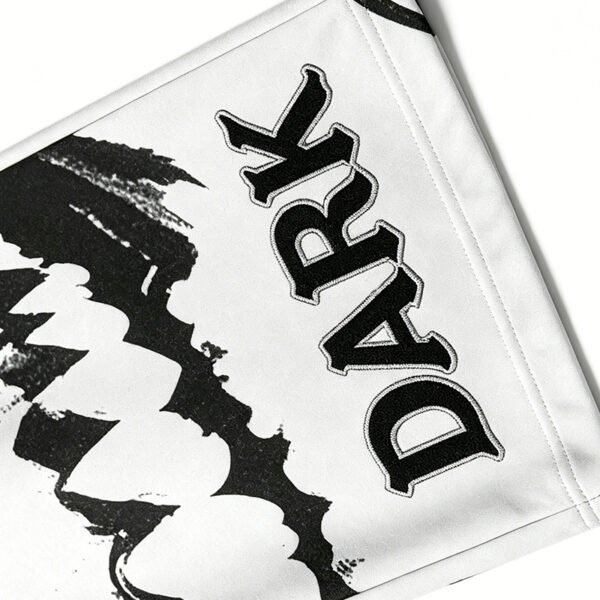
The image shows bold artwork continuing near side edges and hem areas, where seam allowance, panel curvature, and cutting tolerance affect the final appearance. A placement that looks correct on a flat artwork board may shift when the garment is assembled and relaxed.
Sampling should inspect the print after cutting and sewing, not only before. Review points include face centering, tooth continuity near hems, visible white coverage, and whether drawcord hardware or seam bulk interrupts the intended graphic hierarchy.
VeeWen Workflow Checkpoint
For VeeWen's workflow, this style should move from visual evidence to a landmark-marked tech pack, then to a base-size sample with measured print coordinates. The sample approval should record artwork scale, garment dimensions, and the grading logic used for adjacent sizes.
That record becomes the control document for production preparation at MOQ: 100 pieces per style. Before approving the size set, the buyer should compare photographed or physical samples against the placement map and confirm which deviations require correction or acceptance.
Approval Risks and Trade-Offs
Tighter placement control improves visual consistency but can increase marker planning, print preparation, and inspection attention. A looser approach may reduce development complexity, yet the high-contrast skull faces will expose misalignment quickly, especially across the front rise and lower leg.
The final checkpoint is a size-range approval based on finished garments, with particular attention to the smallest and largest sizes. Confirm fiber composition, fabric behavior, print method, and wash expectations before locking the production specification for this cropped silhouette.
Buyer Questions
How should skull artwork be graded across sizes?
Use landmark-based coordinates tied to waistband, seams, knee, and hem, then adjust scale or spacing only where pattern growth changes visual balance.
What should the first sample prove?
The first sample should prove finished print alignment, facial scale, seam interaction, cropped length, waistband position, and the relationship between artwork and footwear exposure.
Is the source fiber percentage confirmed?
No. The source title references cotton, but VeeWen should confirm final fiber composition, fabric weight, stretch, and shrinkage before technical approval.
What is the commercial minimum?
The commercial minimum is MOQ: 100 pieces per style, subject to the approved construction, artwork, material specification, and production documentation.
Approve the Placement Map
Send the artwork, graded size chart, target market range, and preferred fabric reference to VeeWen for a landmark-based development review and sample approval checkpoint.


Reviews
There are no reviews yet.