
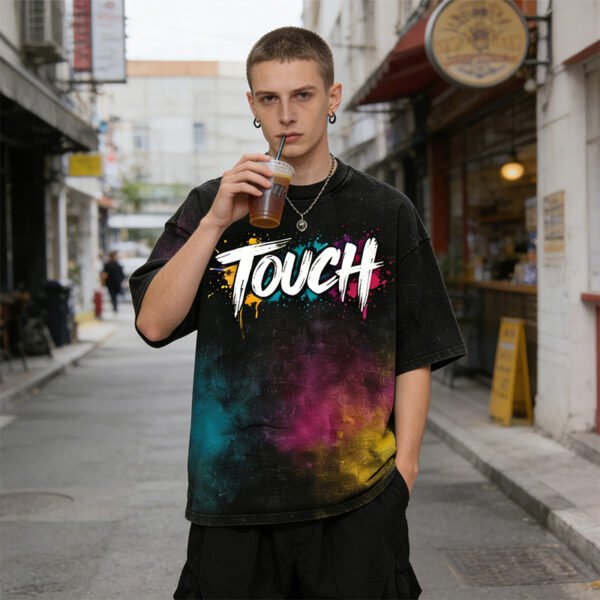









This T-shirt should be judged by how its sleeve geometry manages volume. The washed black ground and irregular color fields create visual energy, while the broad short sleeves and roomy body must preserve movement over a base layer without collapsing into shapelessness.
Why Sleeve Opening Changes the Wearing Experience
Sleeve opening controls how the shirt transitions from shoulder to upper arm. A narrow opening can make a relaxed body feel restrictive, while an overly wide opening may expose the underarm and weaken the intended silhouette during movement.
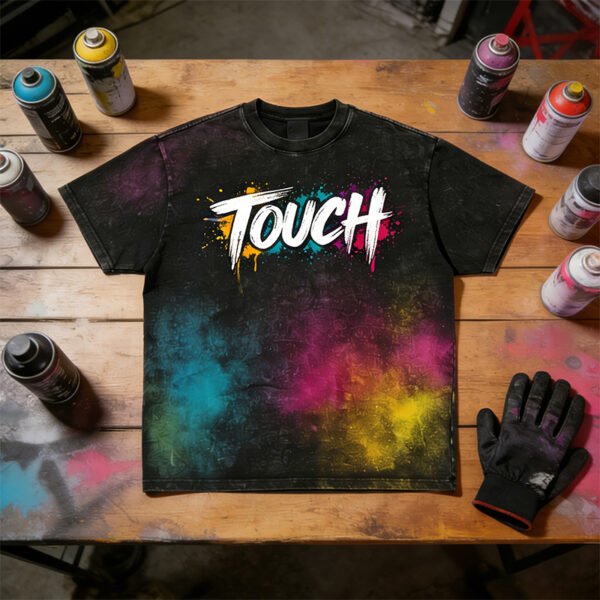
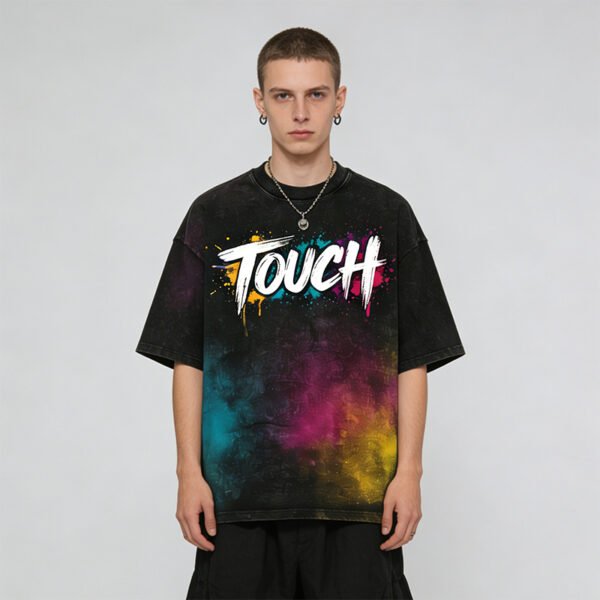
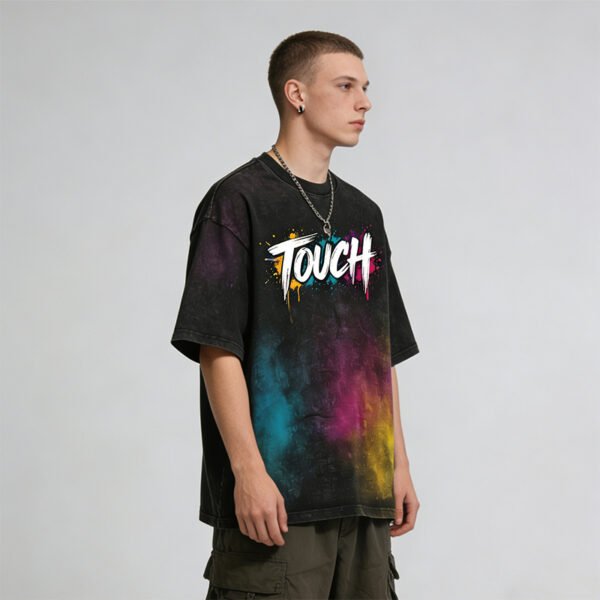
The supplied image shows a broad sleeve shape with visible clearance around the upper arm. That observation supports a measured layering strategy: enough room for a base layer and natural movement, but not so much that the sleeve loses its visual connection to the shoulder.
Layering Clearance Requires More Than Chest Ease
Layering clearance is a three-dimensional relationship involving sleeve opening, underarm depth, chest width, shoulder slope, and body length. Increasing only the chest measurement can create a loose torso while leaving the sleeve seam and armhole uncomfortable.
For this product, the buyer should assess a washed sample over a representative base layer. The test should observe arm lift, forward reach, underarm tension, sleeve rollover, and whether the graphic remains positioned correctly when the body is worn with added volume.
Working With Spray-Dye Irregularity
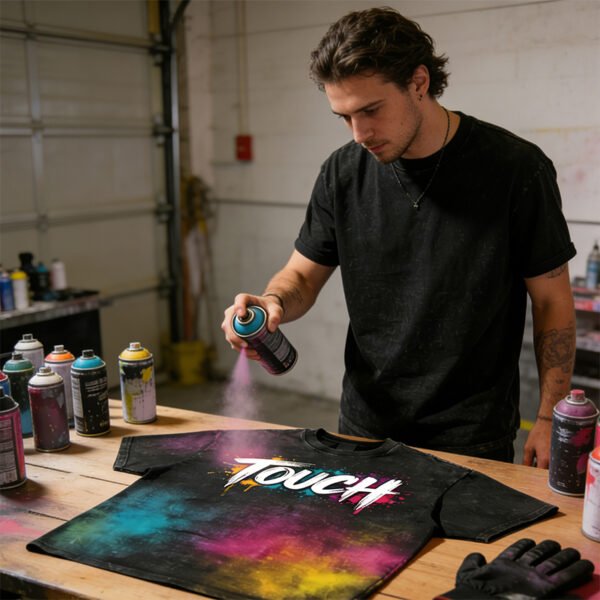
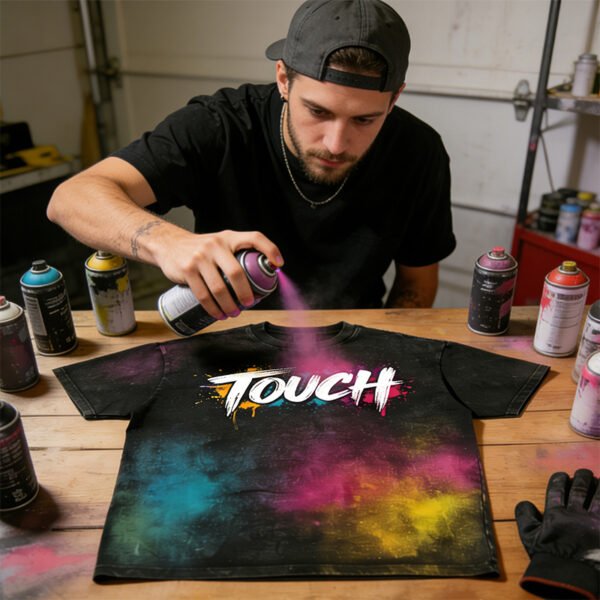
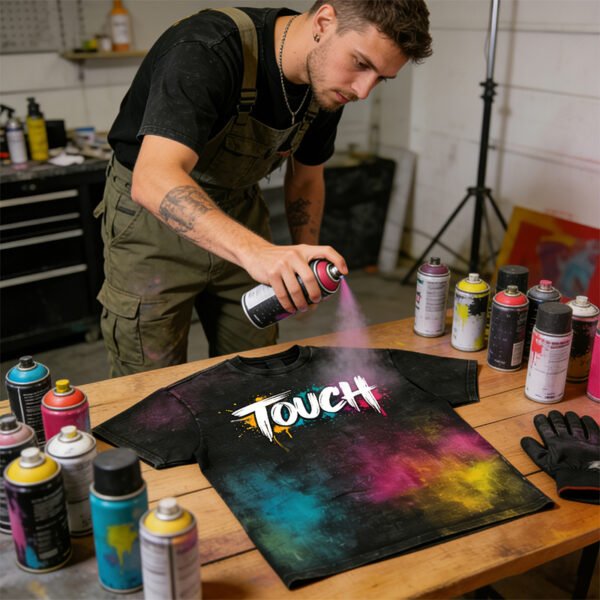
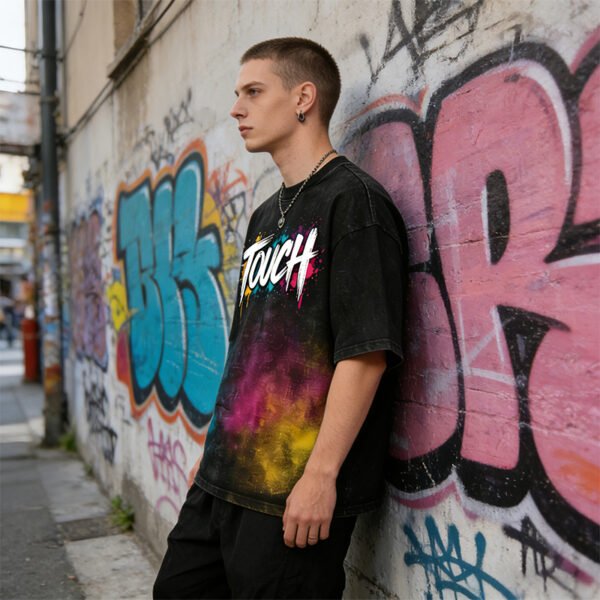
The image presents a black garment with nonuniform turquoise, magenta, and yellow fields across the front and lower body. Such variation is part of the visual direction, but it makes seam placement and sleeve balance more important because color concentration can shift perceived volume.
Development should define acceptable spray coverage zones rather than promise identical artwork on every garment. Buyers should approve a controlled range for tonal depth, overspray, and color interaction, while checking that sleeve openings remain visually balanced against the body treatment.
Graphic Support on Relaxed Jersey
The large front graphic occupies a high-attention area above the strongest color fields. Its appearance depends on the jersey's surface stability, the artwork's coverage, and the amount of distortion created when the shirt is layered or moved.
A relaxed fit can support a bold graphic, but excessive ease may introduce folds that interrupt lettering and color edges. VeeWen should therefore review artwork scale alongside sleeve and body measurements, ensuring the design reads clearly at rest and remains intentional during wear.
VeeWen Development Checkpoint
VeeWen's product-development review should convert the visual sleeve impression into measurable opening circumference, bicep clearance, armhole depth, and layer allowance. These points should be checked after the intended wash and spray process, because surface treatment may alter hand and dimensional behavior.
The buyer's approval checkpoint is a layered fit sample with the final color direction and graphic placement. Approval should record sleeve measurements, tolerance priorities, and acceptable spray variation together, giving production a practical reference for the full order at MOQ: 100 pieces per style.
Trade-Offs for the Buyer
A larger sleeve opening improves airflow and layering comfort, yet can expose more underarm and make the shirt appear less refined. A smaller opening gives cleaner control, but may conflict with the relaxed streetwear proportion visible in the reference image.
The preferred balance should be selected through movement and layering review, not appearance alone. Buyers should decide whether the priority is a stronger standalone sleeve line, easier over-layering, or maximum arm mobility, then preserve that choice in the approved measurement sheet.
Buyer Questions
Why is sleeve opening important for a relaxed T-shirt?
It determines upper-arm comfort, airflow, movement, and how the shirt sits over another layer. Body width alone cannot guarantee balanced clearance through the armhole and sleeve.
How should layering clearance be tested?
Use a washed sample over the intended base layer. Check arm lift, forward reach, underarm tension, sleeve rollover, shoulder balance, and graphic position during movement.
Will every spray-dye garment look exactly identical?
Not necessarily. Spray treatment naturally creates variation, so buyers should approve coverage zones, tonal range, overspray limits, and color interaction instead of requiring identical marks.
What is the minimum order for this T-shirt style?
The commercial minimum is MOQ: 100 pieces per style. Final quantities, colorways, specifications, and planning remain subject to the approved development package.
Approve the Layered Fit Direction
Share your base-layer reference, sleeve measurements, wash direction, and artwork. VeeWen will connect layered fit evidence with the processed sample before confirming MOQ: 100 pieces per style.



Reviews
There are no reviews yet.