
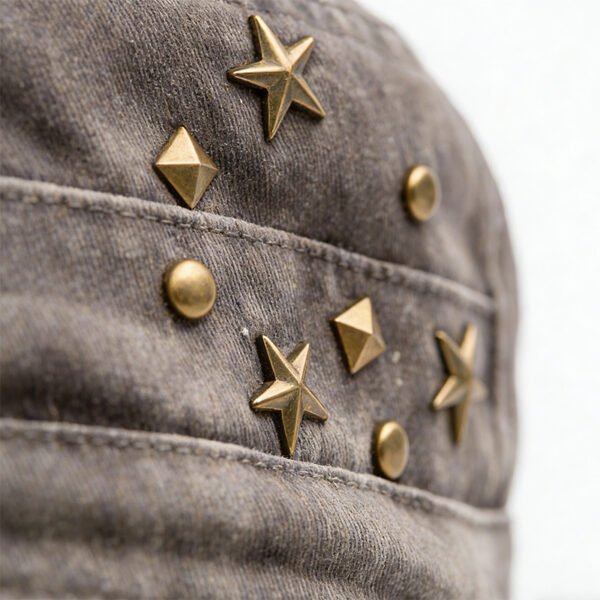
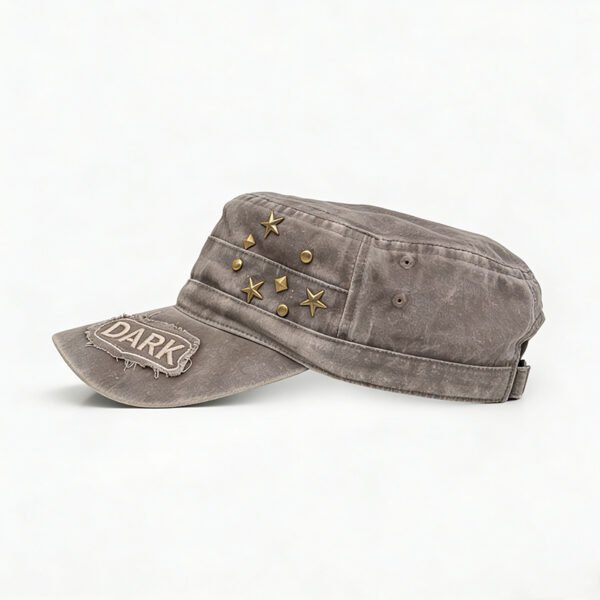
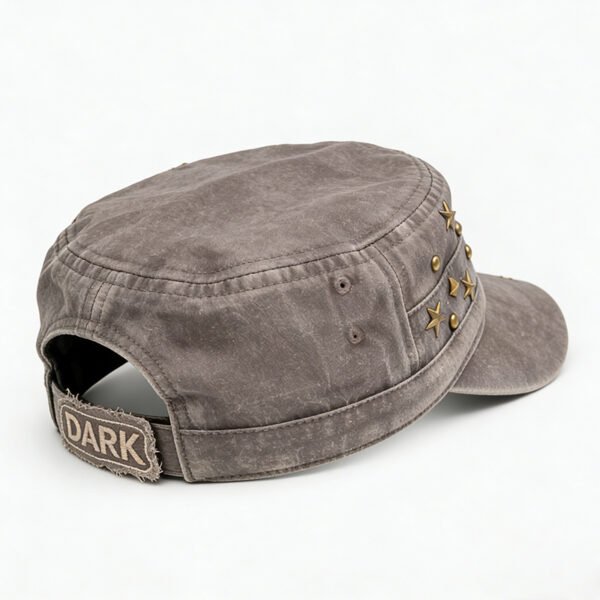
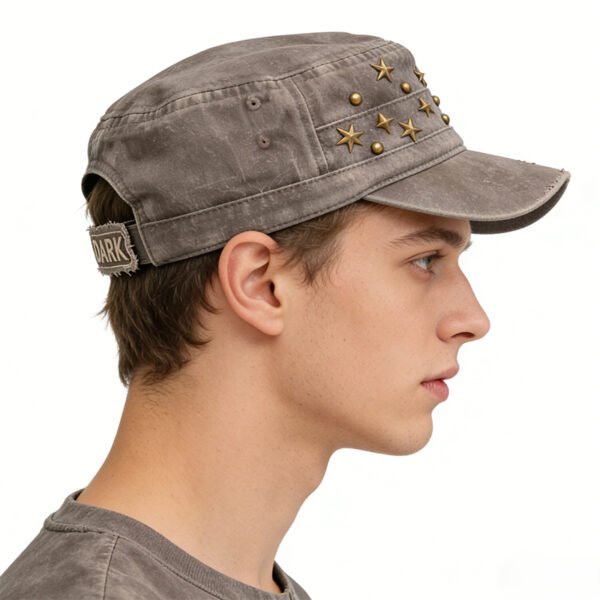
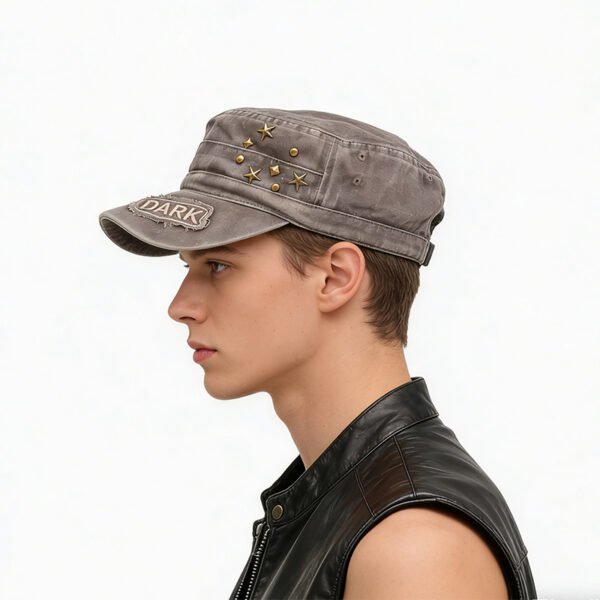
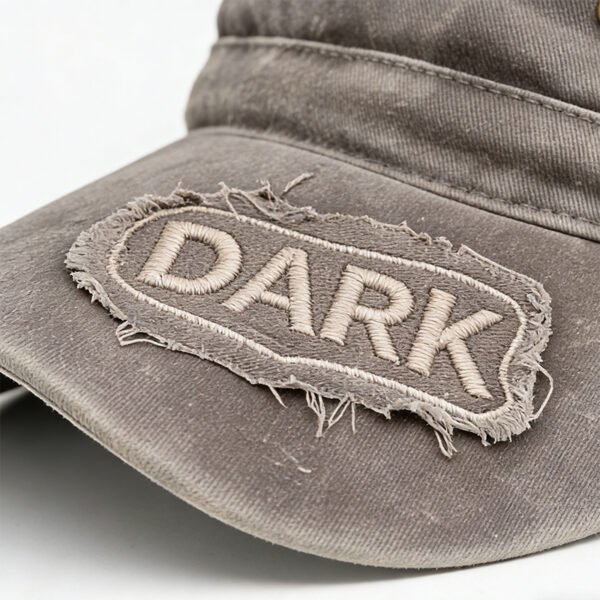

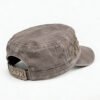
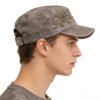


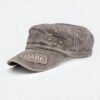
This flat cap is developed around a controlled contrast: a softened washed base carries concentrated applique and metal details without losing its clean, compact silhouette. The visible crown grain, curved seams, and clustered gold motifs make base stability and embellishment density the central approval priorities.
Base Fabric Stability Sets the Shape
The image shows a washed charcoal textile with a pronounced linear grain and several curved construction seams. That surface character is valuable, but softer fabric can reveal puckering when dense applique, embroidery, or hardware concentrates stress around crown panels.
VeeWen development should begin by confirming the shell construction, backing approach, seam allowance, and recovery after washing. The objective is not maximum stiffness; it is enough dimensional control for the crown and brim to retain their intended relationship during wear.
Density Mapping Prevents Visual Overload
Gold stars, diamonds, and round studs appear in grouped areas rather than as an evenly distributed field. This creates a deliberate focal rhythm, yet every additional attachment point adds local weight and can compete with the flat cap's restrained proportions.
A production-ready artwork map should define motif scale, spacing, edge clearance, and attachment sequence. If embroidery or applique is added beneath the visible hardware, its coverage must be tested so stitches support the design without hardening the crown excessively.
Hardware Placement Must Follow Seams
The close visual evidence places embellishment near panel joins and across the front crown, where the base fabric changes direction. Those locations can amplify the design, but they also require clearance from seam lines, brim folds, and areas receiving repeated handling.
Sampling should therefore check stud positions against actual pattern pieces rather than a flat graphic alone. VeeWen can review the placement through construction drawings and a physical sample, identifying whether a motif needs relocation, reinforcement, or a lower attachment density.
Wash Character Requires Controlled Repetition
The gray surface has an intentionally irregular, softened appearance that gives the cap its vintage character. However, wash variation can alter how gold embellishment contrasts against the base, and inconsistent abrasion may expose unwanted differences between panels or production lots.
The approval checkpoint should define the acceptable visual range for shade, grain, and abrasion. A retained reference sample can guide panel matching and finishing review, while the buyer decides how much natural variation supports the collection's design language.
VeeWen Workflow Turns the Argument Into Controls
For this product, VeeWen's workflow should connect artwork mapping with pattern engineering before sampling begins. The team can place every star, diamond, and round detail on crown panels, then review density against seams, brim structure, and backing requirements.
The sample review should record cap measurements, attachment security, panel flatness, and the washed appearance together. This creates a single approval loop for the visual effect and its physical mechanism, instead of approving embellishment separately from the base construction.
Approve the Wearable Balance
The key trade-off is character versus control: a softer washed base supports an aged hand, while greater stabilization may improve shape retention but reduce flexibility. Dense decoration increases recognition, yet excess concentration can make the cap feel rigid or visually crowded.
Before production, approve the measured fit, embellishment map, backing method, and finish tolerance as one package. The buyer should also confirm whether the final design prioritizes maximum motif impact, lighter everyday wear, or a defined midpoint between them.
Buyer Questions
Can the visible motifs be replaced with our artwork?
Yes, motif artwork can be developed for the same placement logic, subject to confirming scale, attachment method, edge clearance, and the selected base fabric's stability.
Is the base fabric cotton?
The image presents a cotton-like washed twill appearance, but fiber content and fabric weight are not verified. VeeWen should confirm composition through the development specification.
How should we approve embellishment density?
Review a measured sample with the complete motif map, checking crown flatness, seam clearance, attachment security, visual balance, and comfort before approving bulk production.
What is the minimum order quantity?
The commercial minimum is MOQ: 100 pieces per style. Final feasibility remains subject to approved artwork, materials, construction details, and the confirmed development sample.
Approve the Cap Development Direction
Send your artwork, target head measurements, preferred wash character, and embellishment priorities. VeeWen can organize the technical review around base stability, density mapping, and a measurable sample approval checkpoint.


Reviews
There are no reviews yet.