
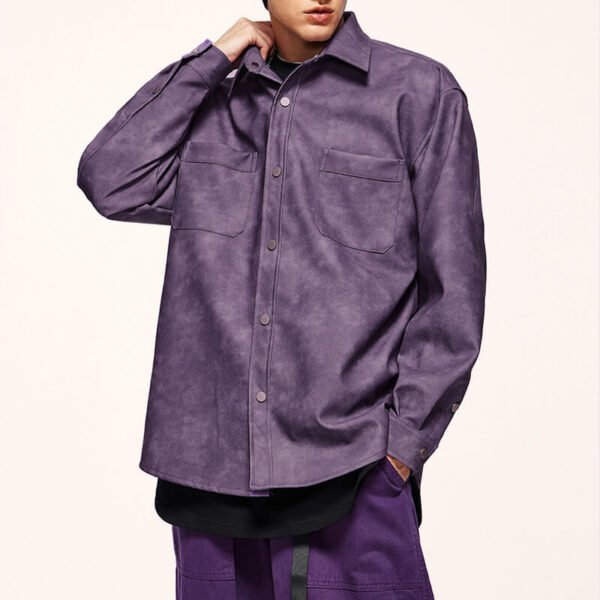
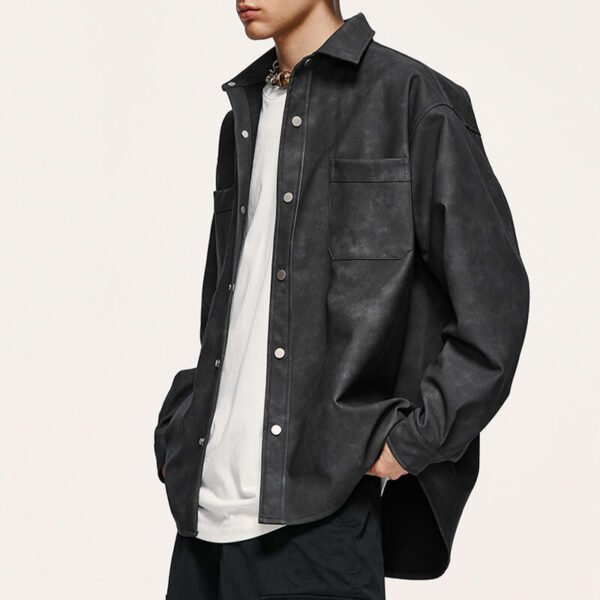
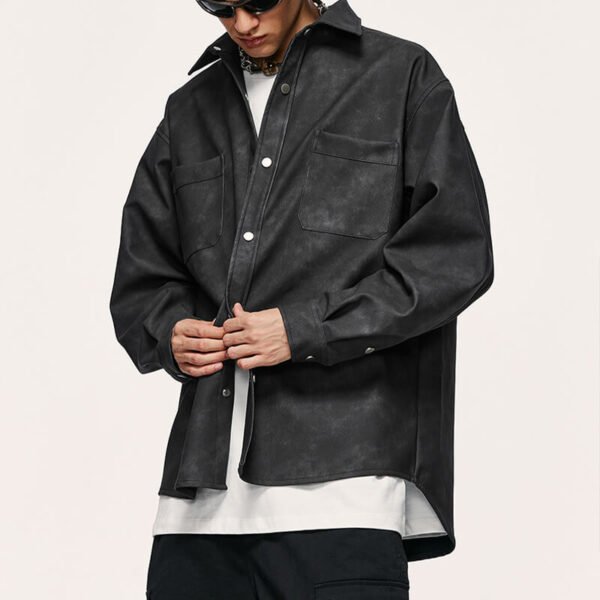
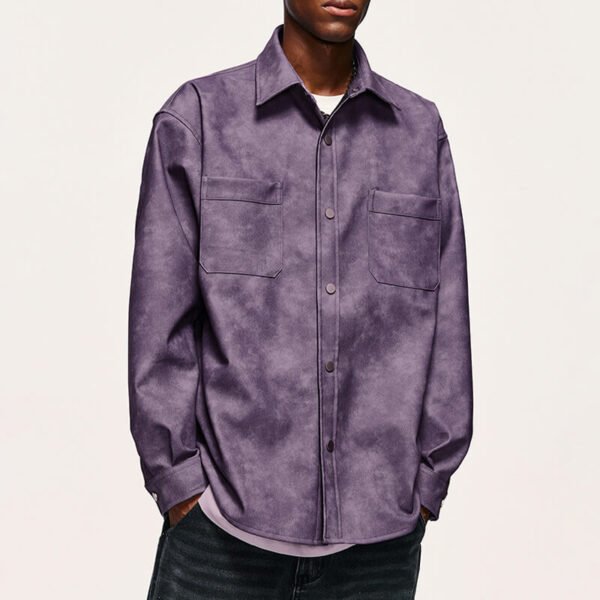
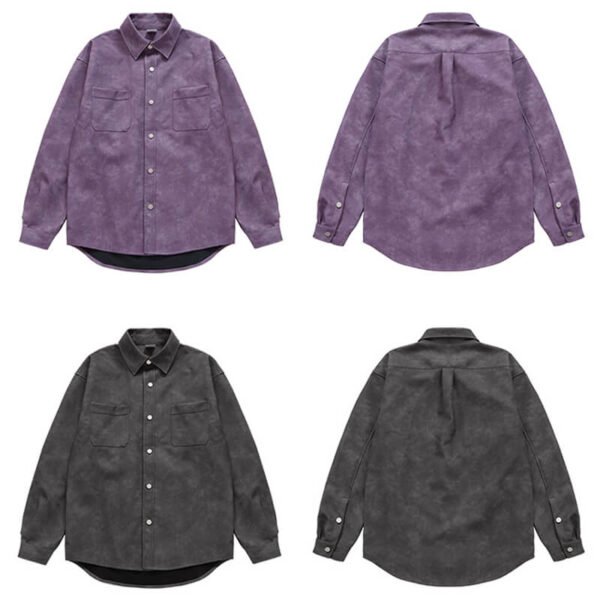
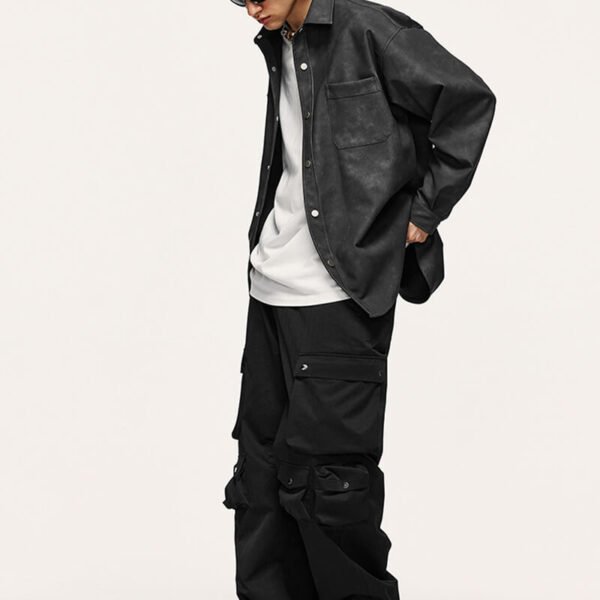
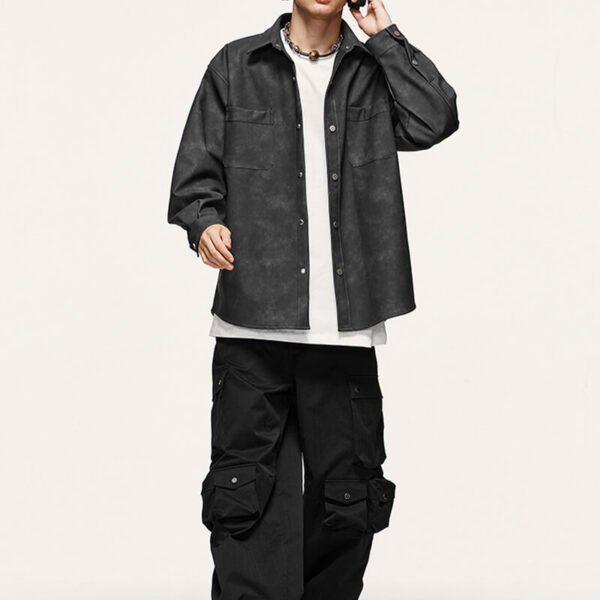
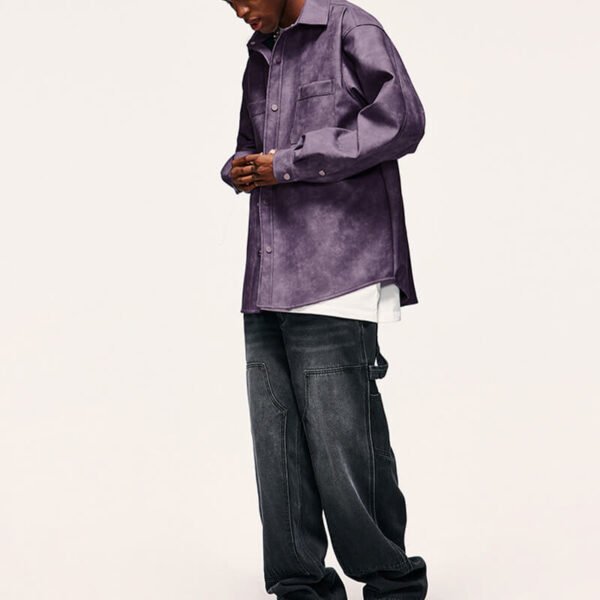
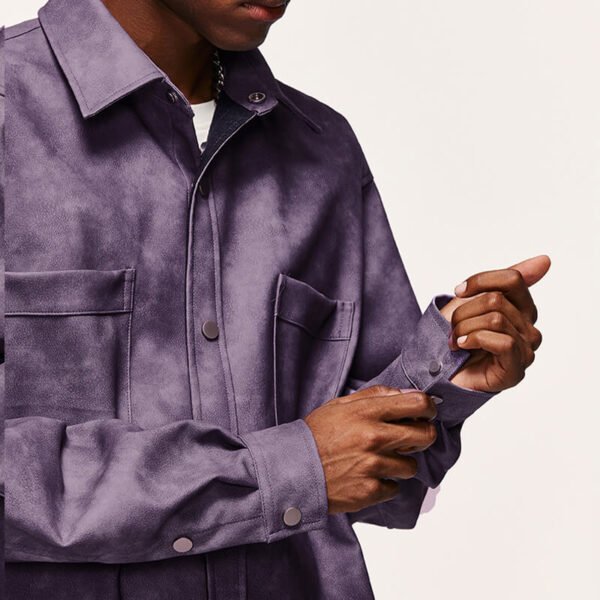
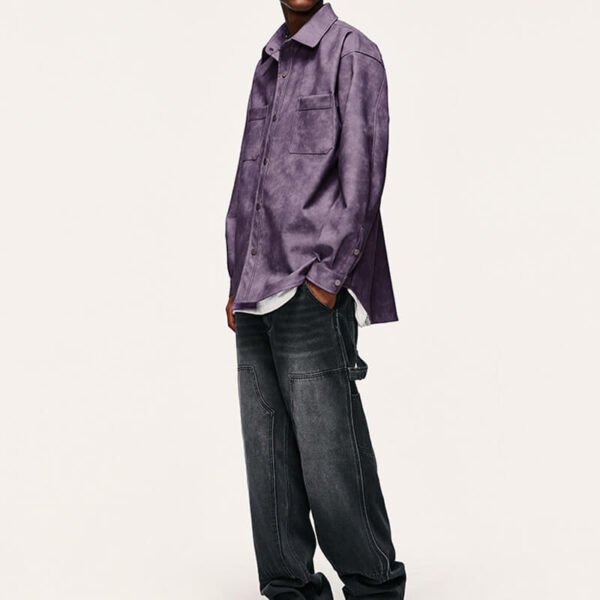
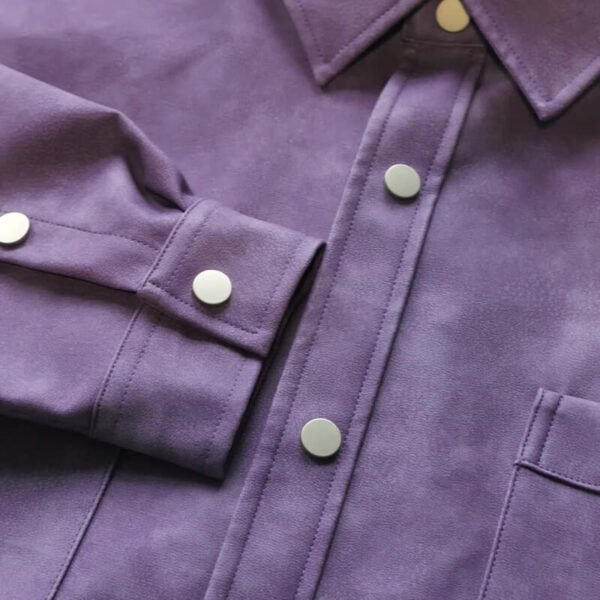
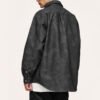
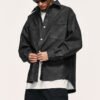
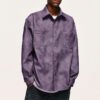
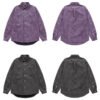



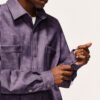
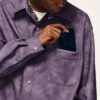



This custom long-sleeve shirt is built around visible panel discipline. The muted purple surface, mirrored chest pockets, central snap placket, and cuff tabs create a grid that makes alignment immediately judgeable. For buyers, pattern accuracy is the central development lever behind a convincing oversized result.
The Front Placket Establishes the Datum
The center placket is the strongest visual reference in the supplied image. Snap positions, collar points, pocket spacing, and lower hem direction all read against its vertical line. If the front panels are drafted unevenly, the shirt can look twisted even when individual components appear correctly sewn.
VeeWen should establish the placket as the primary datum in the pattern and inspection sheet. Measure left-to-right pocket distances, button spacing, collar spread, and hem offsets from that line. This creates a repeatable alignment method for sampling and later size grading.
Pocket Symmetry Carries the Argument
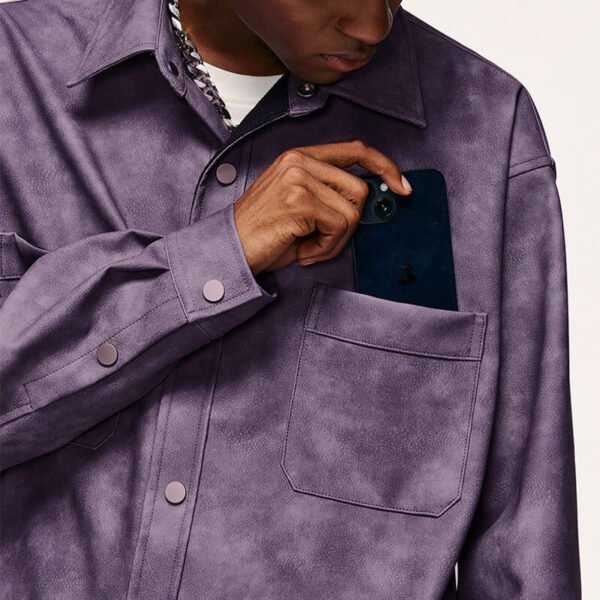
The two front patch pockets are prominent and appear intentionally balanced across the chest. Their top edges, side angles, flap or opening lines, and placement relative to the placket form a second horizontal control system. Small differences become conspicuous because the purple surface provides clear tonal continuity.
During prototype review, buyers should inspect pockets on a flat table and on a body form. Confirm equal height, equal inset, matching corner geometry, and consistent topstitch direction. The approval standard should consider visual symmetry first, then functional access and pocket capacity.
Heavy Materials Magnify Tolerance Drift
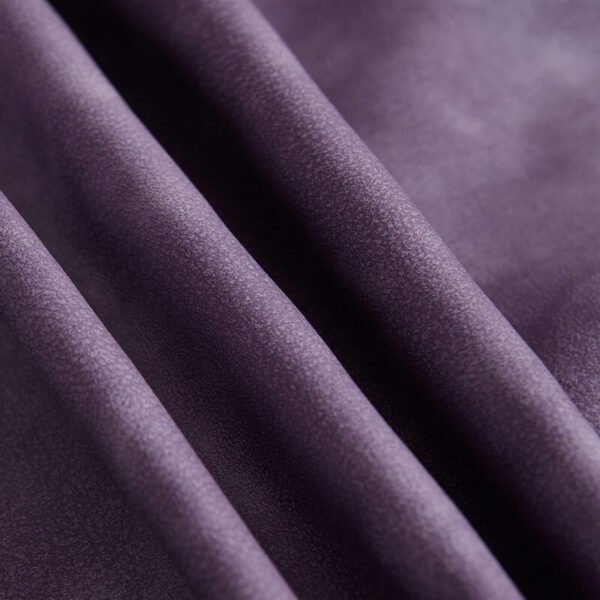
The source wording references 760 GSM and PU leather, while the image shows a substantial, coated-looking shirt. Those references require verification, but they identify a development risk: thicker or less pliable materials resist turning and can magnify seam displacement around pockets, plackets, cuffs, and collar points.
Material confirmation should precede final seam allowances and pressing settings. VeeWen can compare a representative shell with the approved pattern, checking whether panel edges roll, stretch, or shift during assembly. Alignment must be judged after finishing, because surface treatment may change handling and appearance.
Sleeve and Cuff Lines Complete the Grid
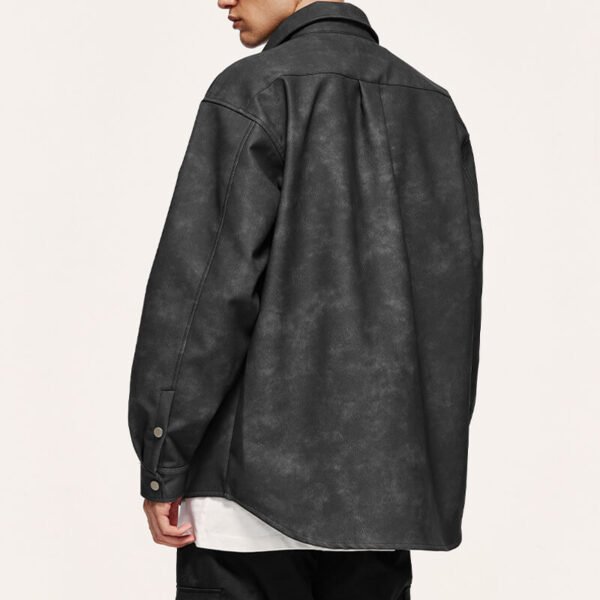
The long sleeves finish with cuff constructions and narrow tab details, giving each arm its own alignment checkpoints. A sleeve rotated slightly in the armhole can make the cuff tab, elbow line, and pocket relationship look inconsistent, particularly on an oversized shirt with generous body width.
The development sample should be reviewed from front, side, and raised-arm positions. Check sleeve pitch, cuff orientation, tab placement, and the way each sleeve meets the shoulder panel. This catches errors that remain hidden when inspection is limited to the front-facing flat lay.
Vintage Surface Effects Must Stay Directional
The muted purple appearance includes tonal variation that contributes to its vintage character. If the finish is panel-sensitive, misaligned seams may also interrupt color direction, making drafting discrepancies more visible. A controlled surface process should support the panel map rather than disguise inconsistencies.
VeeWen's approval process should compare the finished garment against a panel-marked reference sample. Reviewers should note color continuity across the placket, pocket bodies, sleeves, and collar, then confirm that snap installation and pressing have not introduced new distortions.
VeeWen Workflow Locks Alignment Before Quantity
VeeWen can build the product around a seam-map review: identify every visible join, assign measurement datums, test the confirmed shell material, and inspect the complete sample after finishing. This workflow connects the shirt's visual identity directly to pattern engineering and factory handoff.
The buyer's final checkpoint is approval of a front alignment board, pocket placement, sleeve pitch, cuff details, and finished measurements across the intended grade. Once those points hold together, the technical package is ready to support MOQ: 100 pieces per style.
Buyer Questions
Is the material definitely PU leather?
The source wording references PU leather, but the image alone cannot verify substrate. Confirm composition, backing, coating, handfeel, and care requirements through material documentation.
Why does panel alignment matter on this shirt?
The central placket, mirrored pockets, cuffs, collar, and hem create visible reference lines. Drafting or sewing drift can make the entire oversized garment appear unbalanced.
What should the first sample prove?
It should prove pocket symmetry, placket straightness, sleeve pitch, cuff-tab orientation, collar balance, hem alignment, and material behavior after the intended finishing process.
What is VeeWen's commercial minimum?
The commercial minimum is MOQ: 100 pieces per style. Buyers should finalize material, alignment standards, measurements, and finishing direction before production approval.
Align the Panels Before Approval
Share your target measurements, material reference, and pocket artwork with VeeWen for a seam-map review covering alignment, material behavior, finishing, and MOQ: 100 pieces per style.


Reviews
There are no reviews yet.