
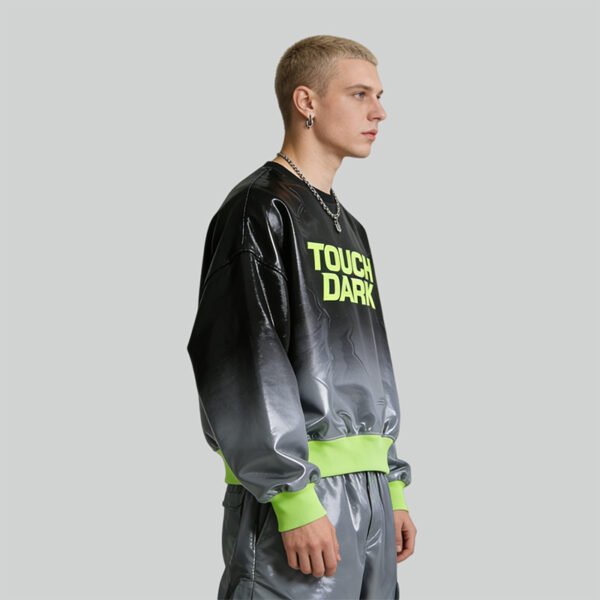


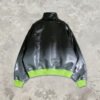

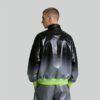
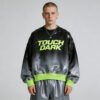





This custom techwear jacket is built around shade repeatability: the glossy surface shifts from black into gray while bright lime rib anchors lock the contrast. Because reflections can exaggerate or soften boundaries, buyers should approve a defined visual range before confirming future production.
Shade Range as the Product's Core Mechanism
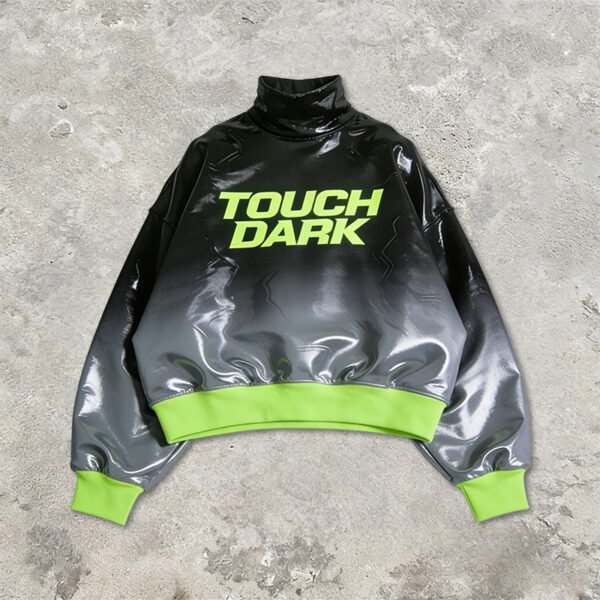
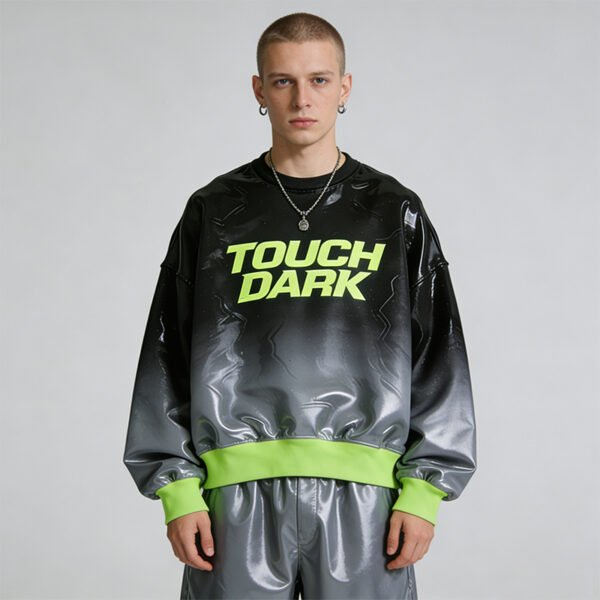
The jacket's visual identity depends on a controlled transition from deep black at the upper body toward gray below. On a glossy surface, light reflection can make the same shade appear lighter or darker, so shade range must be defined through placement, lighting, and an agreed visual.
The gradient is not merely a color choice; it is a spatial construction decision. Buyers should specify where the transition begins, how wide it becomes, and whether sleeves follow the back consistently, because uneven placement will be obvious against the fixed lime rib anchors.
Evidence from the Supplied Surface View
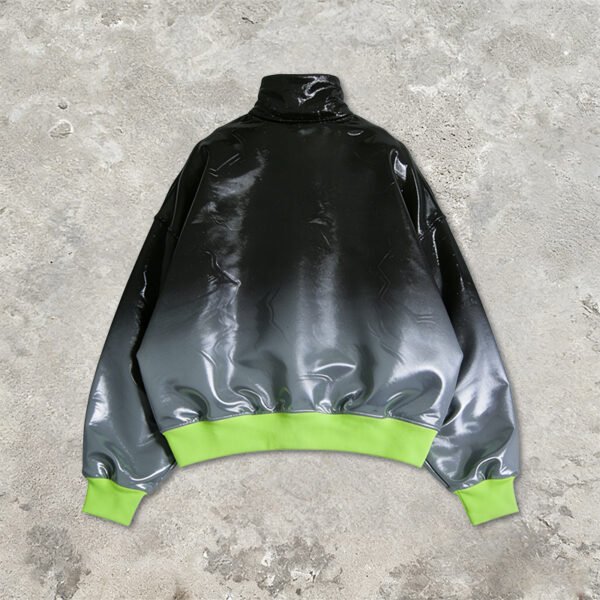
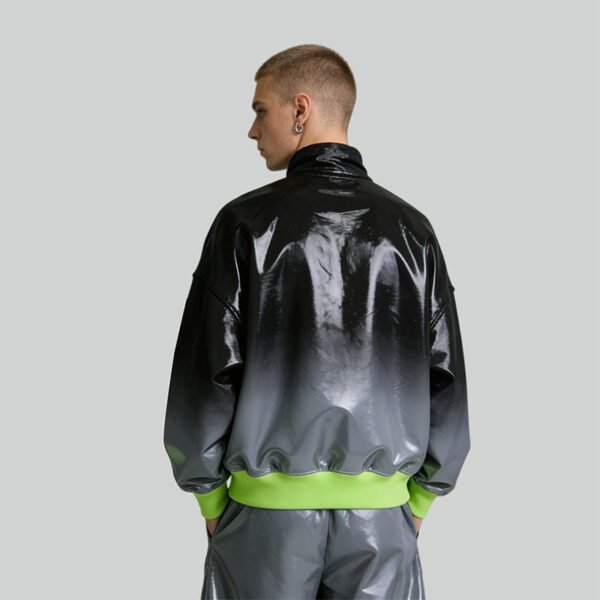
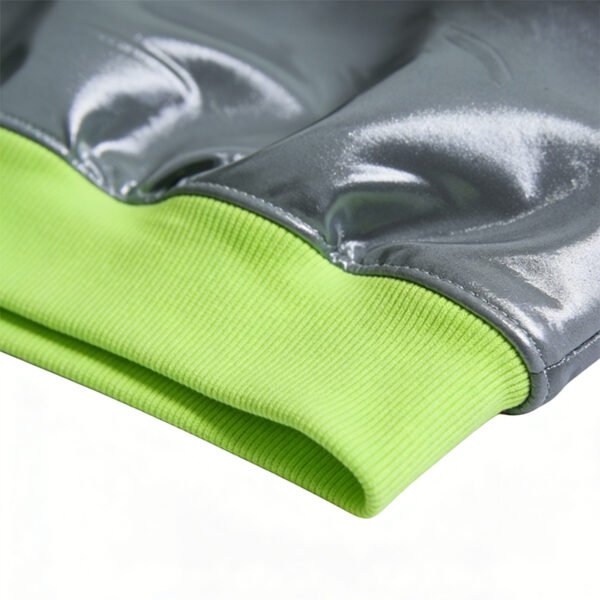
The supplied back image shows a black high-collar upper area, a reflective gray lower field, and a gathered hem finished with bright lime rib. Sleeve surfaces continue the dark-to-gray impression, creating a connected gradient direction across the rear silhouette.
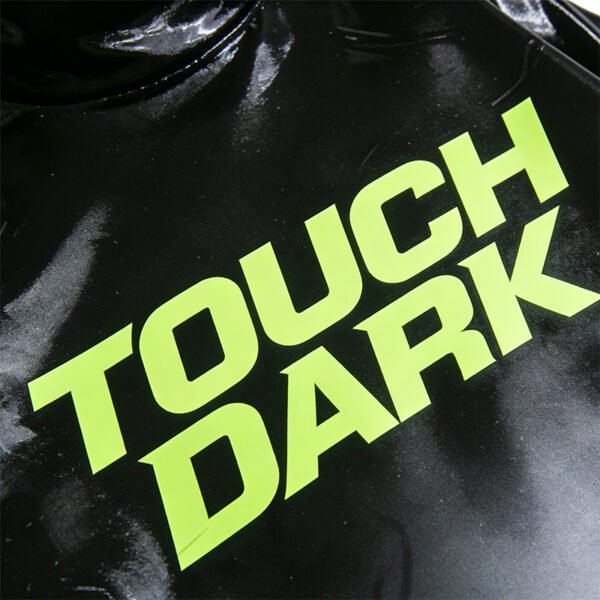
Glossy highlights create irregular-looking light bands across the body, but those bands should not be mistaken for verified print boundaries. The image confirms reflective appearance and tonal movement only; coating chemistry, gel-print thickness, wash behavior, and composition remain development questions.
VeeWen Workflow for Reorder Repeatability
VeeWen's development workflow should convert the visual gradient into a shade map with named zones, placement references, and approved contrast anchors. The initial brief should identify upper black, transition gray, lower gray, and lime rib targets, while recording which areas are surface effect versus base color.
Before reorder approval, compare a controlled reference panel or approved garment under consistent viewing conditions, then inspect transition position, edge softness, and rib contrast. This creates a product-specific review method that protects the gradient's visual logic without assuming unverified test performance.
Gloss, Reflection, and Perceived Variation
A glossy finish increases visual energy but makes shade judgments sensitive to light angle, wrinkles, and garment orientation. A black panel may read charcoal under reflection, while gray can appear brighter along folds, creating perceived variation even when the underlying shade is consistent.
Buyers should separate actual shade deviation from reflection behavior during approval. Reviewing flat panels, worn views, and folded areas together can clarify whether the desired result is a smooth tonal gradient, a stronger contrast break, or a deliberately irregular surface effect.
Fixed Contrast Anchors for Production Control
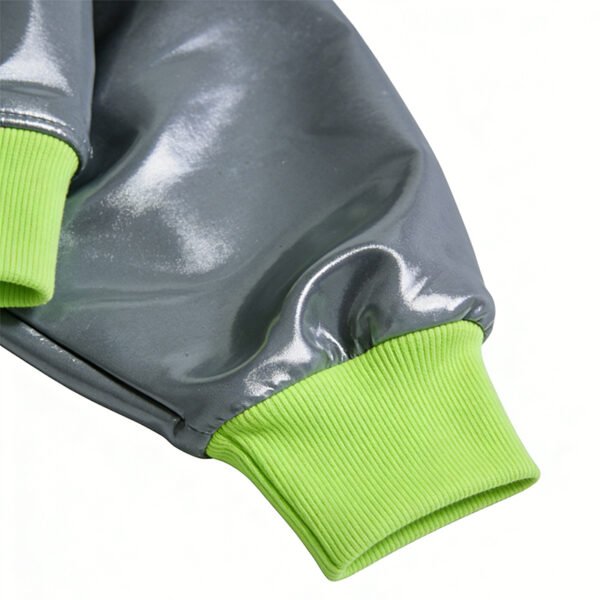
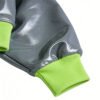
The bright lime hem and cuffs provide stable contrast points against the changing body shades. Their position, width, and saturation should remain fixed in the technical pack because they help reviewers judge whether the gradient reaches the lower body at the intended visual strength.
The high collar also acts as a dark anchor at the top, framing the transition and strengthening the jacket's technical attitude. Any change to collar color, rib height, or hem gathering can make the same shade range appear more or less pronounced.
Buyer Approval Checkpoint
Approve the gradient only after confirming its starting zone, ending zone, transition width, sleeve relationship, and reflective appearance under agreed viewing conditions. The buyer should also approve the lime rib reference separately, since contrast anchors expose even modest reorder differences.
The final decision is whether the approved shade map is precise enough for repeat production at MOQ: 100 pieces per style. If the visual range remains subjective, pause bulk approval until the technical reference, surface finish, and color checkpoints are documented.
Buyer Questions
Why is the gradient difficult to repeat?
Glossy reflections, folds, viewing angles, and transition placement can change perceived shade. Repeatability requires defined zones, consistent references, and separate review of surface behavior.
What should the buyer approve first?
Approve the black, transition, and gray shade zones first, then confirm the lime rib anchors. Review back, sleeve, flat-panel, and worn views before bulk decisions.
Is the visible finish confirmed as PU gel print?
The source wording references PU gel print, while the image confirms a glossy surface effect. Exact print construction, coating details, and composition still require confirmation.
What is the minimum order quantity?
The exact commercial minimum is MOQ: 100 pieces per style. Pricing, capacity, production timing, and reorder terms require separate commercial confirmation.
Lock the Gradient Reference
Share your shade map, surface expectations, and reorder priorities with VeeWen for focused development. We will structure approval around transition placement, reflective appearance, lime contrast anchors, and repeatable technical documentation.



Reviews
There are no reviews yet.