
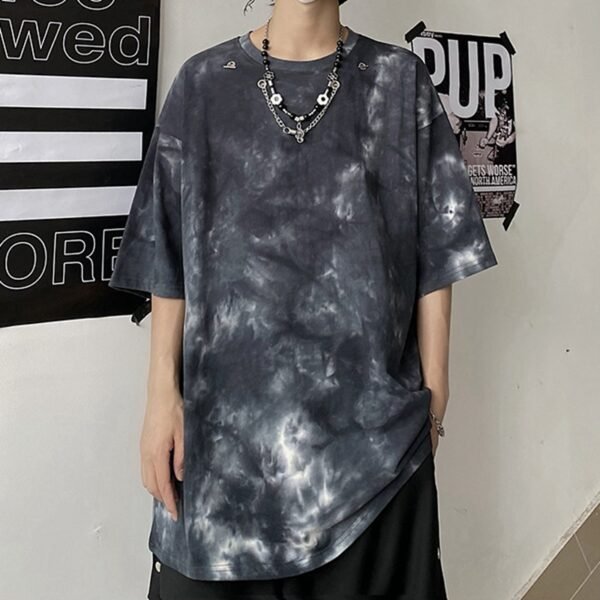
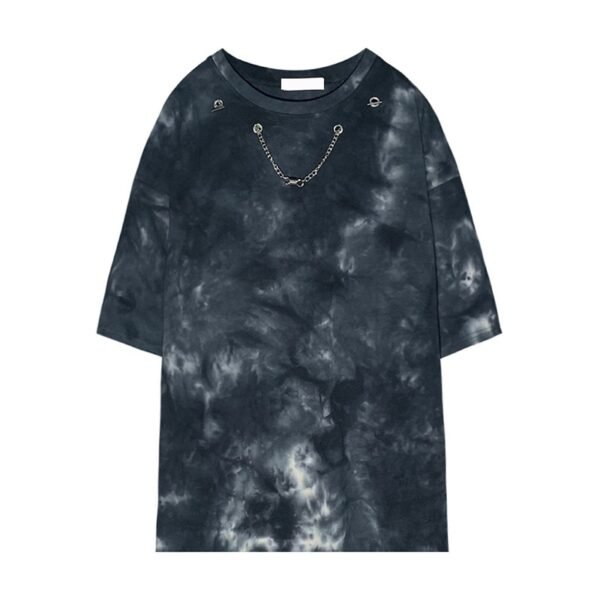
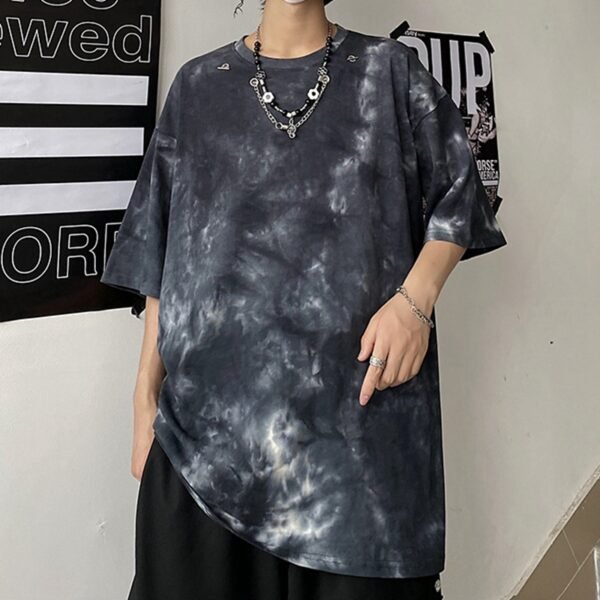
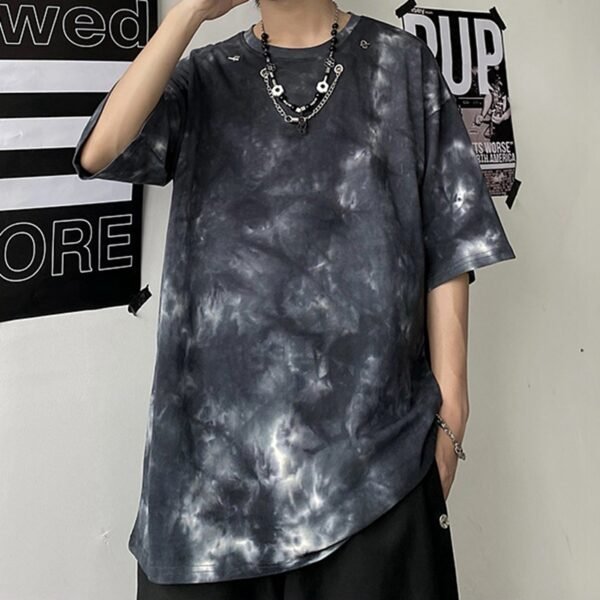
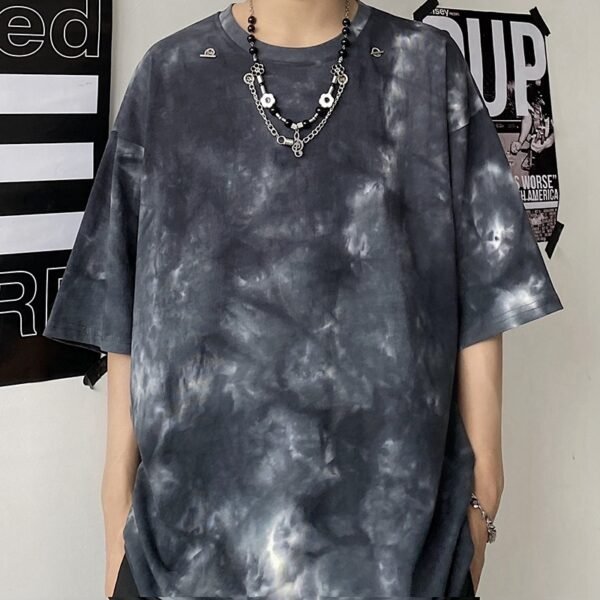
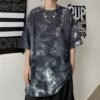
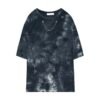
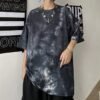
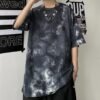
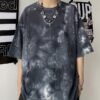
This custom oversized T-shirt is built around wearer comfort at the neck, where label position, seam bulk, and neckline recovery meet the skin. The tie-dye surface adds visual irregularity, so development must separate intentional tonal variation from construction issues that could affect a comfortable, repeatable finish.
Treat the Neck as a Contact Zone
An oversized body does not automatically guarantee comfort. The wearer still feels the collar seam and label at a concentrated area, especially when the neckline sits close to the skin. Label position, edge softness, stitch density, and seam overlap should therefore be reviewed together.
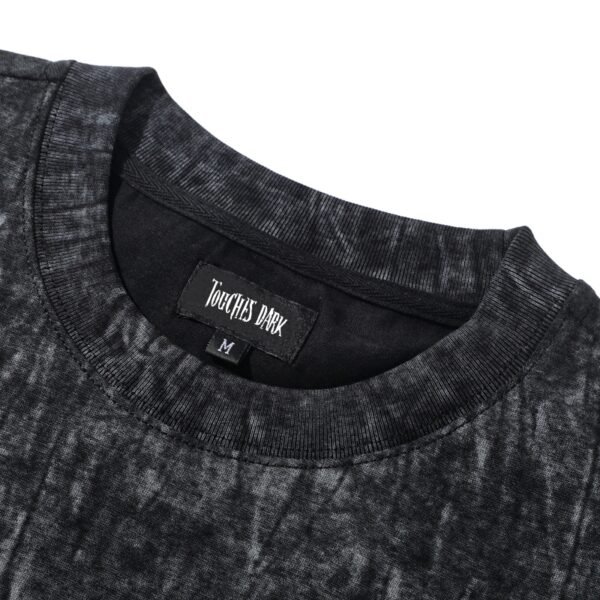
The source imagery supports a round-neck T-shirt direction, but the inner neck construction is not visible. The buyer should define whether the label sits at center back, uses a printed alternative, or moves into a low-contact position before the first fit approval.
Work with Tie-Dye Irregularity
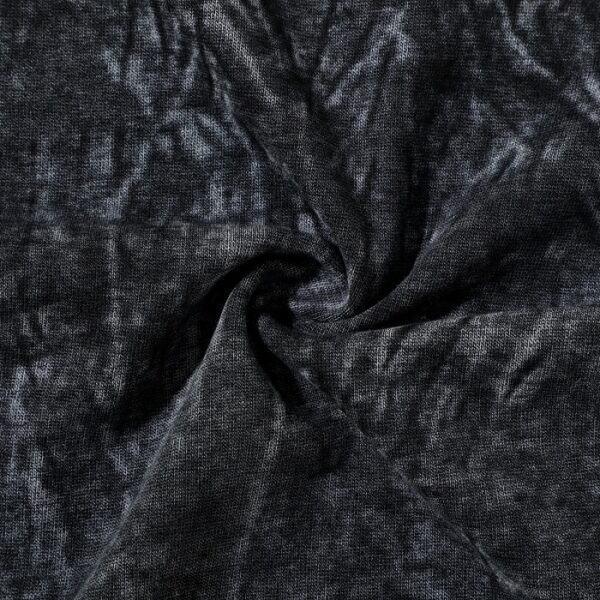
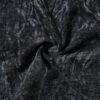
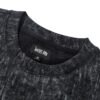
The close-up shows a black and charcoal knit with cloudy lighter movement and visible fabric texture. That irregularity is part of the appearance, yet it can make small construction problems harder to distinguish from dye variation when the neck area is inspected.
A comfort sample should be reviewed under consistent lighting and after the intended wash or finishing route is confirmed. The team can then separate acceptable tonal movement from puckering, label distortion, or seam impression that may become noticeable during wear.
Keep Label Attachment Low Bulk
A woven label can create a firm rectangle at the center back, while a printed label may reduce physical bulk but introduce different durability and hand-feel questions. Folded labels, seam insertion, and exposed edges each change the contact experience at the neckline.
The right choice depends on the approved branding requirement and fabric response. VeeWen's development review should compare attachment methods on the actual knit, checking whether stitches, label corners, or backing materials remain perceptible when the shirt is worn and laundered.
Coordinate Collar Recovery and Comfort
The neckline must balance enough recovery to hold its shape with a hand feel that does not press harshly against the wearer. Rib width, seam allowance, binding choice, and stitch tension can all influence how the label area behaves during movement.
Because the shirt is oversized, a collar that appears proportionate on the body may still feel tight or unstable at the neck. The buyer should approve neckline measurements on the fit sample and record comfort observations separately from the overall silhouette decision.
Connect Comfort to VeeWen's Workflow
For this product, VeeWen's workflow should place the label and neckline brief beside the pattern measurements, not as a late decoration step. The brief can identify contact-sensitive zones, label dimensions, attachment options, and the intended tie-dye finishing sequence.
After the first sample, VeeWen can log wearer feedback against specific construction variables: seam bulk, label edge, collar pressure, and surface hand. That evidence supports a focused revision before the size set, helping the buyer approve comfort as a measurable product requirement.
Approve the Wear Test Before Bulk
The commercial decision should combine visual approval with a short wear review. Check the center-back label after movement, inspect the collar against the skin, and look for distortion where the neck seam meets the tie-dye surface. A comfortable oversized fit still needs disciplined internal finishing.
Before production booking, approve the neck construction, label method, wash or finishing assumptions, size grading, and tie-dye tolerance. The final checkpoint is a signed specification confirming that comfort priorities remain protected at MOQ: 100 pieces per style.
Buyer Questions
Can a printed neck label improve comfort?
It can reduce raised label bulk, but hand feel, print durability, and skin sensitivity still require confirmation. Compare the printed option with a sewn label on the actual fabric.
Does oversized fit guarantee a comfortable neckline?
No. Body ease does not determine collar pressure or label irritation. Neck measurements, rib recovery, seam construction, and attachment method need separate wear-focused approval.
How should tie-dye variation be approved?
Define an acceptable tonal range with a visual standard, then inspect construction under consistent lighting. Separate intended color movement from puckering, distortion, or finishing defects.
What is the commercial minimum?
The exact commercial minimum is MOQ: 100 pieces per style. Confirm the final neck construction, material details, dye tolerance, and approved sample before production planning.
Approve the Comfort-Led Neck Package
Share your label preference, neckline measurements, and tie-dye tolerance with VeeWen. We can structure the sample review around contact comfort, attachment bulk, fabric response, and MOQ: 100 pieces per style.


Reviews
There are no reviews yet.