
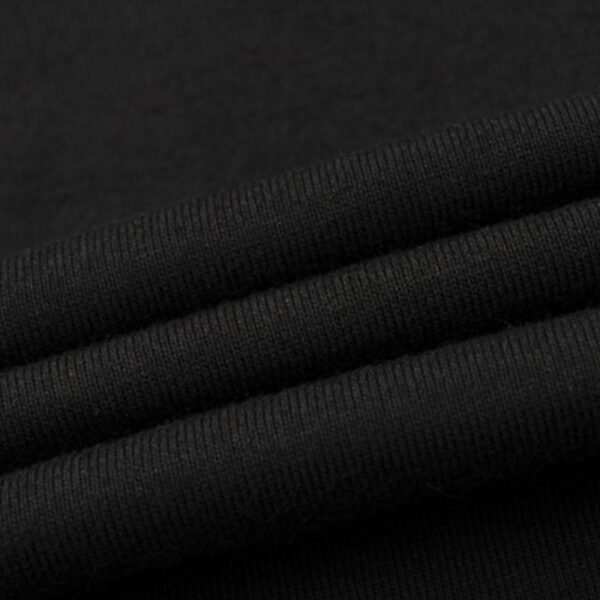

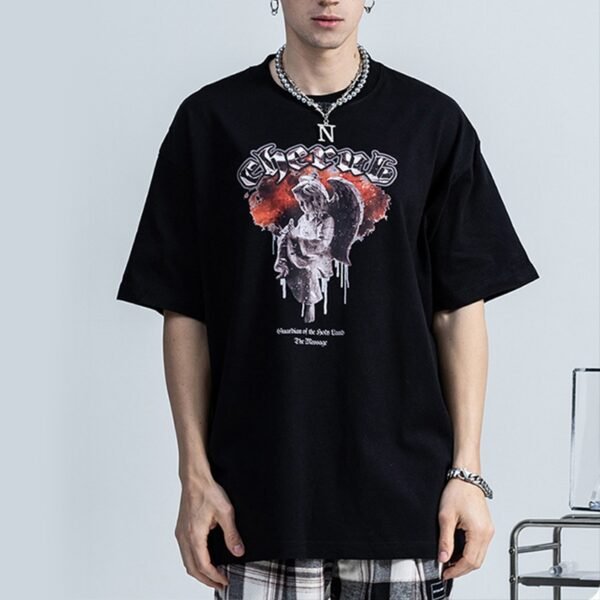

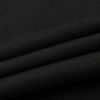





This custom men's T-shirt development record treats drawcord, eyelet, and channel reinforcement as a controlled load-management problem. The supplied black knit close-up supports a dense surface reference, while the source wording establishes printed decoration; hidden reinforcement details require confirmation before sampling.
Load Paths Around the Neckline
A drawcord concentrates force where the cord exits, changes direction, and is tightened. Reinforcement should spread that load through a stable channel or facing, preventing localized distortion that could shift the neckline and disrupt the intended printed silhouette during repeated handling.
The supplied image shows a closely textured black knit surface, but it does not reveal an opening, eyelet, or cord tunnel. That absence matters: the first technical review must establish whether the requested axis belongs to a hooded variant, adjustable collar, or alternate construction.
Eyelet Selection and Placement
An eyelet is only as reliable as the fabric beneath it. For a lightweight or stretchable T-shirt body, a small reinforcement patch, inner tape, or layered facing may be needed so insertion does not enlarge the hole or create a hard ring against the wearer's skin.
Placement should be coordinated with the print map, neckline seam, and wearer movement. VeeWen's development review can mark the eyelet center, backing boundary, stitch line, and artwork exclusion zone together, allowing the buyer to assess appearance, comfort, and production repeatability in one sample.
Channel Geometry and Cord Travel
Channel width controls cord movement, visual bulk, and the chance of bunching. A narrow route can bind a thicker cord, while excessive room permits wandering and uneven tension; the correct geometry therefore depends on the selected cord diameter, channel material, and finishing method.
For this program, VeeWen should convert the chosen cord and exit design into a measured pattern detail rather than treating reinforcement as an afterthought. Confirming the route on a physical sample will show whether the black surface remains smooth when tightened and released.
Print Stability Near Reinforced Areas
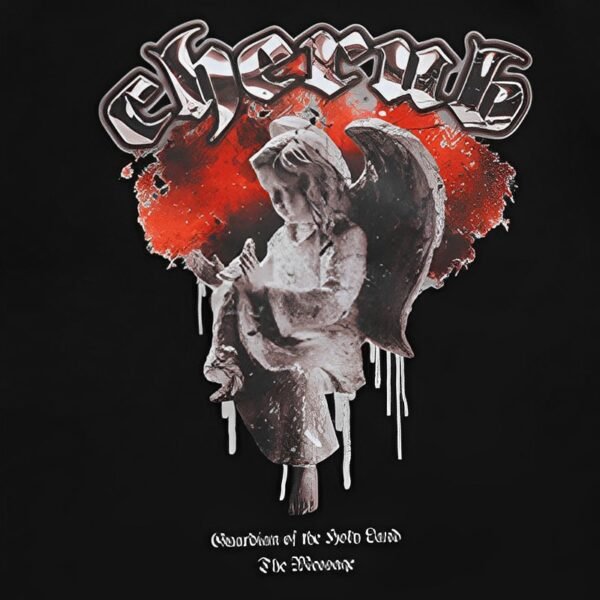
Direct-injection decoration is identified in the source wording, while the supplied close-up shows the dark textile surface without artwork. The buyer should therefore review how print placement interacts with seams, facings, and concentrated tension, because raised or compressed areas can alter visual registration and hand feel.
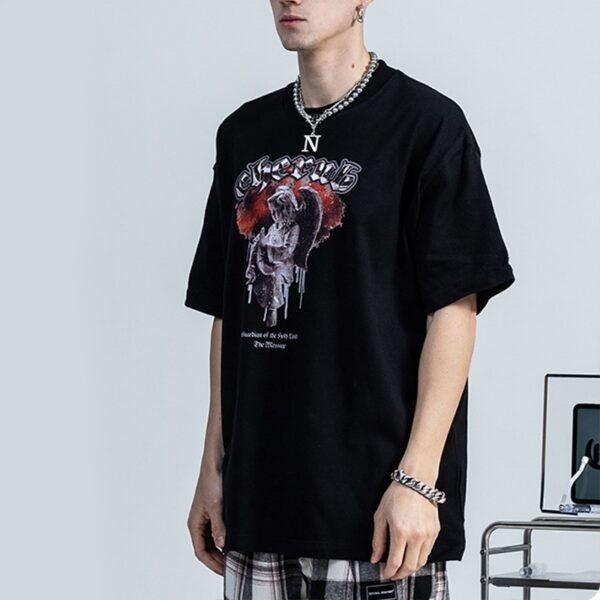
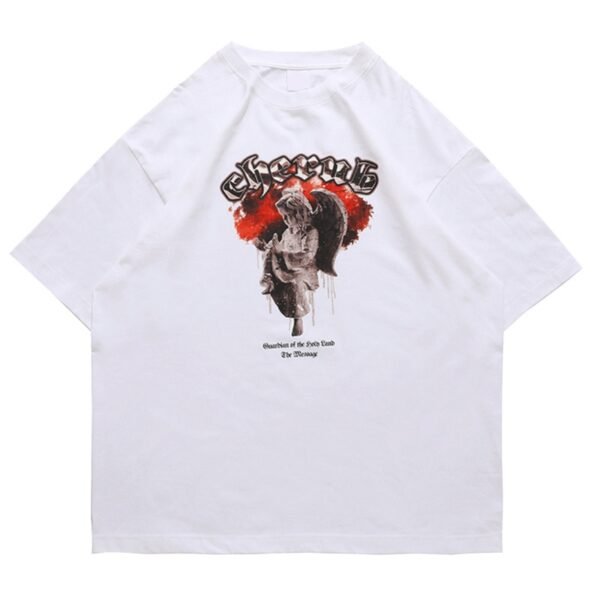
The graphic reference described in the source title should be mapped against the final neckline architecture before artwork approval. VeeWen's workflow can coordinate pattern, reinforcement, and print files so the team evaluates the decorated garment as a complete load-bearing system.
Comfort, Bulk, and Trade-Offs
Additional reinforcement improves resistance to pull-through and deformation, but every layer can increase stiffness, thickness, or edge awareness. On a T-shirt, excessive backing may feel unlike the surrounding body fabric, so the design should use only the support needed for the intended cord tension.
The buyer should compare at least the proposed reinforcement location and a lighter alternative during sample review. The decision is not simply maximum strength; it is the acceptable balance between secure hardware, clean print appearance, flexible wear comfort, and efficient assembly.
VeeWen Development Checkpoint
VeeWen can begin with the supplied black surface and printed-garment reference, then document the cord diameter, eyelet specification, channel dimensions, backing shape, stitch sequence, and artwork clearance in the technical pack. This creates a traceable approval path for an otherwise hidden construction detail.
Before moving toward the MOQ of 100 pieces per style, the buyer should approve the actual neckline configuration, reinforcement materials, and sample behavior after tightening and release. If no drawcord exists in the final garment, the axis should be removed from the specification.
Buyer Questions
Is the fabric confirmed as 100% cotton?
No. The source title references cotton, but the supplied evidence does not verify composition, GSM, yarn specification, or testing; VeeWen should confirm these details in the technical pack.
Does the supplied image show a drawcord channel?
No. The image is a close-up of black textile texture without visible hardware or openings, so the neckline configuration and reinforcement package require buyer confirmation during development.
What should the first sample prove?
The first sample should prove eyelet security, channel movement, neckline recovery, wearer comfort, and artwork clearance after tightening and releasing the selected cord detail.
What is the commercial minimum?
The commercial minimum is MOQ: 100 pieces per style. Final pricing, production timing, packaging, and compliance requirements remain subject to confirmed specifications and quotation.
Approve the Reinforcement Direction
Send the intended neckline, cord, eyelet, artwork, and material requirements to VeeWen for technical review, then approve the physical sample before committing to MOQ: 100 pieces per style.



Reviews
There are no reviews yet.