

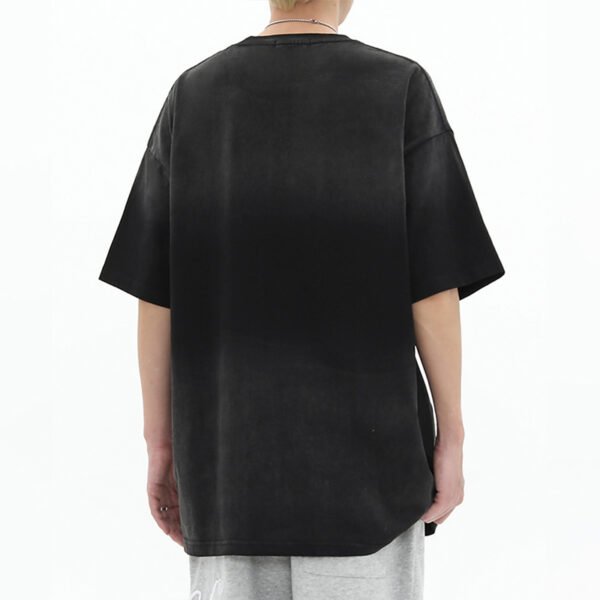


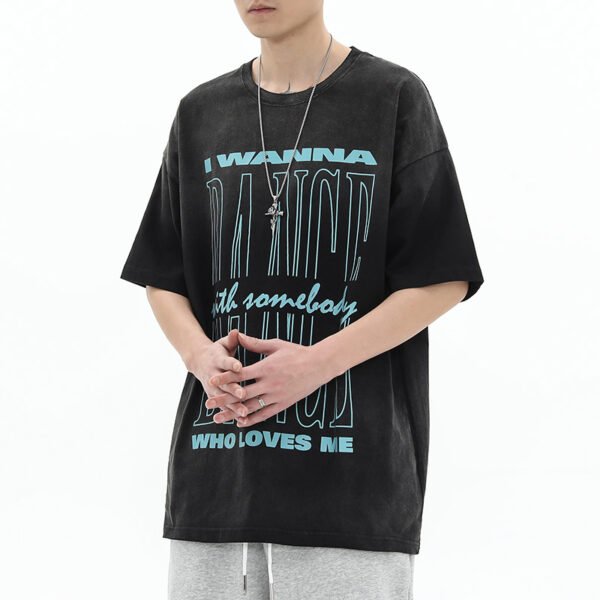
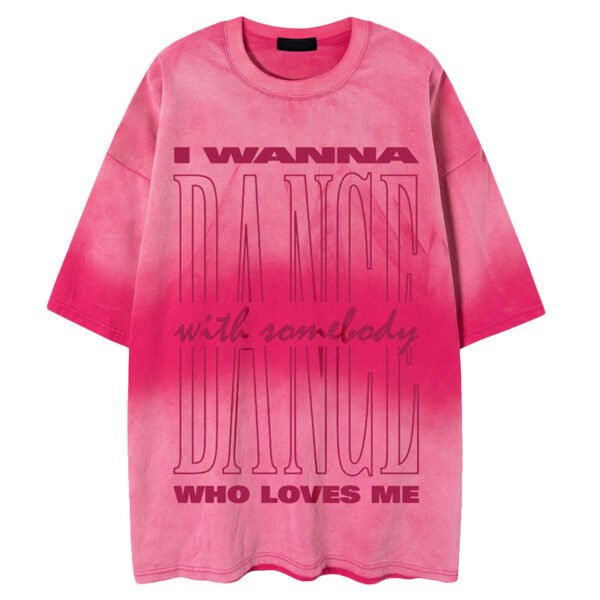



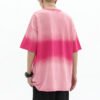
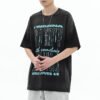

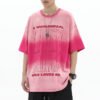
This custom men's T-shirt is developed around a velvet-like pleated surface where thread choice directly controls seam presence. The supplied close-up shows raised linear texture, saturated pink color, and dark graphic marks, making stitch proportion a visual approval point rather than a hidden construction detail.
Why Thread Choice Controls the Surface
On a raised pleated ground, a thick or highly contrasting thread can compete with the texture instead of supporting it. The visible lines already create directional rhythm, so thread selection should preserve definition while keeping seam shadows controlled.
The close-up shows a saturated pink field interrupted by dark linear marks and script-like graphics. That contrast means seam color, luster, and stitch density will affect whether the finished shirt reads refined, distressed, or visually crowded.
Seam Appearance Across an Oversized Body
Oversized garments expose longer seam paths and broader uninterrupted panels, giving small construction decisions greater visual reach. A seam that appears acceptable on a compact block may become dominant when extended across this shirt's relaxed body proportions.
The pleated texture can also distort how seam alignment is perceived. Development should review whether seams follow, cross, or interrupt the raised lines, because each route changes apparent width, drape direction, and the continuity of the surface pattern.
Graphic Contrast Requires Stitch Discipline
The supplied image places dark artwork over the textured pink surface, creating multiple competing line weights. Thread should therefore be selected with the graphic scale in mind, so construction lines remain legible without resembling additional artwork or muddying the printed or applied treatment.
Where graphics approach seams, the sample should confirm edge cleanliness and visual separation. A low-sheen thread may quiet the construction, while a brighter thread could emphasize it; the correct choice depends on the intended relationship between texture, artwork, and label identity.
Trade-Offs in Texture-Led Construction
A stronger thread can improve seam definition and may help a development team inspect stitch consistency, but it can also exaggerate ridges on a plush or velvet-like surface. A finer thread can appear more discreet, yet may reduce perceived structure or require closer density review.
Texture itself can conceal minor irregularities in some areas while amplifying them in aligned pleats. Buyers should weigh tactile richness against visual restraint, especially where the shirt will be photographed closely or merchandised beside smoother basic tops.
VeeWen Development Workflow Checkpoint
VeeWen's product-development workflow should begin by mapping the pleat direction, graphic placement, seam routes, and intended oversized measurements into one annotated tech package. The first sample then becomes a controlled comparison of thread size, color, sheen, and density against the supplied visual target.
Before approval, the buyer should review close-up seam photography and a worn or laid-flat sample under consistent lighting. This checkpoint connects construction decisions to the final appearance, allowing adjustments before grading, labeling, and the MOQ: 100 pieces per style production plan.
Buyer Approval Decision
The key approval is not simply whether the shirt has texture; it is whether the texture, seams, and graphics share the same visual hierarchy. Confirm the preferred thread behavior on the body, neckline, sleeve joins, and any areas where pleats change direction.
Approve production only after the selected thread and stitch treatment remain controlled at the intended scale. If the seam becomes a visible stripe or disappears into the surface, revise the construction package and sample before committing to bulk specifications.
Buyer Questions
What material is this T-shirt made from?
The supplied evidence shows a velvet-like textured surface, but fiber composition, GSM, stretch, and finishing chemistry remain To Confirm through material selection and sampling.
How does VeeWen control seam visibility?
VeeWen can evaluate thread size, color, sheen, and stitch density together against the raised surface, then document the approved combination within the development package.
Can the pleated texture and graphics be customized?
The development can define texture direction, graphic placement, color relationships, and seam treatment; final feasibility depends on approved artwork, material behavior, and sample review.
What is the minimum order quantity?
The exact commercial minimum is MOQ: 100 pieces per style. Final quantities, size ratios, colors, labels, and packaging should be confirmed within the production quotation.
Approve the Surface and Seam Direction
Send your artwork, target measurements, and preferred surface reference to VeeWen for a focused thread-and-seam development review before sampling and MOQ: 100 pieces per style production planning.


Reviews
There are no reviews yet.