
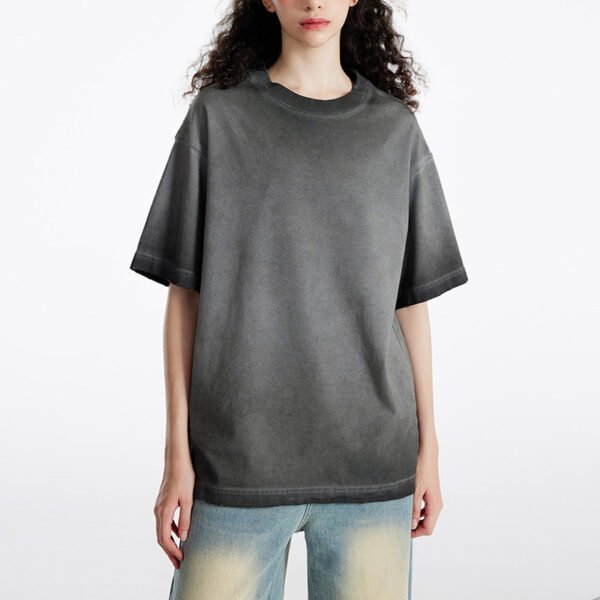
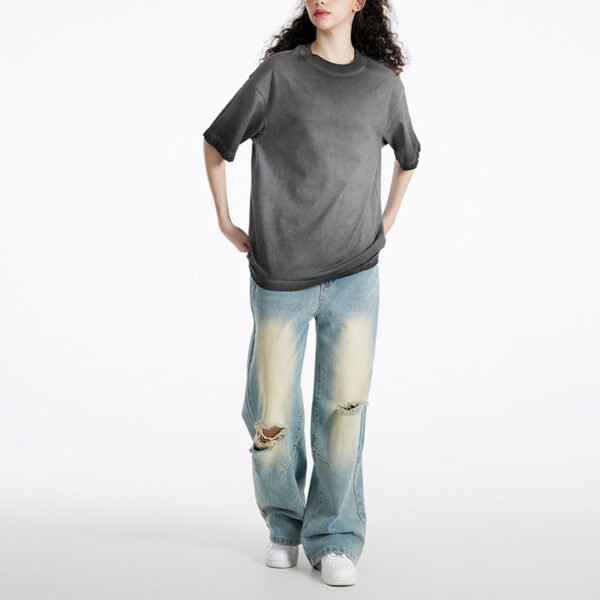


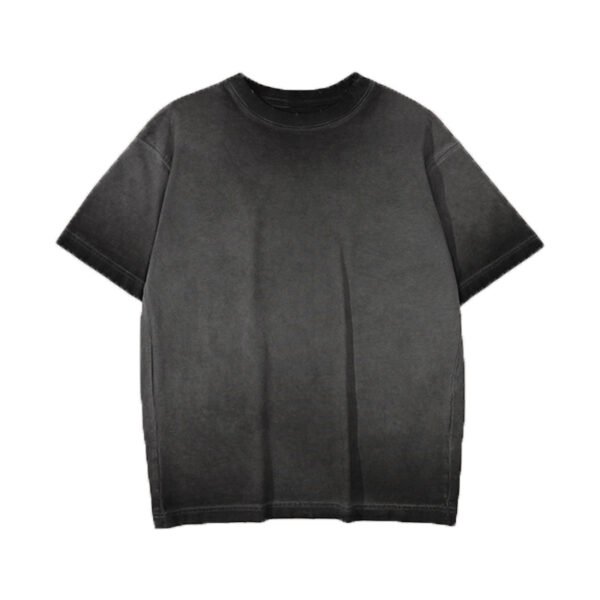
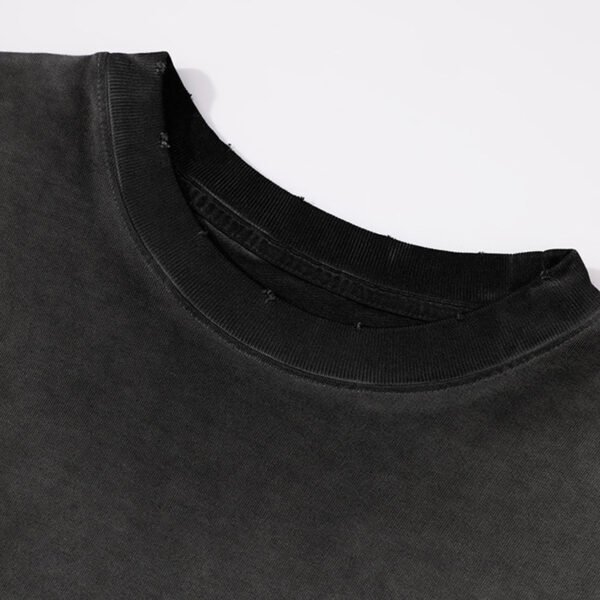

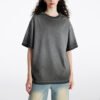
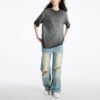


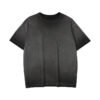


This custom T-shirt is developed around seam accuracy under a relaxed silhouette. The supplied image shows a washed charcoal, heavyweight-looking short-sleeve body with a broad drop shoulder, crew neck, and extended hem. VeeWen can translate that visual direction into controlled panel and wash specifications for private-label review.
Why Seam Accuracy Matters Here
A relaxed T-shirt makes small alignment errors unusually visible because the broad front presents long, uninterrupted surfaces. When contrasting panels are introduced, shoulder seams, sleeve edges, side joins, and hem lines must meet consistently to prevent the oversized shape from looking distorted.
The supplied image provides useful registration references: the crew neck is centered, the drop shoulders extend evenly, and the bottom hem runs broadly across the body. These landmarks can anchor a color-block pattern while keeping the washed surface visually balanced.
Wash Variation and Panel Control
Acid-wash coloration adds a second variable to seam approval. Tonal lightening can soften or obscure panel boundaries, while stronger contrast can make even slight mismatches obvious. The reference presents charcoal gray with visible tonal movement, so wash placement should be evaluated alongside cut-panel alignment.
For development, VeeWen should separate the seam map from the wash instruction, then review them together on the first sample. This clarifies whether each panel receives the same treatment, a controlled tonal variation, or a deliberately contrasting color before bulk specifications are locked.
Silhouette Registration Points
The drop-shoulder proportion depends on stable relationships between neckline width, shoulder extension, sleeve opening, and body length. If one panel shifts during cutting or sewing, the garment can appear twisted even when individual measurements remain within tolerance. Registration points therefore protect the intended relaxed profile.
The visual reference shows sleeves falling well below the natural shoulder and a body extending over the upper hip. VeeWen can use those proportions as approval references while confirming the buyer's measurement chart, grade rules, seam allowance, and acceptable tolerance for each color-block join.
Construction Decisions for Bulk
Heavyweight fabric can improve visual body and seam definition, but it may also increase handling resistance at layered joins. The source title states 280GSM heavyweight cotton; exact knit structure, shrinkage behavior, and sewing response remain items to confirm before finalizing needle, thread, and stitch settings.
A practical bulk review should inspect neckline symmetry, sleeve-hem continuity, side-seam alignment, and the way layered panels lie after pressing. These checks connect the manufacturing axis to wearable appearance, ensuring color-block accuracy does not create puckering, stiffness, or an unintended break in the drop shoulder.
VeeWen Development Workflow
VeeWen's workflow for this style should begin with a measurement sheet and a seam map that identify every visible panel boundary. The buyer can then review a colorway board alongside the acid-wash direction, making the contrast decision before fabric cutting rather than after construction.
At sample approval, the key record should capture panel order, notch locations, seam allowances, wash treatment by component, and approved visual tolerances. VeeWen can carry those decisions into the production file, allowing the same registration logic to guide cutting, sewing inspection, and final sample comparison.
Buyer Approval Checkpoint
The buyer should approve three linked elements: the final silhouette measurements, the exact panel layout, and the relationship between wash variation and seam visibility. Approving only the artwork or color names leaves the most important construction risk unresolved for this specific T-shirt.
Before releasing the style, compare the front, back, shoulders, sleeves, and hem on a physical sample under consistent lighting. Confirm whether the collection needs true color-block contrast or only tonal segmentation, then document that choice with the approved wash and seam references.
Buyer Questions
Is the 280GSM specification confirmed?
The supplied source title explicitly states 280GSM heavyweight cotton. Knit structure, finished-weight tolerance, shrinkage, and detailed fiber composition still require confirmation during development.
Does the supplied image show color-block panels?
No. The main image shows a tonal washed charcoal body without clear contrasting panels. Color-block construction is therefore a proposed development direction tied to the assigned manufacturing axis.
What should the first sample prove?
The first sample should prove shoulder, sleeve, neckline, side-seam, and hem registration while showing how the selected wash treatment affects panel visibility and overall silhouette.
What is VeeWen's minimum order?
VeeWen's exact commercial minimum is MOQ: 100 pieces per style. Final order planning should follow approved measurements, materials, colorways, and production documentation.
Approve the Seam and Wash Direction
Send your measurement chart, panel artwork, preferred wash references, and target colorways for review. VeeWen will organize the development checkpoint around seam registration, tonal control, and the MOQ: 100 pieces per style requirement.


Reviews
There are no reviews yet.