







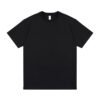
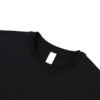
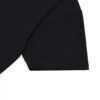



This custom men's T-shirt is developed around a disciplined tension between a close silhouette and a deliberately controlled surface. The supplied black sample shows how subtle body rippling can add depth, while restrained seam movement keeps the garment commercially clean and scalable.
Surface texture defines the visual hand
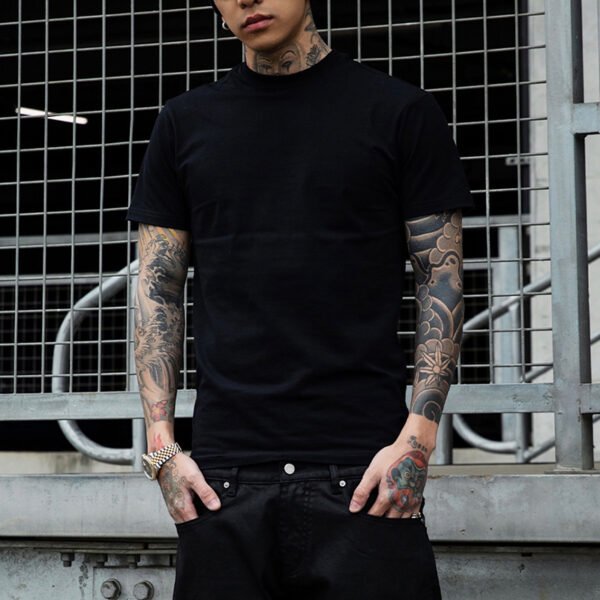
The image presents a nearly uniform black surface, but the torso carries shallow horizontal rippling around the chest and abdomen. That restrained movement prevents the garment from looking lifeless while preserving the sharp visual simplicity expected from a solid-color, close-fitting foundation style.
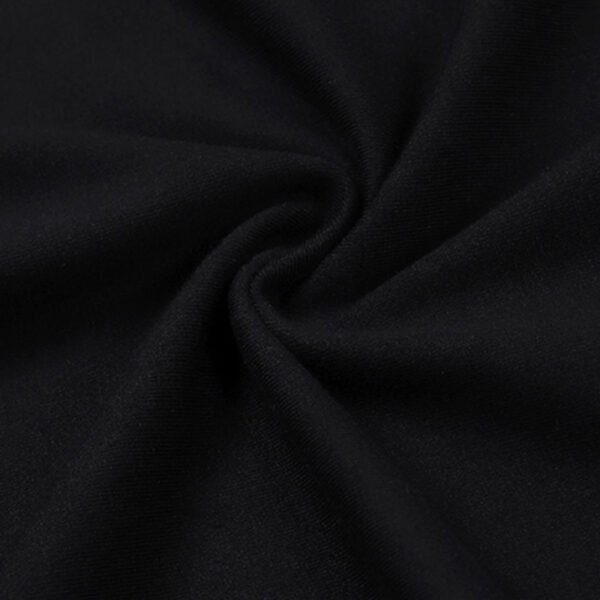
Texture should come from controlled fabric relaxation, panel handling, and finishing conditions rather than accidental distortion. During development, VeeWen can compare approved swatches and panels under consistent lighting, identifying whether the desired depth survives pressing, packing, and the buyer's intended care route.
Seam puckering changes perceived fit
On a skinny-fit T-shirt, small seam irregularities become more noticeable because the fabric stays close to the body. The supplied image shows relatively clean shoulder and sleeve transitions, so excessive puckering would interrupt the contour and make the garment appear smaller, twisted, or poorly balanced.
The development checkpoint is not simply eliminating every wrinkle. A little movement may support a relaxed surface story, but puckering must remain even across matching sizes and colors. Sewing tension, thread selection, differential feeding, and pressing should therefore be reviewed together before approval.
The black color increases inspection pressure
Black makes this style commercially versatile, yet it also exposes shine, drag lines, uneven pressing, and seam ripples through changing reflections. In the image, the dark body emphasizes the boundary between smooth areas and shallow folds, giving the surface-control decision direct merchandising importance.
VeeWen's review should inspect the garment under diffuse and directional light, then compare front, side, and back views. The buyer should define whether the target is matte uniformity, subtle lived-in texture, or a controlled balance before the production sample is released.
Close fit requires measured movement
The visual silhouette follows the torso closely without appearing compressed at the sleeves or neckline. That balance means texture cannot be judged separately from fit: a panel that relaxes unevenly may alter circumference, while seam puckering can reduce perceived stretch and disturb the intended body line.
A size-set review should map chest, waist, sleeve opening, shoulder width, and garment length alongside seam appearance. VeeWen can then distinguish a true pattern issue from a sewing or finishing issue, keeping corrections targeted instead of broadly changing the approved silhouette.
Production workflow turns texture into a specification
For this product, VeeWen's workflow should begin with a visual texture brief built from the supplied black image, then translate that brief into fabric, pattern, sewing, and finishing checkpoints. The purpose is to make an aesthetic impression measurable enough for sample comments and factory-floor decisions.
The buyer should receive a development sample showing the approved surface at key seams and open panels, followed by a size-set confirmation. Before purchase-order release, both parties should record acceptable puckering limits, pressing expectations, shade references, and inspection views for the MOQ of 100 pieces per style.
Approval should protect repeatability
The principal trade-off is clear: a perfectly flat surface may feel generic, while stronger rippling can create inconsistency and undermine the close fit. The supplied image supports a restrained middle path, where texture adds dimension but seam lines still read as deliberate.
Approve this direction only when the sample demonstrates consistent texture after the planned finishing process and the seams remain stable through fitting review. If variation appears between sizes or panels, revise construction or finishing before approving bulk, rather than accepting an undefined handmade effect.
Buyer Questions
Is the 190 GSM weight verified for this T-shirt?
Yes, 190 GSM appears in the supplied source title. Fiber composition, dimensional tolerance, and whether the finished garment maintains that target remain To Confirm during development.
What should the buyer inspect first?
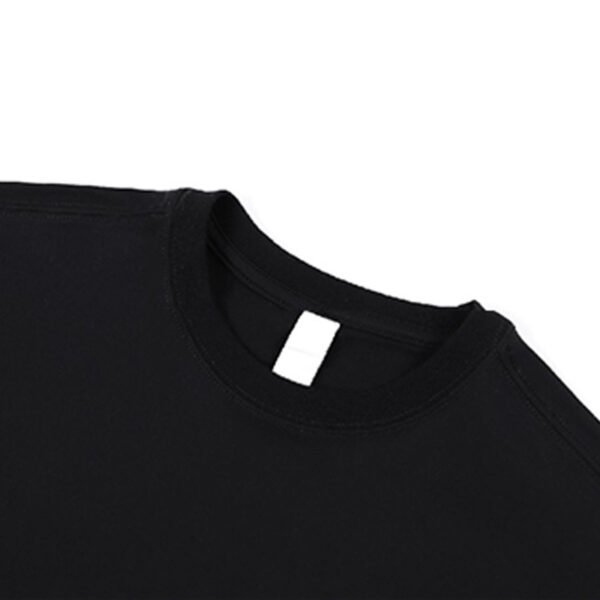
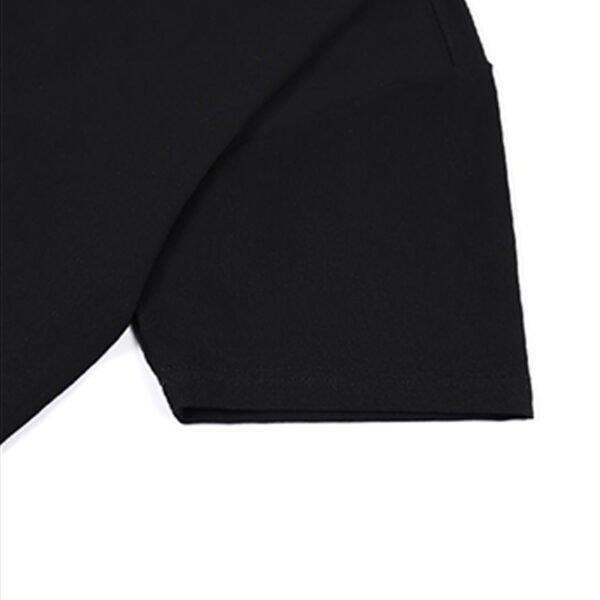
Inspect torso texture, shoulder seams, sleeve hems, and neckline alignment under consistent lighting. Compare multiple sizes to separate intentional surface character from unstable puckering or fit distortion.
Can the surface be made completely flat?
It can be developed toward a flatter appearance, but that may remove the subtle depth visible in the image. The approved balance should reflect the intended brand positioning.
What is the minimum order for development?
The commercial minimum is MOQ: 100 pieces per style. Final material, color, label, packaging, and construction decisions should be confirmed before production approval.
Approve the texture direction
Send the target measurements, care route, color standard, and desired texture tolerance. VeeWen can then prepare the development checkpoint for a close-fit sample and MOQ: 100 pieces per style.


Reviews
There are no reviews yet.