

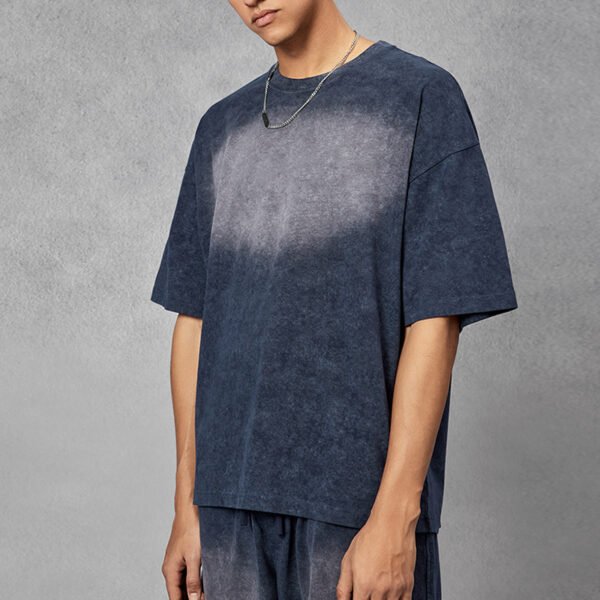


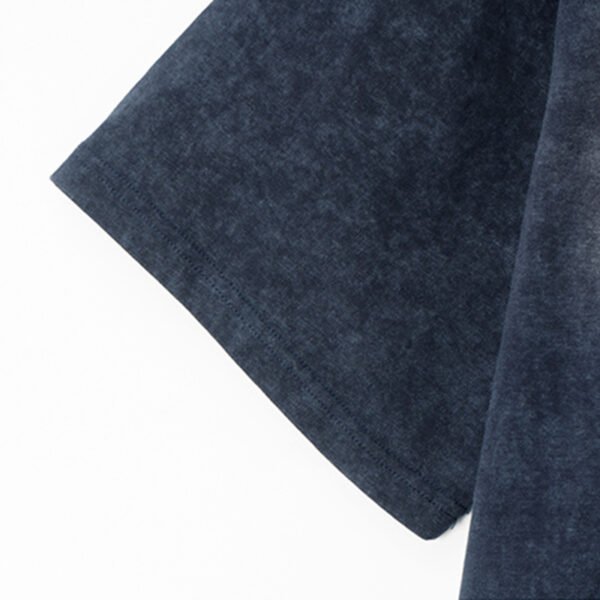


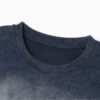

This T-shirt is a fit-engineering study in relaxed proportion, using shoulder balance and sleeve pitch to shape its streetwear stance. The supplied image shows an extended shoulder line, broad sleeves, and a straight body, while the vintage surface treatment makes those decisions immediately visible.
Shoulder Balance Sets the Silhouette
The shoulder seam visibly extends past the wearer's natural shoulder point, shifting volume outward before the sleeve begins. That placement enlarges the upper frame and lets the body fall cleanly, producing a relaxed shape without requiring extreme garment length or excessive body width.
For development, the critical measurement is not simply shoulder width. The pattern must coordinate shoulder extension with armhole depth, chest ease, and neckline position, because one adjustment can make the garment appear slouched, tight, or disproportionately square during wear.
Sleeve Pitch Controls Visual Weight
The sleeves appear broad and angled slightly downward from the extended shoulder, creating a deliberate pitch instead of a conventional vertical hang. This distributes visual weight across the upper arm and helps the shirt maintain a substantial streetwear presence when worn untucked.
A sleeve that is widened without correcting its pitch may twist forward, collapse at the underarm, or restrict movement. VeeWen's development checkpoint should therefore review sleeve rotation, bicep width, cuff opening, and arm mobility together on the first fitting sample.
The Straight Body Protects Proportion
The image shows a mostly straight side profile from chest through hem, with limited waist suppression. This body shape gives the dropped shoulder and broad sleeve enough room to read as intentional, while avoiding a tapered lower section that would visually pull the silhouette inward.
The trade-off is that a straight body can look oversized if chest ease and hem width are not balanced against the shoulder extension. Buyers should confirm front, side, and back measurements together, especially when grading the pattern across multiple sizes.
Wash Contrast Reveals Construction Decisions
The dark indigo-blue appearance shifts lighter across the chest and center surface, while deeper tones remain near the lower body and sleeve edges. That contrast makes seam placement, sleeve pitch, and shoulder width easier to evaluate because tonal change follows the garment's three-dimensional form.
Garment treatment can vary with fabric, recipe, loading, and panel exposure, so the approved sample must establish acceptable shade movement. The buyer should separate fit approval from wash approval, then record both as linked but independently controlled production standards.
VeeWen Workflow for Fit Approval
VeeWen should translate the visual axis into a measurement brief covering shoulder extension, neckline placement, armhole depth, sleeve pitch, and body balance. The first sample then tests whether these linked coordinates reproduce the intended relaxed stance on an actual wearer.
After fitting, pattern corrections should be documented by point of measure rather than described only as oversized or vintage. A second approval should verify movement, sleeve rotation, and wash appearance before the specification is released for the MOQ: 100 pieces per style program.
Buyer Checkpoint Before Production
The central approval question is whether the shoulder and sleeve system looks relaxed from every angle while remaining comfortable during ordinary movement. A front-only review can conceal forward twisting, underarm tension, or a sleeve opening that becomes unstable when the arm rises.
Request a size-set review when the target range is broad, because dropped shoulders do not always grade proportionally. Confirm shoulder extension, sleeve pitch, body width, wash tolerance, and labeling requirements in the final technical package before production booking.
Buyer Questions
Is the fabric confirmed as cotton?
The source context references cotton T-shirts, but the supplied evidence does not verify composition or percentage. Treat fiber content as a source reference and confirm it through the technical fabric submission.
What creates the relaxed shoulder appearance?
The visible effect comes from shoulder extension combined with sleeve pitch and body balance. Increasing only one measurement may produce distortion, so all three should be reviewed on the fitting sample.
Can the vintage wash remain consistent?
Consistency depends on fabric behavior, treatment recipe, garment loading, and approved tolerance. VeeWen should establish a signed shade and surface standard using the approved development sample.
What is the minimum order quantity?
The commercial minimum is MOQ: 100 pieces per style. Final colorways, size ratios, labeling, packaging, and development approvals should be confirmed before production planning.
Approve the Shoulder and Sleeve System
Send your target measurements, wash direction, size range, and branding requirements to VeeWen for a focused development review and fitting plan. Approve the complete proportion system before releasing MOQ: 100 pieces per style.



Reviews
There are no reviews yet.