
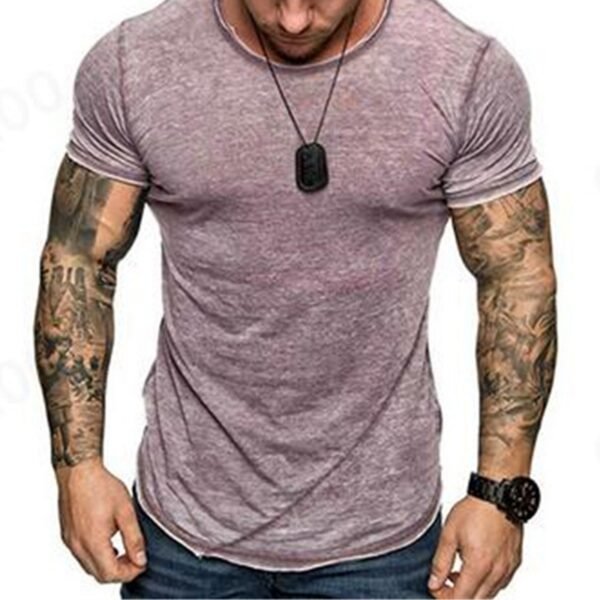
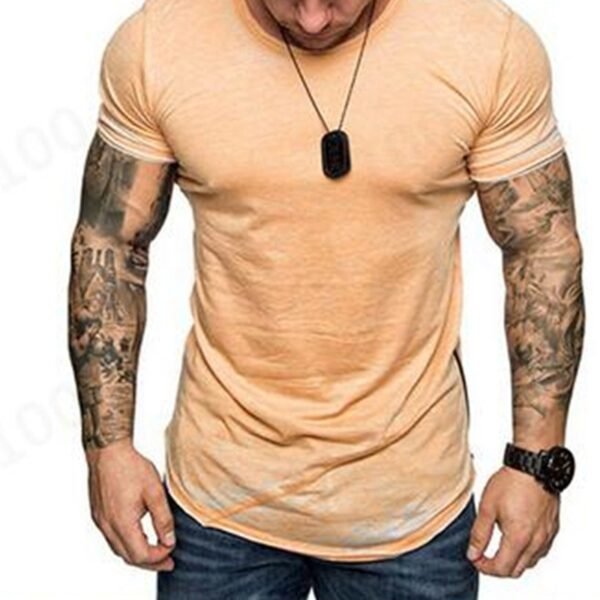
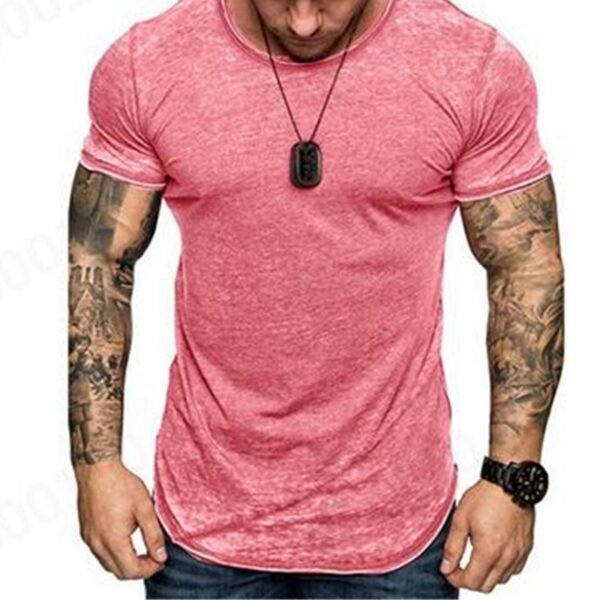
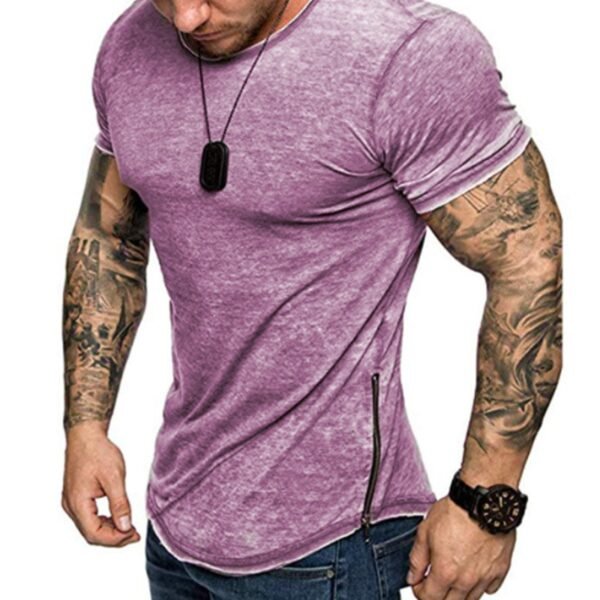
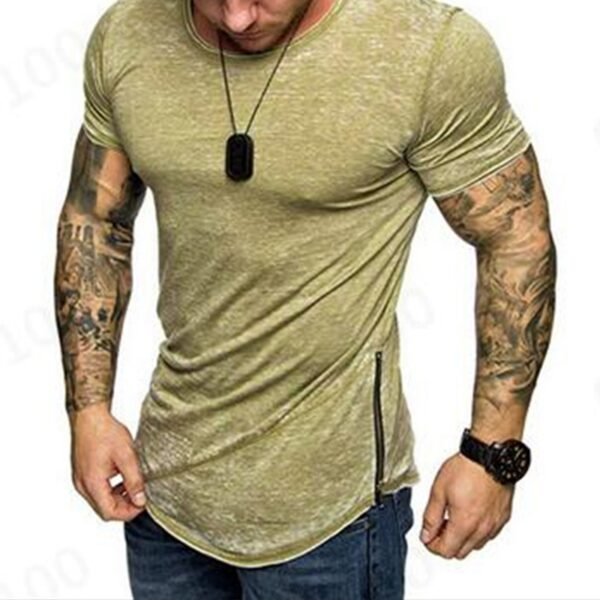
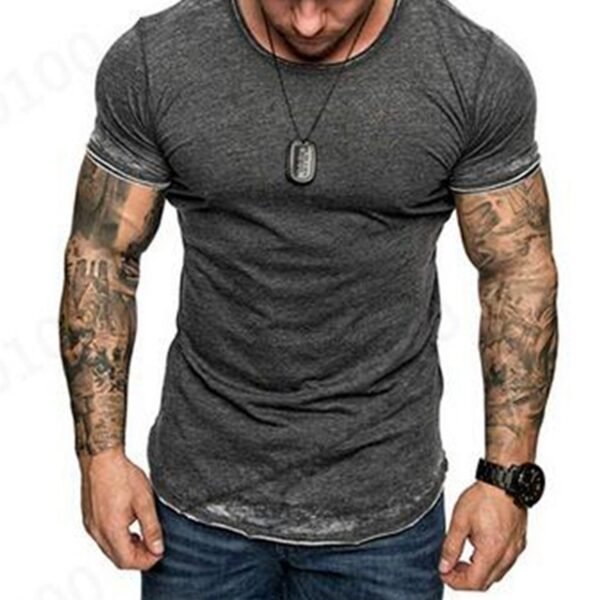
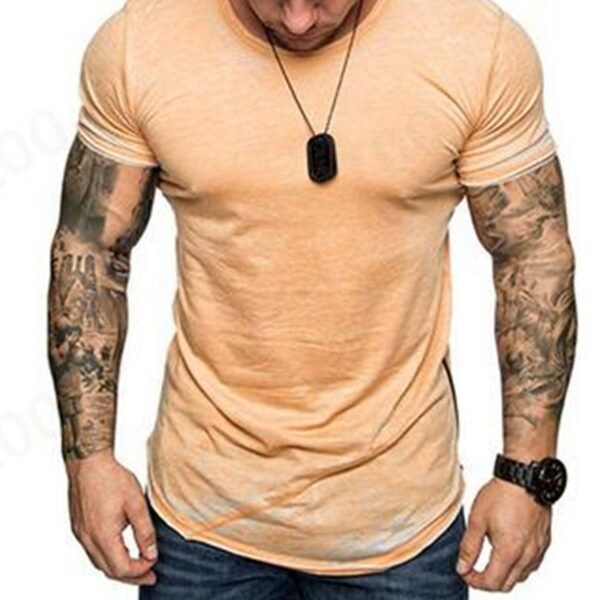
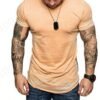
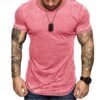
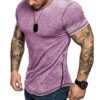
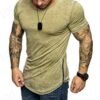
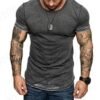
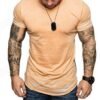
This men's slim-fit T-shirt is developed around fabric weight as the control for clean body definition, controlled drape, and a hem zipper that remains visually balanced. VeeWen uses the image reference to align handfeel, recovery, and silhouette before bulk approval on sample.
Fabric Weight Sets the Drape
Fabric weight changes how a slim jersey hangs: lighter knits follow the torso and can reveal tension, while heavier options create steadier vertical fall but may reduce ease. The visible close fit and soft-looking surface make drape calibration central to the product-development decision.
The supplied front image shows a mauve heather-like visual, fitted sleeves, a round neckline, and a curved hem with a small dark zipper detail. These observations support a medium-weight starting reference, but they do not verify GSM, fiber content, stretch recovery, or zipper performance.
Compare Weight on One Pattern
For buyer approval, compare at least two knit weights on the same graded pattern, then inspect side seams, sleeve pitch, and hem behavior on the body. The right option should preserve close shaping without pulling across the chest or collapsing around the zipper opening.
A lighter construction can improve movement and create a relaxed fall, yet it may amplify seam impressions and distort the curved hem. A heavier construction can sharpen the silhouette, though it may feel warmer and make the zipper zone more prominent, so the collection brief must define.
Protect the Hem-Zip Relationship
Because the hem zipper interrupts an otherwise continuous lower edge, its placement affects both drape and perceived proportion. Keep the opening aligned with the side or front balance shown in the reference, and stabilize adjacent knit areas so the slider does not torque the hem.
Development should test zipper tape width, stop placement, stitch density, and opening length against the chosen fabric weight. Record whether the hem lies flat when closed and whether the detail remains comfortable during sitting, layering, and repeated dressing across sizes in wear trials.
Translate the Argument into Workflow
VeeWen's workflow should begin with a fabric-weight matrix tied to the approved silhouette, followed by a first sample that reproduces the visible neckline, sleeve fit, curved hem, and zipper location. Each revision should identify whether a drape issue comes from knit weight, pattern balance, or finishing.
Before size grading, confirm the selected knit's measured weight, width, stretch direction, shrinkage behavior, and color appearance against the buyer's standard. The approval checkpoint is a worn sample review that signs off body fall and hem stability together, not as separate details.
Control Risk Before Bulk Cutting
Production risk rises when a slim garment is specified only by appearance. A technically similar color can behave differently if the knit is denser, more elastic, or less stable. Buyers should therefore approve a physical fabric swatch and measurement chart before finalizing the zipper and hem package.
Document tolerance around chest, sleeve opening, body length, and zipper placement, then inspect the first pre-production piece under natural movement. This protects the intended drape across sizes while leaving room to adjust grading where fabric weight changes the silhouette.
Make the Approval Decision
For a commercial range, this tee works best when its fit is treated as a calibrated platform rather than a decorative graphic base. The restrained color and small hem detail leave fabric behavior responsible for most of the visual result here.
Approve the product when the selected weight delivers the target fall, the neckline remains level, and the zipper closes without puckering. If those conditions conflict, decide whether silhouette priority or lighter movement better serves the collection before costing.
Buyer Questions
What fabric weight should this T-shirt use?
The reference shows a close men's silhouette, but the correct weight depends on desired fall, stretch, opacity, and climate. VeeWen should confirm these through side-by-side swatch and sample review together.
Is the zipper placement verified?
The image visibly shows a small dark zipper near the curved hem, but exact opening length, tape, hardware, and reinforcement remain To Confirm during technical sampling.
Can the slim fit be adjusted?
Yes. VeeWen can develop the chest, sleeve, body length, and hem proportions from the approved block, while preserving the selected fabric-weight and zipper relationship.
What is the minimum order quantity?
The commercial minimum is MOQ: 100 pieces per style. Final quantities should follow the approved size breakdown, colorway plan, and confirmed production specification.
Approve the Drape Direction
Send your target measurements, color reference, and preferred handfeel to begin a focused weight comparison. VeeWen will align the hem zipper, fit block, and sample approval around your collection brief.


Reviews
There are no reviews yet.