
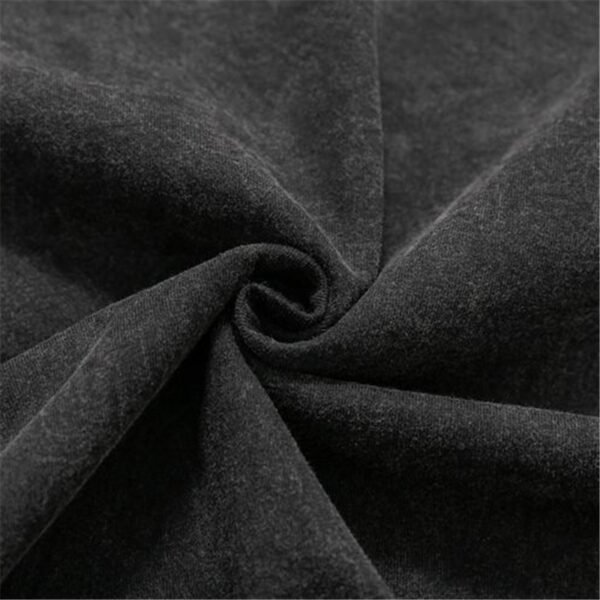


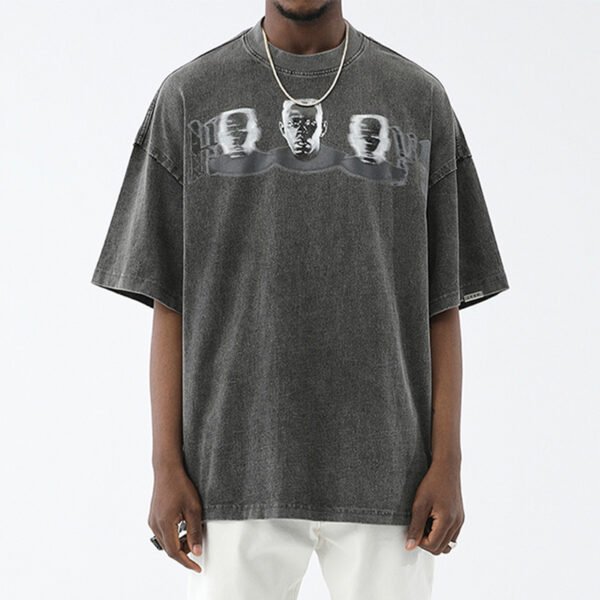


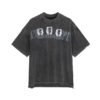


This oversized streetwear T-shirt should be developed around collar stability, because acid washing and decoration can expose neckline distortion before the garment reaches retail. The supplied image shows a dark, irregularly toned knit with soft folds, making wash control and collar recovery the central approval question.
Reframe the Collar-to-Zipper Axis
The assigned collar-to-zipper intersection does not physically occur on this T-shirt, since no zipper appears in the supplied evidence. That absence is useful: the buyer can lock a clean neckline architecture instead of allowing an unnecessary opening to complicate a basic streetwear block.
For a future zip-front adaptation, the same checkpoint would govern how zipper tape, seam allowance, and collar rib meet. On this version, VeeWen should treat the collar seam as the terminal intersection, documenting neckline width, rib height, topstitching, and recovery after finishing.
Read the Wash Through the Fabric
The supplied close-up shows charcoal fabric gathered into deep folds, with lighter and darker areas distributed across the surface. Those tonal changes support the acid-washed direction, but they also indicate that appearance depends on movement, pressure, and finishing consistency rather than color alone.
The development sample should therefore compare flat and worn views, especially around the collar, shoulder, sleeve opening, and hem. Buyers should expect controlled variation, not identical panels, while still requiring a defined shade range and rejection standard for harsh streaks or uneven fading.
Protect Neckline Geometry
An oversized silhouette gives the body more visual volume, so a stretched or rippled neckline can quickly make the garment look unfinished. Collar recovery becomes the practical test: after washing and decoration, the opening should return to its approved shape without pulling the shoulder seam inward.
VeeWen's pattern review should record finished neckline circumference, collar attachment method, seam allowance, and tolerance by size. The buyer should approve these measurements against a washed sample, because the source evidence does not establish GSM, rib composition, or dimensional performance.
Coordinate Decoration With Finishing
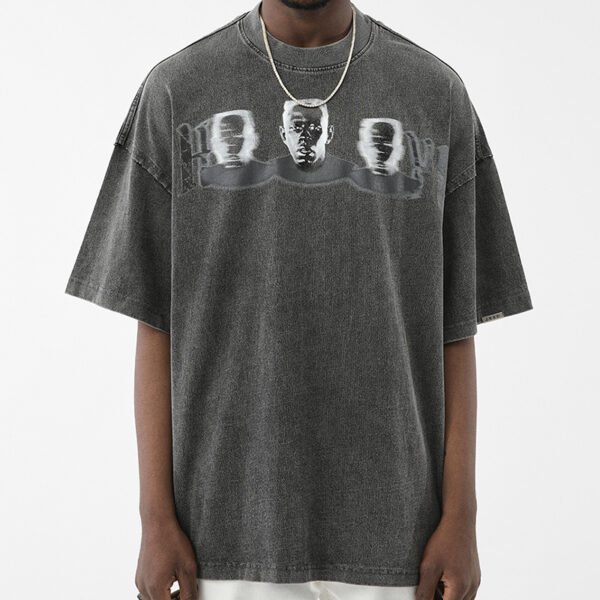
The source wording emphasizes custom printing, while the image evidence emphasizes a distressed surface. Together, they create a sequencing issue: printing before or after washing can materially change contrast, hand feel, and registration. The buyer must select the intended visual order before bulk specifications are frozen.
VeeWen's workflow should place artwork placement, wash recipe, and collar inspection on one development sheet. A sample approval should show the graphic at actual scale across the chosen body area, with the neckline and shoulder zones checked for twisting, abrasion, and unwanted print interruption.
Make Oversizing Measurable
Oversized fit is stated in the source title, but the word alone does not define a production block. Buyers should specify body length, chest width, shoulder drop, sleeve length, bicep width, and hem opening, then confirm how those measurements grade across sizes.
The supplied folds suggest a fabric that can collapse softly rather than hold a rigid shape. That behavior may support the intended relaxed profile, but it can also alter perceived proportions. VeeWen should compare technical measurements with on-body photography before approving the final size set.
Set the Approval Gate
The correct approval gate is not simply whether the tee looks dark and oversized. It is whether the collar remains controlled after the selected wash and print process, while the body retains the intended relaxed proportion and the tonal variation stays commercially acceptable.
For production release, the buyer should sign off on the washed decorated sample, measurement chart, artwork placement, shade range, and care direction. VeeWen can then quote and schedule against one defined style specification, with MOQ: 100 pieces per style applying to the approved version.
Buyer Questions
Is the zipper intersection included in this T-shirt design?
No zipper is visible in the supplied evidence. Treat the collar seam as the active checkpoint unless the buyer intentionally develops a separate zip-front adaptation.
What should the first sample prove?
The first sample should prove neckline recovery, body proportions, wash variation, decoration placement, and acceptable dimensional change after the selected finishing sequence.
Can the acid-washed appearance be made identical across garments?
Exact visual uniformity should not be assumed. Approve a defined shade range and surface-variation standard, then inspect production against the signed reference sample.
What is the minimum order quantity?
The commercial minimum is MOQ: 100 pieces per style. Final quantities should follow the approved color, size, decoration, and finishing specification.
Approve the Washed Collar Checkpoint
Send the intended artwork, size range, and wash reference to VeeWen for a development review focused on collar recovery, tonal variation, measurements, and decoration sequencing.


Reviews
There are no reviews yet.