
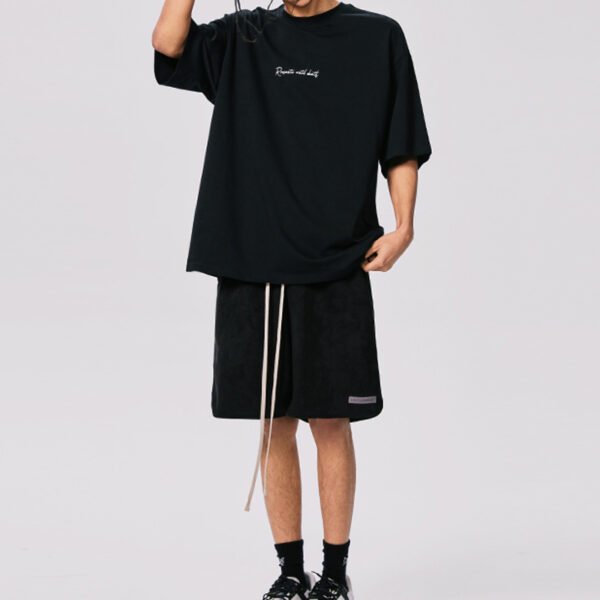

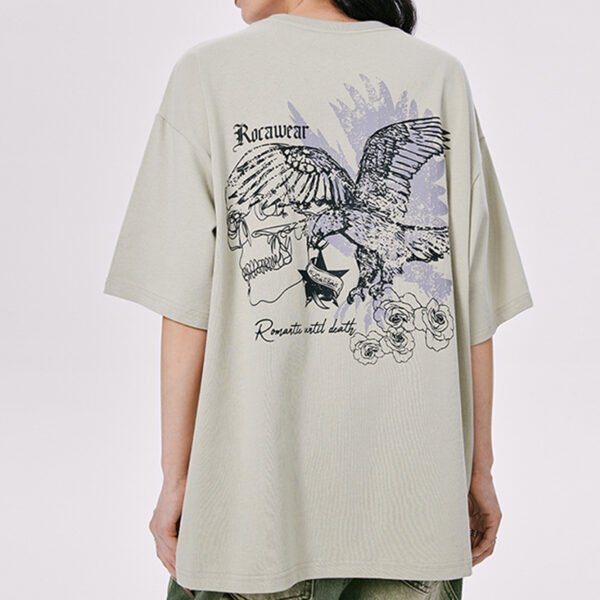
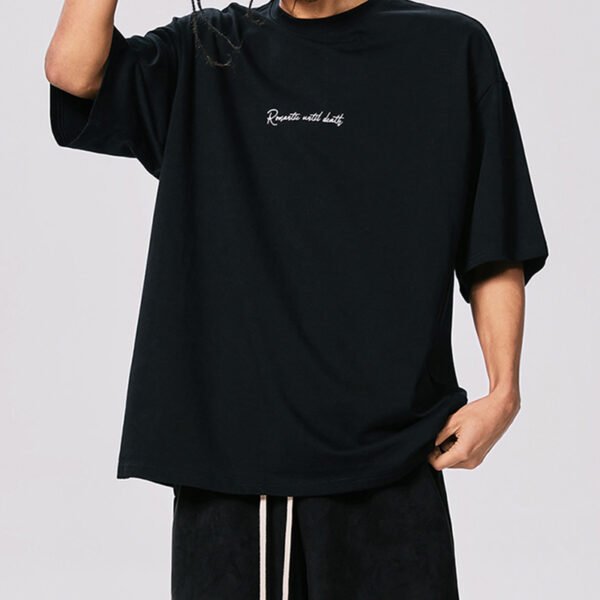
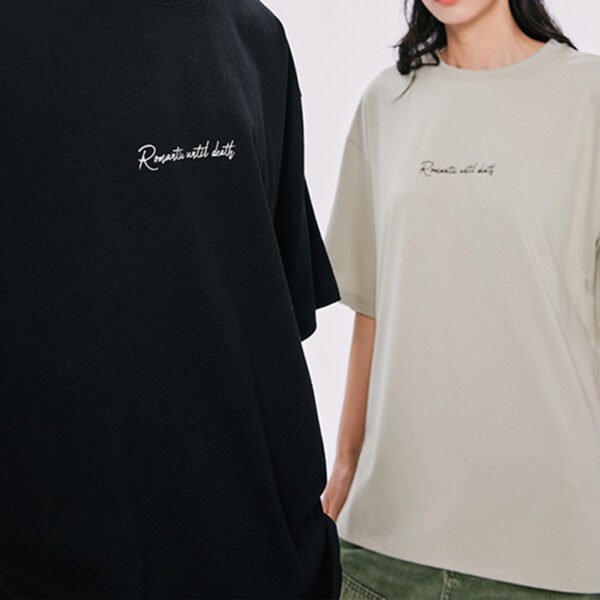





This T-shirt treats decoration thickness as a fit and comfort variable, not simply an artwork choice. The heavyweight oversized body shown in the supplied image already carries visual volume, so clean edges, restrained layering, and disciplined placement determine whether the product feels intentional or overloaded.
Heavyweight Cotton Magnifies Surface Decisions
The source wording identifies heavyweight cotton, while the image shows a broad black body with generous sleeve volume. That combination gives the T-shirt presence before decoration begins, meaning added layers can quickly change drape, hand feel, and perceived wearability.
VeeWen should establish the base fabric and decoration stack together, not sequentially. The buyer checkpoint is a sample worn over a lightweight layer, confirming the body remains comfortable while the decoration stays visually subordinate to the oversized silhouette.
Small White Graphics Need Sharp Boundaries
The supplied image places a small white graphic near the center chest against black fabric, creating strong contrast despite limited area. At this scale, fuzzy edges, uneven ink deposit, or registration drift can make the mark appear careless rather than deliberately restrained.
For development, VeeWen should test artwork line weight, screen or print setup, curing route, and placement template as one system. Approval should focus on edge definition at normal viewing distance and close inspection, without increasing ink thickness simply to chase opacity.
Layer Bulk Must Stay Visually Quiet
The assigned axis concerns applique edge control and layer bulk, even though the visible reference identifies direct white-ink printing. That distinction matters: an optional applique or layered treatment could add tactile value, but its perimeter must not compete with the clean oversized body.
VeeWen can offer a controlled comparison between direct print and a low-profile applied element, using the same chest placement. The buyer should select the route that preserves flexibility, avoids raised pressure points, and keeps the black field visually uninterrupted around the mark.
Dropped Shoulders Require Placement Discipline
The image shows shoulders falling outward and sleeves extending widely from the upper body. On this proportion, a conventional chest placement can appear too close to the neckline or shift toward the armhole, especially when the garment is graded into larger widths.
The development workflow should map decoration from the actual body block, including shoulder slope, armhole curve, and finished length. VeeWen should submit a placement sheet with tolerances, then verify the mark on multiple sizes before approving bulk cutting or decoration.
Black Fabric Reveals Edge And Thickness
The black ground gives the white chest mark strong graphic separation and makes any halo, abrasion, or uneven perimeter easier to notice. It also visually absorbs construction detail, so thickness is perceived primarily through the decoration's edge and shadow.
VeeWen should inspect samples under flat light and normal retail lighting, checking whether the chosen surface route creates a visible ridge or uneven border. The buyer decision should balance tactile interest against a clean face, especially for garments intended to layer.
VeeWen Workflow Builds A Decoration Gate
VeeWen can convert this argument into a decoration gate covering artwork simplification, edge tolerance, layer profile, hand feel, placement, and laundering review. Each gate should reference the same oversized block, ensuring the decoration is judged as part of the garment.
The buyer's final approval should compare the selected print or applied treatment across at least the key graded sizes. Confirm chest position, edge sharpness, comfort, and visual restraint before production release, with any heavier layer treated as a deliberate construction choice.
Buyer Questions
Is an applique included in the reference?
No applique is visibly confirmed. The supplied wording references direct white-ink printing; any applied layer should be treated as an optional development comparison.
Why does the oversized fit affect decoration?
Dropped shoulders and broad sleeves change visual landmarks, so standard placement can drift. Decoration should be mapped to the approved body block and graded deliberately.
Can the white graphic be enlarged?
Yes, but enlargement increases surface coverage and potential bulk. Review opacity, flexibility, edge definition, and chest balance before approving a larger artwork footprint.
What is the minimum order?
MOQ: 100 pieces per style. Confirm artwork, decoration route, material specification, size range, color, and placement tolerances before production planning.
Approve The Low-Profile Decoration Route
Share your artwork, preferred decoration method, size range, and hand-feel target with VeeWen for sample review centered on crisp edges, controlled bulk, placement accuracy, and oversized comfort.



Reviews
There are no reviews yet.